Akwa Ibom State is stepping up efforts to modernise public education through a fresh partnership with global education technology organisation, EIDU, in what officials describe as a major move towards digitally driven learning across primary schools.
The collaboration is part of a wider education reform agenda focused on improving literacy, numeracy, teacher effectiveness and classroom engagement through technology-powered learning systems. State officials say the initiative is expected to reshape how pupils learn in public schools while also giving teachers stronger digital support tools.
According to the Akwa Ibom State Commissioner for Education, Prof. Ubong Essien Umoh, the partnership reflects the government’s determination to prepare children for a technology-driven future rather than leaving them behind in a rapidly changing global economy.
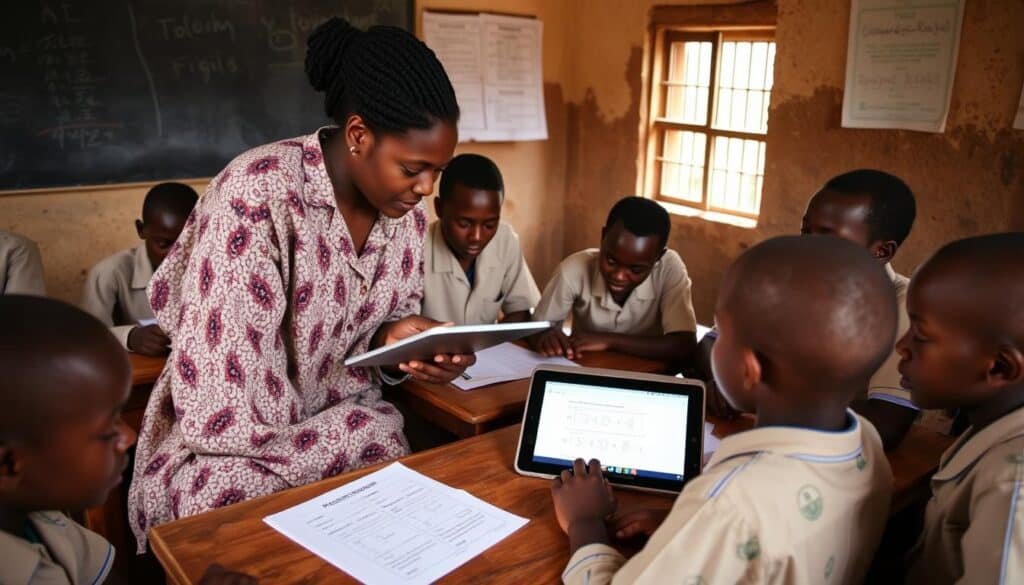
The programme introduces digital learning devices, AI-powered teaching support systems and structured classroom content designed to improve foundational learning outcomes among pupils in the state’s public primary schools. Education experts involved in the project believe the model can help tackle long-standing concerns about poor learning outcomes in early basic education.
Officials familiar with the initiative say the digital platform allows teachers to monitor pupil performance in real time while also adjusting lesson delivery based on learning progress. The system is expected to improve classroom participation, simplify lesson planning and provide data-driven support for school administrators.
EIDU, which already works with governments across several African countries, has expanded rapidly in Nigeria in recent months through partnerships with states seeking to modernise basic education. Reports indicate the organisation currently supports learning programmes reaching hundreds of thousands of children across the continent through AI-enabled education systems.
The Akwa Ibom government believes the initiative aligns with its broader digital transformation ambitions, especially as the state increases investment in technology infrastructure and innovation-focused governance.
Education stakeholders in the state have welcomed the partnership, arguing that technology integration is no longer optional for Nigerian schools seeking to remain globally competitive. Many observers say traditional teaching methods alone may no longer be sufficient for preparing children for future workplaces increasingly shaped by artificial intelligence and digital systems.
Analysts also note that Nigeria’s education sector continues to battle serious challenges ranging from overcrowded classrooms to limited learning materials and inadequate teacher support. For many education advocates, technology-based interventions now represent one of the few realistic paths to scaling quality learning across underserved communities.

Recent education reforms in different Nigerian states show a growing shift towards digital learning models. Oyo, Ondo, Taraba and Gombe states have all entered similar partnerships with EIDU to strengthen classroom instruction and improve foundational literacy and numeracy outcomes among pupils.
In Akwa Ibom, officials insist the focus is not merely on distributing devices to schools but on creating a sustainable teaching ecosystem where technology actively supports classroom learning. The programme reportedly includes teacher training, structured digital curriculum delivery and monitoring systems designed to ensure measurable improvements in learning outcomes.
Some educators in the state believe the success of the initiative will depend heavily on consistent implementation, teacher readiness and long-term funding support. While digital learning projects often generate excitement during launch periods, education experts say sustainability remains one of the biggest challenges facing technology-driven reforms in Nigeria.
Still, optimism remains high among many stakeholders.
For teachers, the initiative could reduce administrative pressure and improve lesson delivery efficiency. For pupils, it could make learning more interactive and engaging. For policymakers, it offers access to classroom performance data that can guide future education planning.
The state government also hopes the partnership will strengthen digital literacy among younger learners, especially at a time when technology skills are becoming increasingly important in higher education and employment opportunities.
Observers say the reform could also position Akwa Ibom as one of the leading states in Nigeria’s growing education technology landscape, particularly given its previous investments in digital infrastructure such as the Ibom E Library, one of the country’s earliest major digital library projects.
There are also expectations that the initiative may eventually expand beyond pilot schools if the programme records measurable success in pupil performance and teacher effectiveness.
Beyond the classroom, experts argue that digital education reform has wider economic implications. A stronger digitally skilled population could improve innovation, entrepreneurship and employability among future generations. In a country where youth unemployment remains a serious concern, many policymakers increasingly view technology education as a long-term economic strategy rather than just an education policy.
Research into digital access among Nigerian adolescents has also highlighted the growing importance of structured digital education and online literacy programmes. Studies suggest that many young Nigerians already interact heavily with digital platforms but often lack sufficient guidance on safe and productive technology use.
Education analysts say partnerships like the one between Akwa Ibom and EIDU may therefore play a dual role by improving academic learning while also helping students develop responsible digital skills from an early age.
For parents across the state, however, the biggest concern remains whether the reforms will produce visible improvements in classroom performance. Many families continue to demand better learning outcomes from public schools amid rising economic pressure and growing competition in the education sector.
Government officials insist results will become increasingly visible as implementation expands and teachers become more familiar with the new system.
The collaboration comes at a time when conversations around artificial intelligence in education are gaining momentum globally. Across many countries, schools are exploring how AI tools can support personalised learning, automate repetitive tasks and improve access to educational resources.
While some critics warn about overdependence on technology in classrooms, supporters argue that digital learning systems can help bridge major education gaps when implemented responsibly.
For Akwa Ibom, the partnership represents more than another government project. It reflects a broader attempt to reposition public education for a future increasingly shaped by technology, innovation and data-driven learning systems.

Back Story
Akwa Ibom has long maintained a reputation as one of the states placing strong emphasis on education development. Over the years, successive administrations invested in free and compulsory education policies, teacher recruitment and learning infrastructure across the state.
The state also attracted attention nationally with projects such as the Ibom E Library in Uyo, which became one of the earliest large-scale digital library initiatives in West Africa.
In recent years, however, growing concerns about learning poverty, poor literacy levels, and global digital competition have pushed many Nigerian states to begin exploring technology-driven reforms in public education.
EIDU has emerged as one of the organisations partnering with governments across Africa to address those challenges using AI-powered digital learning systems. Its programmes are already active in multiple Nigerian states, including Oyo, Ondo, Taraba and Gombe.
Akwa Ibom’s partnership with the organisation is therefore part of a wider national movement towards integrating technology into foundational education as governments attempt to improve classroom outcomes and prepare younger generations for a more digital future.
Join Our Social Media Channels:
WhatsApp: NaijaEyes
Facebook: NaijaEyes
Twitter: NaijaEyes
Instagram: NaijaEyes
TikTok: NaijaEyes