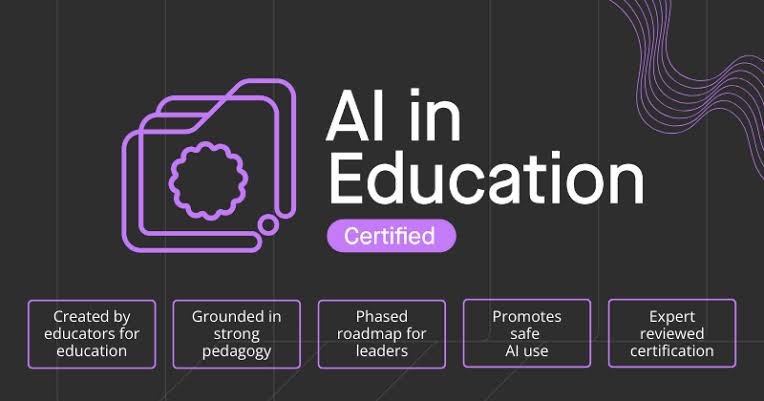

Artificial intelligence is rapidly changing the way classrooms operate, from helping teachers prepare lesson plans to supporting personalised learning for students. Yet, education leaders across the United States believe the real challenge is not simply introducing AI into schools. It is ensuring that the technology is used responsibly, ethically and in ways that genuinely improve learning.
As schools continue to experiment with generative AI tools, state education leaders are exchanging ideas on what works, what should be avoided and how schools can prepare both teachers and students for an AI-driven future. Their discussions have highlighted a growing consensus that successful AI adoption requires more than new software. It demands clear policies, ongoing teacher training, strong data protection and a commitment to keeping human judgement at the centre of education.
The recommendations come as schools across the country grapple with the opportunities and risks presented by AI. While many teachers have embraced the technology to save time and create engaging classroom materials, concerns remain over student privacy, academic honesty, misinformation and unequal access to digital resources.
Rather than discouraging innovation, education leaders are encouraging schools to take a measured approach that allows AI to enhance teaching without replacing the expertise and relationships that educators bring into the classroom every day. According to discussions among state education officials and education technology experts, schools that establish clear expectations now will be better positioned to adapt as AI technologies continue to evolve. These recommendations are increasingly shaping guidance issued by education departments and state boards across the US.
Education Leaders Call for Clear AI Policies Before Classroom Expansion
One of the strongest messages emerging from state education leaders is that schools should not adopt artificial intelligence simply because it is becoming popular. Instead, every school and school district should first develop policies that explain how AI can and cannot be used by teachers, students and administrators.
These policies are expected to cover important issues such as data privacy, responsible classroom use, transparency and academic integrity. Without clear guidance, experts warn that schools could face inconsistent practices, confusion among staff and increased risks relating to student information.
Education leaders say AI should be viewed as another educational tool rather than a replacement for teachers. They argue that technology performs best when it supports educators by reducing repetitive administrative work, generating classroom resources and providing personalised learning support, while teachers continue to make the professional decisions that shape instruction.
Several state education agencies are therefore encouraging schools to review existing technology policies before introducing AI platforms. Instead of treating artificial intelligence as a completely separate issue, many experts recommend incorporating AI into broader digital learning strategies that already govern cybersecurity, student data and technology procurement. This approach helps schools build on existing systems while ensuring AI is introduced responsibly.
Teacher training has also emerged as a top priority. Education leaders say many teachers are interested in using AI but remain uncertain about its capabilities, limitations and ethical implications. Professional development programmes are now being designed to help educators understand how AI generates responses, how to verify AI-produced information and how to identify situations where human judgement remains essential.
Some schools have already begun organising workshops that allow teachers to explore AI tools before introducing them in classrooms. These sessions often focus on practical applications such as lesson planning, creating differentiated learning materials, generating quizzes and simplifying administrative tasks. At the same time, teachers are encouraged to review AI-generated content carefully rather than accepting every suggestion without verification.
Experts say this balanced approach helps educators build confidence while reducing the risk of inaccurate or biased information reaching students. It also encourages teachers to model responsible AI use, showing learners that technology should complement critical thinking rather than replace it.
Another important recommendation involves communication with parents. School leaders believe parents should understand how AI is being used in classrooms, what safeguards are in place and how student information is protected. Transparent communication can help build public confidence while addressing concerns surrounding emerging technologies.
Also Read: Why Schools Should Lead AI Education Instead of Banning Technology
Schools Place Greater Emphasis on Digital Literacy and Critical Thinking
Beyond introducing AI tools, education leaders believe schools must also prepare students to use artificial intelligence responsibly.
One concern repeatedly raised during discussions is that students may become too dependent on AI-generated answers without questioning their accuracy. Although modern AI systems can produce detailed and convincing responses, they are not always correct. They may contain factual errors, outdated information or content influenced by bias within training data.
For this reason, many schools are strengthening digital literacy programmes that teach students how AI works, when it can be useful and why information generated by AI should always be verified through credible sources.
Education leaders argue that students need to understand not only how to use AI but also how to evaluate it critically. Instead of accepting every response at face value, learners are being encouraged to compare information from multiple sources, identify possible inaccuracies and develop independent judgement.
Teachers are also redesigning classroom activities to place greater emphasis on creativity, analysis, collaboration and problem solving. These are skills that remain difficult for AI to replicate and are increasingly viewed as essential for future employment and lifelong learning.
In many schools, assessments are gradually changing to reflect this reality. Oral presentations, classroom discussions, practical projects and collaborative assignments are receiving greater attention because they allow teachers to evaluate students’ understanding beyond what AI can easily generate.
Education leaders say these adjustments do not represent a rejection of artificial intelligence. Rather, they reflect an effort to ensure technology supports genuine learning while preserving the academic standards that schools are expected to uphold.
They also stress that equitable access must remain part of every AI strategy. Schools serving disadvantaged communities often face challenges such as unreliable internet access, limited digital infrastructure and fewer opportunities for teacher training. Without deliberate planning, these gaps could widen as AI becomes more integrated into education.
State leaders therefore continue to encourage collaboration among governments, school districts, technology providers and education organisations to ensure that AI benefits every learner, regardless of geography or socio-economic background.
Education Leaders Say Responsible AI Requires Collaboration and Long-Term Planning
Education leaders agree that preparing schools for the age of artificial intelligence cannot be left to individual teachers alone. They say governments, school districts, technology companies, universities and parents all have important roles to play in ensuring AI is used in ways that benefit learners.
One area receiving increasing attention is student data protection. As more AI-powered platforms enter classrooms, schools are being urged to scrutinise how these systems collect, store and process personal information. Before adopting any AI tool, education authorities recommend carrying out privacy assessments, reviewing vendor policies and ensuring compliance with existing data protection laws.
Transparency is another principle gaining widespread support. Many school leaders believe students should know when AI has been used to create learning materials or provide feedback. Likewise, teachers are encouraged to explain how AI supports classroom activities instead of presenting AI-generated content as entirely human-produced.
Experts also advise schools to avoid relying on a single AI platform. Because the technology is evolving rapidly, education systems are encouraged to remain flexible and regularly review whether their chosen tools continue to meet educational standards and ethical expectations.
State education leaders are also investing in partnerships that help teachers stay informed about developments in AI. Universities, education technology organisations and research institutions are increasingly working with schools to develop practical guidance, evaluate classroom outcomes and identify emerging challenges before they become widespread.
Many education officials believe the most successful schools will not necessarily be those with the most advanced AI systems. Instead, success will depend on leadership, thoughtful planning and a willingness to adapt as technology changes.
For countries such as Nigeria, where digital learning continues to expand, these lessons are particularly relevant. Artificial intelligence has the potential to improve access to quality education, especially in underserved communities. However, experts say the technology should be introduced alongside investments in reliable internet connectivity, electricity, teacher development and digital infrastructure.
Education analysts also believe African countries have an opportunity to develop AI policies that reflect local realities rather than simply copying models from elsewhere. Doing so could help schools maximise the benefits of AI while addressing issues such as unequal access, language diversity and varying levels of digital literacy.
Also Read: Why Artificial Intelligence Is Making This One of the Most Important Eras for Teachers
Back Story
The conversation about artificial intelligence in schools has changed significantly over the past few years.
When generative AI tools became widely available in late 2022, many schools responded with caution. Some restricted access to AI platforms because of concerns about plagiarism, examination malpractice and the possibility that students would rely on machines instead of developing their own ideas.
However, as teachers began experimenting with the technology, attitudes gradually shifted. Educators discovered that AI could help prepare lesson plans, summarise lengthy documents, create classroom activities, generate practice questions and reduce the time spent on repetitive administrative tasks.
These early experiences prompted education departments and state boards across the United States to move beyond simple bans and begin developing practical guidance for schools. Rather than asking whether AI should be used, the focus turned to how it could be used responsibly.
Organisations such as the National Association of State Boards of Education, the State Educational Technology Directors Association and several state education departments have since published recommendations encouraging schools to adopt balanced AI strategies. These include investing in teacher training, protecting student privacy, promoting digital literacy and maintaining human oversight over teaching and assessment.
The growing interest in AI also reflects wider changes in the global economy. Employers increasingly expect graduates to understand how artificial intelligence works and how to use it responsibly in the workplace. As a result, schools are under pressure to prepare students with both technical knowledge and the critical thinking skills needed to evaluate AI-generated information.
Education experts argue that while AI can automate certain tasks, it cannot replace the qualities that define effective teaching. Empathy, creativity, ethical judgement, communication, and the ability to inspire learners remain uniquely human strengths that technology cannot fully replicate.
Looking ahead, state education leaders believe AI will become a permanent feature of modern education. The challenge will not be deciding whether schools should use artificial intelligence but ensuring that it serves educational goals rather than dictating them.
Their message to schools is clear. Introduce AI with purpose, train teachers thoroughly, protect students’ data, involve parents in the conversation and continue to place learners at the heart of every decision.
If these principles are followed, education leaders believe artificial intelligence can become a powerful tool that enhances learning, improves teaching and prepares students for a future in which digital skills will be increasingly essential.