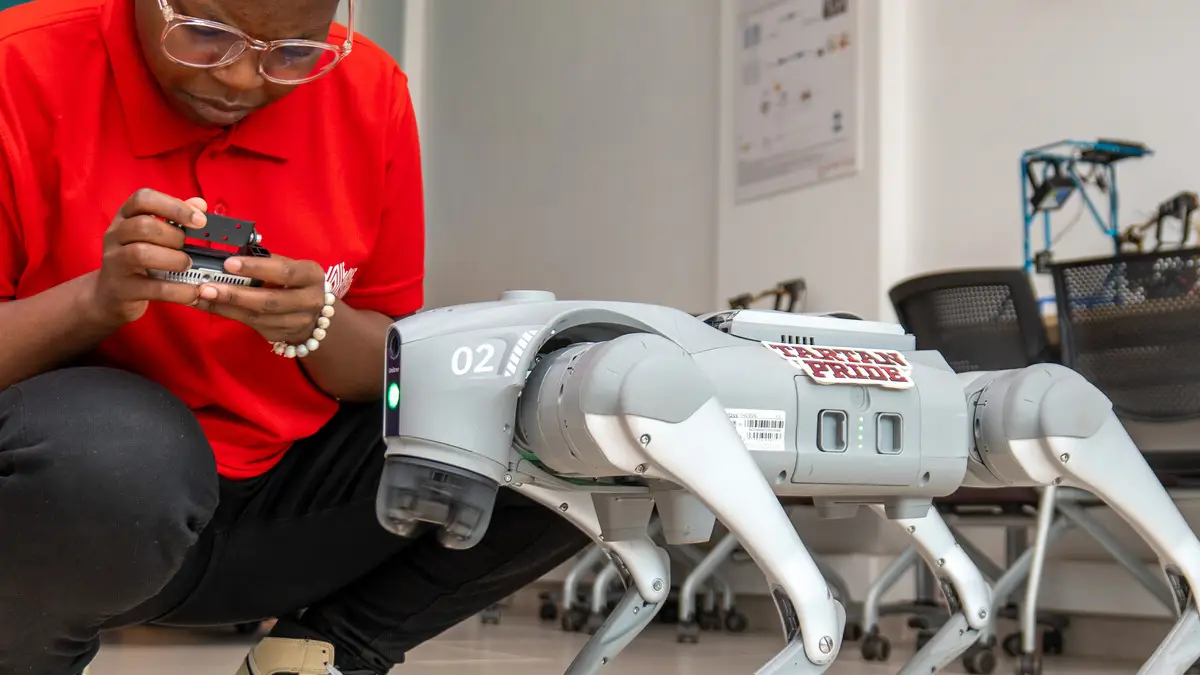

Across Africa, universities are quietly transforming the way students learn science, technology and engineering. Robotics laboratories, once considered rare and expensive facilities reserved for a handful of elite institutions, are now becoming an important part of higher education across the continent.
From Nigeria and Rwanda to Kenya, Ethiopia and South Africa, universities are investing in modern robotics labs that allow students to design, build and test intelligent machines capable of solving real-world problems. These laboratories are helping young Africans move beyond theory by providing practical experience in robotics, artificial intelligence, automation and smart systems.
The shift reflects a growing understanding that Africa’s future competitiveness will depend on producing graduates who are prepared for the Fourth Industrial Revolution rather than simply studying it in textbooks.
Industry experts say the expansion of robotics laboratories is also strengthening research, entrepreneurship and collaboration between universities and technology companies, creating opportunities that did not exist just a few years ago.
Also Read: Why Africa’s New $12 Million Research Fund Matters for Nigerian Universities
Universities Are Investing in Practical Robotics Education
For many years, engineering and computer science education in Africa focused heavily on classroom instruction because of limited access to specialised equipment. That picture is changing rapidly.
Several universities are now establishing dedicated robotics and AI laboratories equipped with programmable robots, sensors, 3D printers, automation tools and advanced computing systems. These facilities allow students to develop practical skills by designing robots, writing software and testing autonomous systems that could be applied in healthcare, agriculture, manufacturing and education.
In Nigeria, the University of Lagos established its Artificial Intelligence and Robotics Laboratory to encourage research, innovation and product development while supporting students interested in emerging technologies. Since its creation, the laboratory has expanded its activities and participated in international robotics competitions, demonstrating that Nigerian universities can compete globally when given the right resources.
Elsewhere on the continent, Addis Ababa recently launched an Artificial Intelligence University Innovation Pod that combines robotics equipment, high-performance computing facilities and collaborative research spaces. The initiative is expected to serve as a national innovation hub connecting students, researchers, government agencies and private industry.
South African universities are also expanding robotics education. The University of Zululand recently unveiled a fully equipped robotics laboratory aimed at strengthening STEM education and preparing students for technology-driven careers. Similar investments have also been made at the University of the Witwatersrand, where researchers now have access to advanced digital manufacturing equipment for robotics development.
Why Robotics Laboratories Matter for Africa’s Development
The growth of robotics laboratories goes beyond teaching students how to build machines.
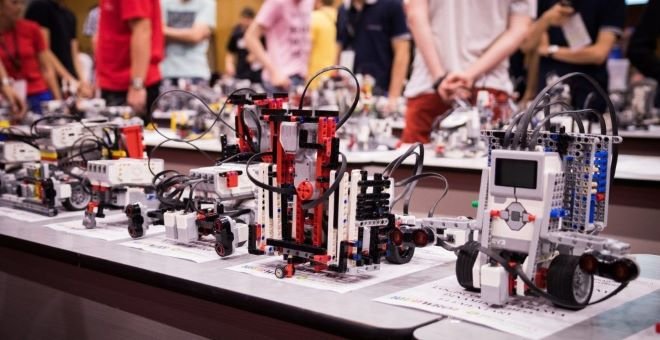
These centres are becoming innovation spaces where students learn critical thinking, teamwork, programming, electronics and engineering design while working on solutions to local challenges.
African researchers are increasingly exploring how robots can improve healthcare delivery, support precision agriculture, monitor infrastructure, assist people with disabilities and enhance manufacturing efficiency. Researchers are also developing robots that better understand African languages, cultures and social interactions, making technology more relevant to local communities rather than simply importing solutions designed elsewhere.
Universities also see robotics laboratories as important tools for entrepreneurship. Students who develop successful prototypes often receive support to transform their ideas into startups, creating employment opportunities while strengthening Africa’s growing technology ecosystem.
For employers, graduates with practical robotics and AI experience are becoming increasingly valuable as industries adopt automation and intelligent systems. This demand is expected to continue rising as governments across Africa invest more heavily in digital transformation strategies.
Nigeria is already taking additional steps by planning new Centres of Excellence dedicated to robotics, artificial intelligence, machine learning, coding and cybersecurity across selected universities through the Tertiary Education Trust Fund. The initiative aims to strengthen advanced technology education and expand research capacity nationwide.
Also Read: Why AI Skills Are Becoming Essential Across Every Profession
Back Story
The expansion of robotics laboratories in African universities reflects a broader transformation taking place across higher education.
For decades, many institutions struggled with inadequate laboratory facilities, outdated equipment and limited funding for advanced technology research. As global industries increasingly embraced automation, artificial intelligence and robotics, African universities recognised the need to modernise their programmes to remain competitive.
Governments, international organisations, universities and private sector partners have responded by investing in specialised laboratories, research centres and innovation hubs focused on emerging technologies.
These investments are not only intended to improve classroom learning but also to ensure that African graduates can contribute to solving local problems using homegrown technological solutions.
Although challenges such as funding, reliable electricity, access to modern equipment and skilled instructors still exist, the momentum continues to grow. New partnerships between universities, technology companies and international research organisations are helping to bridge these gaps while exposing students to global standards of robotics education.
The Future Looks Increasingly Promising
The rise of robotics laboratories signals that African universities are no longer content with producing graduates who only understand technology in theory. Instead, they are creating environments where students can experiment, innovate and develop practical solutions with global relevance.
For countries like Nigeria, where millions of young people are entering the workforce each year, this shift could prove significant. Universities that successfully integrate robotics, artificial intelligence and automation into teaching and research may become important drivers of industrial growth, technological innovation and economic diversification.
While Africa still faces infrastructure and funding challenges, the increasing number of robotics laboratories across the continent suggests that higher education is entering a new era. Students are gaining access to tools that prepare them for future careers, researchers are tackling African challenges with locally developed technologies, and universities are positioning themselves as active contributors to the continent’s digital transformation rather than passive observers.