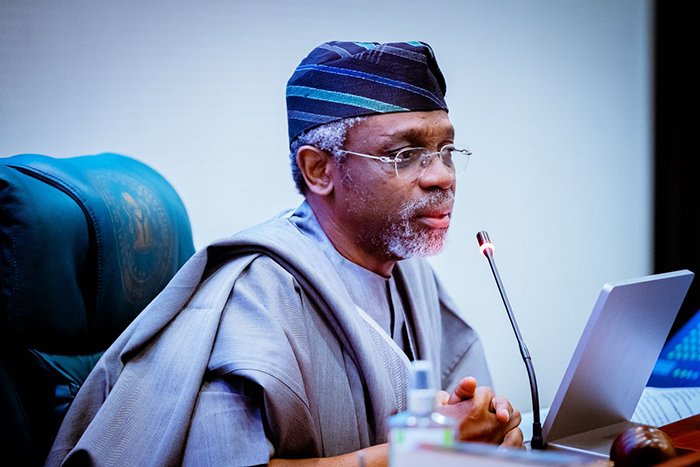

The Presidency has called on Nigerians to contribute their perspectives regarding the proposed creation of state police, announcing that the public submission window for the National Policing Bill closes at 5:00 p.m. on Thursday, August 13, 2026.
The Chief of Staff to the President and Chairman of the Presidential Working Group on the National Policing Bill, Femi Gbajabiamila, disclosed this on Wednesday, explaining that the consultative process aims to incorporate the practical insights and professional expertise of citizens into the draft legislation.
He noted that the public feedback will be vital in tackling challenges related to civilian oversight, officer misconduct, political interference, and inter-agency intelligence sharing between federal and state police structures.
He emphasized that the consultation process is not a replacement for the legislature, noting that the National Assembly retains full authority to review, amend, accept, or reject the proposed legislation once transmitted.
Gbajabiamila urged public participation, particularly regarding strategies to shield law enforcement from political interference, mechanisms for investigating severe misconduct, and protocols for inter-jurisdictional intelligence sharing between federal and state forces.
He further stressed that state police operations must adhere strictly to constitutional standards, human rights principles, and the rule of law within their respective domains.
Additionally, he stated that the proposed regulatory framework must ensure officers are properly recruited, trained, equipped, and supervised, while guaranteeing citizens access to transparent complaint and oversight mechanisms.
He, however, stressed that the reform must protect citizens from abuse regardless of their political affiliation.
Constitutional Provisions
Clarifying the legislative process, Gbajabiamila explained that establishing state police requires a constitutional amendment, as Section 214 of the current constitution establishes the Nigeria Police Force as the nation’s sole law enforcement agency.
He noted that while both chambers of the National Assembly have passed proposed constitutional amendments establishing Federal and State Police Services, the legislative procedure remains underway.
Gbajabiamila added that before the amendment can be submitted for presidential assent, the National Assembly must complete the remaining procedural steps and transmit the bill to the state Houses of Assembly, where it requires ratification by at least 24 of the 36 state legislatures.
He emphasized that until all necessary legislative steps are completed, the establishment of state police remains a proposal.
Gbajabiamila also noted that alongside the constitutional amendment, the Presidential Working Group is actively drafting the National Policing Bill.
He clarified that even if both the constitutional amendment and the National Policing Bill are enacted into law, state police forces will not be automatically established across every state.
According to Gbajabiamila, the Nigeria Police Force will maintain responsibility for policing in any state that is not yet ready to establish its own independent force.
Backstory…
Recall that the presidency previously set a seven-week deadline for the preparation of the proposed state police bill.
On Monday August 3, Femi Gbajabiamila, chairman of the presidential working group on the national policing bill, stated that President Bola Tinubu will receive the executive bill for perusal on September 3, 2026.
Although the State Police bill has faced tangible criticism from top political figures and opposition including, Peter Obi, Kwankwaso and others, the government continues to forge ahead.
Read Also: State Police Bill- To Be Set For Tinubu’s Review September 3- Gbajabiamila