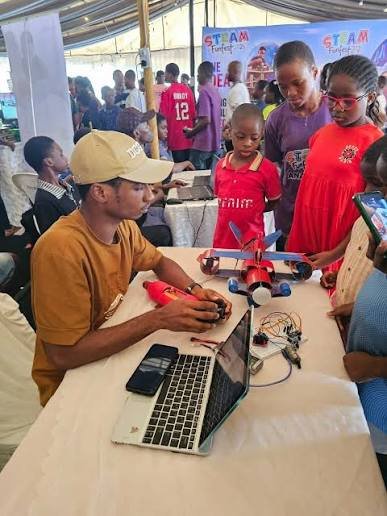

Anambra State is set to give secondary school students and young people access to free computer training as part of a new effort to strengthen digital literacy and prepare young residents for opportunities in a technology-driven economy.
The one-month programme, announced by Anambra State First Lady, Dr Nonye Soludo, through the Healthy Living with Nonye Soludo Initiative, is scheduled to begin on August 24, 2026. Classes will take place three times a week at the Healthy Living Complex in Udoka Housing Estate, Awka.
The initiative is targeted at secondary school students and other young people who want to improve their basic computer knowledge. According to details released by the organisation, the programme will focus on foundational computer skills while helping participants develop the confidence to use technology more effectively.
This is significant at a time when computer literacy is becoming increasingly important in education, employment and entrepreneurship. For many young Nigerians, having access to a computer and understanding how to use digital tools can make the difference between simply consuming technology and being able to use it productively.
The First Lady’s initiative therefore comes at a practical point for young people who may not otherwise have access to structured computer training. The organisers said the programme is designed to expose participants to useful digital knowledge early and improve their ability to participate in the digital economy.
What the Free Computer Training Will Offer
The Anambra computer training programme is centred on basic digital skills rather than advanced programming. This makes it particularly relevant to students and young people who are still developing their computer literacy.
Participants are expected to spend one month in training, with classes organised three times every week. The programme is free, removing one of the common barriers that prevent young people from gaining access to formal technology training.
The organisers have also linked the programme to broader goals around youth empowerment and human capital development. By building foundational skills, the initiative could help participants become more comfortable with computers for schoolwork, communication, online research and future professional activities.
The training also reflects a wider shift in the skills young Nigerians need. Employers increasingly expect applicants to have at least basic digital competence, while many educational resources, job opportunities and entrepreneurial tools now depend on internet-connected devices.
For secondary school students, early exposure could also help them understand technology as more than a social or entertainment tool. With the right follow-up opportunities, foundational computer knowledge can provide a starting point for learning areas such as coding, digital marketing, graphic design, data analysis and other technology-related fields.
Anambra’s Wider Push for Digital Skills
The latest programme is not an isolated digital education effort in Anambra. The state has been pursuing a broader technology and innovation agenda through the Solution Innovation District, which runs several digital skills initiatives for residents.
According to the Solution Innovation District, its programmes include Level-Up Anambra, Code Anambra, SheCodes Anambra and KidsCode Anambra. The programmes cover areas such as web development, UI/UX design, artificial intelligence and machine learning, cloud computing, digital marketing, mobile app development and cybersecurity.
The state also promotes the 1 Million Anambra Digital Tribe initiative, which aims to provide free digital skills training to one million residents. The programme is designed to improve digital inclusion, strengthen employability and support entrepreneurship across the state.
This broader approach is important because basic computer literacy can serve as the entry point into more specialised technology careers. Previous state programmes have already included training in advanced areas, including software development and artificial intelligence.
Back Story: Why Digital Literacy Matters for Anambra’s Youth
Anambra’s latest computer training initiative comes against the background of a growing need for digital skills among Nigerian students and young workers. Technology is increasingly woven into education, business, communication and access to employment, making digital literacy an important part of modern education.
The state has previously partnered with technology organisations on programmes designed to train young people in areas including web development, cloud computing, artificial intelligence, cybersecurity, digital marketing and product design. One Code Anambra programme, for example, was structured as a four-month training initiative with practical learning and project work.
Anambra has also introduced digital learning opportunities specifically for younger learners. Its KidsCode Anambra programme is designed to introduce children and teenagers to coding, robotics, game development, web design and digital literacy.
The new free computer training therefore fits into a larger effort to build digital capacity across different age groups.
For the young people who take part in the August programme, the immediate benefit may simply be learning how to use a computer confidently. But the longer-term value could be much greater if those foundational skills encourage participants to pursue further education, develop employable digital skills and explore opportunities in Nigeria’s growing digital economy.