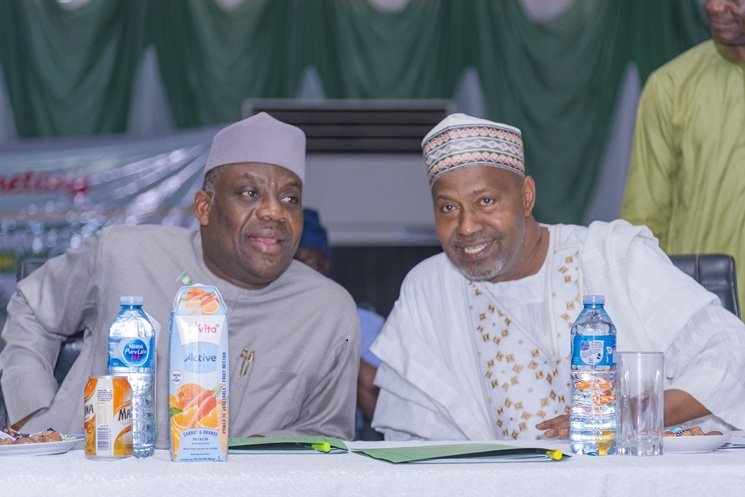

The Federal Government has called on Nigerian universities to embrace artificial intelligence (AI) and digital technologies while improving governance, accountability and compliance with established educational standards.
The Minister of State for Education, Professor Suwaiba Ahmad, made the call on Tuesday, October 13, 2026, during the opening of a two-day retreat organised by the National Universities Commission (NUC) for vice-chancellors and other stakeholders in Abuja.
The meeting, scheduled for October 13 and 14 at the NUC headquarters, focuses on improving regulatory compliance, institutional leadership, governance and strategic partnerships across Nigeria’s university system.
According to a report by PUNCH Newspapers, Ahmad said changes in global higher education, including AI, digital learning, data analytics and new approaches to research, require institutions to review their policies and practices.
She stressed that universities must prepare students for an increasingly technology-driven world without compromising academic integrity, ethical standards or personal data protection.
Universities must balance AI adoption with academic integrity
The minister’s position reflects a growing challenge for Nigerian higher education institutions: how to take advantage of emerging technologies while preserving the credibility of academic qualifications.
AI tools can support teaching, research, data analysis and administrative processes. However, their adoption also requires clear rules on acceptable use, the protection of sensitive information and the integrity of students’ academic work.
Ahmad urged universities to develop appropriate institutional policies to guide the use of AI, rather than allowing its application to develop without adequate oversight.
She also challenged vice-chancellors to improve transparency in financial management, procurement, staff recruitment, promotions, admissions and examinations.
According to the minister, university leaders should establish clear institutional goals, set measurable performance targets and create environments that encourage academic excellence.
She maintained that universities must look beyond awarding degrees to become centres of knowledge creation, innovation, character development and industrial transformation.
Ahmad further called for closer collaboration between university managements and the NUC, noting that the challenges confronting the sector require coordinated action rather than isolated institutional decisions.
She expressed the expectation that the retreat would produce practical recommendations, supported by a communiqué and a monitoring mechanism to track implementation.
Also Ready: NUC Introduces New Monitoring Measures to Strengthen University Standards in Nigeria
NUC advances digital reforms and research partnerships
The Executive Secretary of the NUC, Professor Abdullahi Yusufu Ribadu, disclosed that the commission was developing a National AI Roadmap and Policy Framework specifically for the Nigerian University System.
The proposed framework is expected to guide the responsible integration of artificial intelligence into teaching, learning, research and university administration.
Ribadu also announced that the commission had deployed its e-NUC platform to automate operations and was developing accreditation software to improve transparency, data management and quality assurance.
He said the NUC was strengthening its oversight mechanisms through measures such as post-matriculation monitoring and carrying-capacity visits. Post-accreditation monitoring visits are also being prepared to help ensure that universities continue to meet required standards after programme accreditation.
The commission is equally working to improve research collaboration and commercialisation. Ribadu said the ACE Alliance platform had been launched to unite Nigeria’s 20 African Centres of Excellence and encourage research partnerships around national development priorities.
He identified sectors including agriculture, healthcare, education, manufacturing, technology and environmental management as areas where stronger university-industry collaboration could deliver practical results.
However, he cautioned that digital transformation involves more than purchasing equipment and software. Adequate funding, cybersecurity, institutional preparedness, suitable policies and staff capacity are also essential.
Back Story: NUC pursues broader university reforms
The latest call builds on the NUC’s wider reform programme. In July 2026, the commission announced Blueprint 2.0, a strategic framework designed to improve university education, governance, research productivity and international competitiveness.
According to the NUC’s official announcement, the blueprint covers curriculum development, infrastructure, staffing, graduate employability, funding, information and communications technology, and innovation.
Ribadu acknowledged that inadequate funding remains a major constraint and urged institutions to explore partnerships with private companies, alumni associations and development partners, provided such arrangements comply with regulatory requirements.
For Nigerian universities, the challenge is now to turn these policy commitments into measurable improvements. Responsible AI adoption, stronger oversight and better research partnerships could help institutions improve learning outcomes and graduate employability, but implementation will determine whether these ambitions translate into lasting progress.
Also Read: Africa Can Lead the World by Building Ethical AI Education Standards