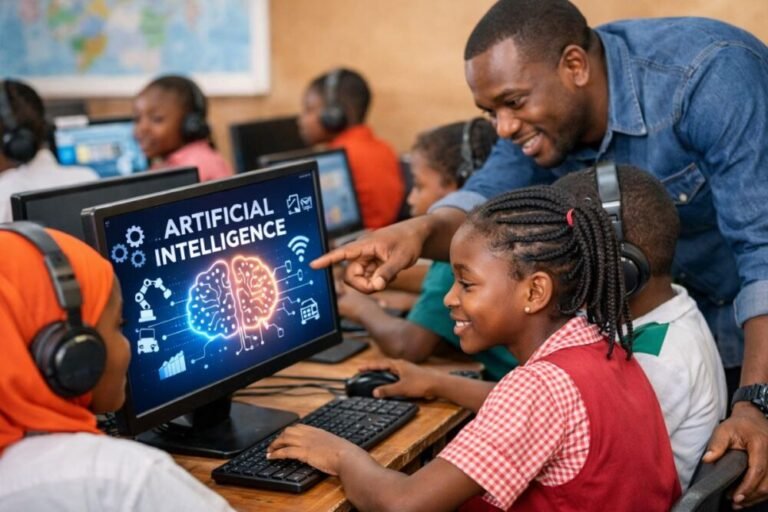
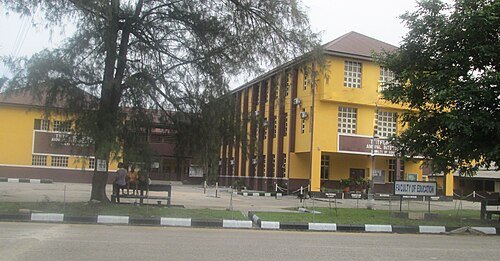
Ignatius Ajuru University of Education (IAUE), Rivers State, has strengthened its push towards technology-driven education with the inauguration of a new Centre for Artificial Intelligence.
The centre, known as the Ignatius Ajuru University of Education Centre for Artificial Intelligence (IACAI), was inaugurated on Tuesday, August 18, 2026, at the university’s main auditorium in Port Harcourt.
Rivers State Commissioner for Education, Dr Peters Nwagor, who was represented by the Permanent Secretary of the Ministry of Education, Dr Mina Tele Ikuru, described the centre as an important step towards preparing students for a technology-driven future.
According to reports from the inauguration, the centre is expected to support AI-driven research, personalised learning, data analytics and digital administration.
For a university whose primary responsibility is the training of educators, the development is particularly significant. Artificial intelligence is already changing how students access information, how teachers prepare learning materials and how institutions manage academic activities.
Nwagor, however, stressed that AI should support educators rather than make them irrelevant. His position was clear: technology should assist the teacher, not replace the teacher.
Also Read: Abia TechFlock 2026 Puts AI, Skills and the Future of Work in Southeast Nigeria Spotlight
Why IAUE’s AI Centre Matters to Nigerian Students
The opening of the centre comes at a time when artificial intelligence is moving rapidly from technology companies and research laboratories into classrooms, offices and public institutions.
For Nigerian students, the shift presents both an opportunity and a challenge.
Students who understand how to use AI responsibly could have an advantage in research, data analysis, programming, content development, entrepreneurship and other areas of the economy. At the same time, universities have to ensure that students do not become overly dependent on AI tools at the expense of independent thinking and genuine learning.
That balance will be particularly important at IAUE because the institution trains future teachers who will eventually introduce technology to younger learners.
The university’s Vice-Chancellor, Professor Okechukwu Onuchukwu, noted during the inauguration that AI is already being applied across sectors including education, healthcare, agriculture, finance, transportation and manufacturing.
The centre could therefore become more than a facility for students studying computer-related subjects. Its wider value may come from encouraging researchers and students in different disciplines to explore how AI can address problems relevant to Nigeria.
The university’s official website describes IAUE as an institution focused on strengthening its academic programmes in line with National Universities Commission requirements and global best practices.
Nigerian Universities Are Entering a New AI Race
IAUE’s decision is part of a broader movement within Nigerian higher education.
Across the country, universities are increasingly looking at artificial intelligence as both an educational tool and a strategic area for research and skills development. The development reflects a wider recognition that graduates entering today’s labour market need more than traditional academic qualifications.
The Digital Education Council’s 2026 global survey, which drew responses from more than 45,000 students and faculty members across 35 countries, found that AI use in higher education is growing, although meaningful classroom integration remains uneven. Only 15 per cent of students surveyed said AI was integrated into many of their courses, while 43 per cent said they encountered it in only a few courses.
This offers an important lesson for Nigerian universities. Simply acquiring AI tools or opening AI centres will not automatically produce better education.
Institutions need lecturers who understand the technology, students who can use it critically and policies that address academic integrity, privacy and responsible AI use.
IAUE’s new centre therefore arrives at a critical point. Its success will ultimately depend on what students and researchers are able to build, investigate and learn through it.
Back Story: IAUE’s Journey From Digitisation to Artificial Intelligence
The establishment of IACAI is also connected to IAUE’s broader digital transformation.
During the inauguration, the university launched a book documenting its 10-year journey in information technology, automation and digitisation from 2015 to 2025.
The university said the transformation included the automation of several academic and administrative processes, including admissions, clearance, biometric verification, computer-based testing, e-campus services and digital certification.
The initiative was presented as evidence of the institution’s transition from largely manual processes towards a more technology-driven university system.
The Pro-Chancellor and Chairman of Council, Chief Chinyere Emmanuel Igwe, described the latest development as part of the responsibility of universities to prepare for and help shape the future.
Dr Kingsley Theophilus Igulu, Acting Director of the new AI Centre, said the centre represents IAUE’s response to emerging national policies and developments around artificial intelligence in higher education.
The timing is significant. AI is no longer simply something Nigerian universities can discuss as a future possibility. Students are already using generative AI tools, employers are beginning to demand AI-related skills, and institutions are being forced to rethink teaching, assessment and research.
IAUE’s new centre could therefore become an important test of how Nigerian universities respond to this transition.
If properly supported, IACAI can help move students beyond simply using AI to understanding it, questioning it and developing solutions with it.
That distinction matters. Nigeria does not only need graduates who know how to ask AI a question. It needs graduates who can identify real problems, use technology responsibly and create solutions that work in the Nigerian environment.
Also Read: World Bank Opens 2027 Africa Fellowship Applications for Nigerian Scholars