As Nigeria’s technology ecosystem continues to expand, a quieter challenge remains: not everyone is getting an equal opportunity to participate in it.
For many young people with disabilities, the barriers go beyond access to a smartphone or computer. Limited digital training, inaccessible learning environments, inadequate assistive technology and poor awareness can make it difficult to acquire the skills needed to study, work or build a business online.
This is the gap that TechAble, an initiative of Nigeria-based Deafzion Foundation, is trying to address.
Established in 2024, TechAble focuses on digital inclusion, youth empowerment and technology education for persons with disabilities and young people in underserved communities. Its approach combines digital skills with artificial intelligence, employability training, mentorship and advocacy for more accessible technology ecosystems.
The initiative is currently active in Nasarawa State, Abuja and Plateau State, with ambitions to expand into other Nigerian states and selected African countries through partnerships.
For TechAble’s leadership, the problem is not that young people with disabilities lack potential. Rather, many existing technology programmes were not designed with their needs in mind.
Also Read: AI Could Become Africa’s Biggest Education Opportunity Yet
How TechAble Is Using AI and Digital Skills to Create Opportunity
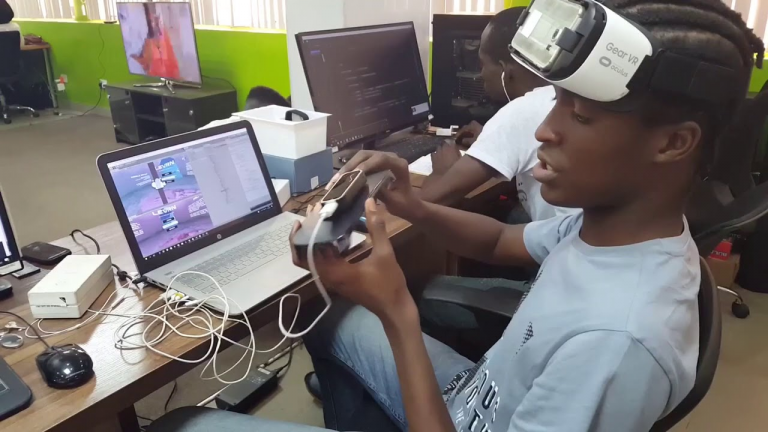
TechAble’s training model is built around practical skills that can translate into education, employment and entrepreneurship.
Its programmes cover digital literacy, data and AI fundamentals, problem-solving, leadership and employability, while also introducing participants to assistive technologies and more inclusive approaches to learning. The initiative says accessibility is embedded into its training rather than treated as an afterthought.
That distinction is important.
A conventional digital training programme may teach someone how to use a particular software or online platform. For a learner with a disability, however, the question may first be whether the platform itself can be accessed effectively.
TechAble’s approach attempts to address both sides of the equation: giving learners relevant technology skills while helping them navigate the accessibility barriers that can prevent those skills from becoming useful opportunities.
The organisation says it has already trained more than 40 young people with disabilities across Nigeria in digital and AI skills. It has also established partnerships with organisations including LEAP Africa, Dow, Windows on America and state disability agencies.
Its wider vision is ambitious. TechAble says it wants to empower more than 1,000 persons with disabilities by 2030 through hands-on workshops, bootcamps, internships and mentorship.
Why AI Could Change the Disability Technology Conversation
Artificial intelligence is creating new possibilities for accessibility, but it could also deepen existing inequalities if access remains limited.
AI-powered speech recognition, image descriptions, transcription, voice interfaces and other tools can make digital environments easier to navigate for people with different disabilities. TechAble argues that these technologies could become powerful accessibility tools if persons with disabilities are given the knowledge and opportunity to use them.
The organisation’s position is particularly relevant as businesses and employers across Africa increasingly adopt AI.
Without digital skills, people who are already disadvantaged could be left further behind as the workplace changes. But with the right training, AI can potentially help people work more independently, access information faster and participate in digital careers that were previously difficult to enter.
TechAble’s work therefore goes beyond teaching people how to use AI tools. It is also about preparing young people with disabilities to become active participants in the digital economy.
The initiative’s experience has highlighted another important lesson: training alone is not enough. Its work has increasingly placed emphasis on mentorship, internships, freelance opportunities and employment pathways, because technical certificates do not automatically create jobs or income.
Also Read: Africa’s AI Skills Race: Why Training 2 Million People Could Change the Continent’s Digital Economy
Back Story: Nigeria’s Disability Inclusion Challenge
TechAble emerged from Deafzion Foundation’s broader work around disability rights, inclusive education, leadership and digital empowerment. The foundation is based in Keffi, Nasarawa State, and describes digital empowerment as one of its core programme areas.
The organisation’s Nigerian roots are also reflected in TechAble’s activities. In August 2025, it organised a one-day TechAble Bootcamp at the Centre for Disability Studies, Nasarawa State University, Keffi. The programme focused on empowering young people with disabilities through digital skills, AI tools and assistive technology knowledge.
The initiative has since continued building its inclusion agenda through fellowship and community activities. Its TechAble Digital Inclusion Fellowship, for example, is designed to give young changemakers the skills and tools to promote accessibility, inclusion and digital equity in their communities.
There are still significant obstacles. TechAble identifies funding limitations, the cost of accessibility, infrastructure challenges in underserved communities and low awareness of disability-inclusive technology education as its major challenges.
Yet the bigger opportunity may lie in changing how Nigeria thinks about disability and technology.
Young people with disabilities should not only be viewed as beneficiaries of digital programmes. They can become developers, designers, entrepreneurs, freelancers, educators and technology leaders when the systems around them are designed to allow them to participate.
That is ultimately what makes TechAble’s approach noteworthy. It is not simply trying to put more people in front of computers. It is attempting to make Nigeria’s growing digital economy more accessible to people who have historically been left outside it.
If the initiative can scale its training, partnerships and employment pathways, its impact could extend beyond individual learners and contribute to a more inclusive technology workforce in Nigeria and, eventually, across Africa.