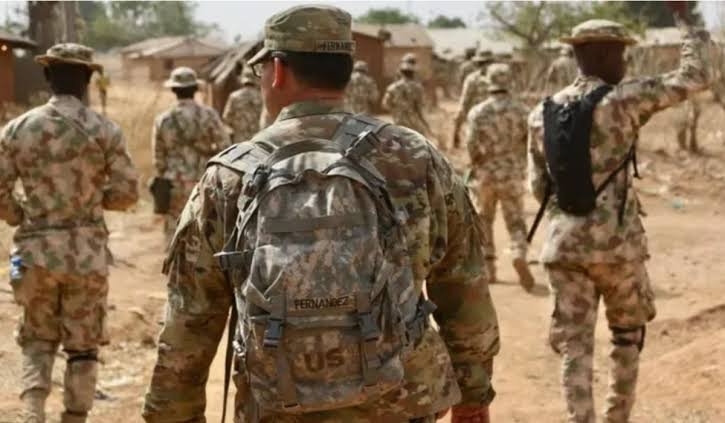

The Pentagon is preparing to withdraw approximately 200 U.S. troops deployed to Nigeria earlier this year to support counterterrorism efforts against Islamist militants.
According to a report published by The New York Times on Thursday, American and Nigerian officials noted that the relatively small contingent delivered outsized results during its deployment.
Citing U.S. military sources, the report indicated that while the primary force is slated to exit by late September, small teams of intelligence analysts and trainers will remain in the country on an ongoing basis.
U.S. officials reportedly added that the Nigerian deployment established a successful framework for future military operations across the African continent.
Following the May operation that killed ISIS second-in-command Abu-Bilal al-Minuki in the Lake Chad Basin, US Africa Command (AFRICOM) chief Dagvin Anderson said the US had withdrawn a significant number of its forces from Nigeria.
Anderson said the operation had severely weakened ISIS’s leadership in Nigeria and globally. He added that Nigeria had remained “very active” since the operation, working to eliminate the militants’ ability to sustain their operations.
The AFRICOM chief said the United States and Nigeria would continue to share intelligence.
Read Also: US Troops in Nigeria As Trump Approves Military Support Against Terrorism
Backstory…
This came weeks after the United States and Nigeria held their second round of talks in Washington under a joint working group focused on protecting Christian communities in Nigeria’s Middle Belt.
The two countries established the working group after President Donald Trump designated Nigeria a Country of Particular Concern (CPC) over allegations of Christian persecution and genocide.
The allegations also prompted greater US security involvement in Nigeria.
However, despite these efforts and increased security cooperation, insecurity has continued to worsen, with terrorist attacks, banditry and kidnappings remaining major challenges across several parts of the country.
The Nigerian government has consistently rejected single-cause explanations for its security challenges, maintaining that the country’s violence stems from a complex, multi-layered crisis.
Confirming this assessment, Ladd Serwat, senior Africa analyst at the Armed Conflict Location & Event Data Project (ACLED), told TheCable that actions by Islamist terrorist groups “constitute only a small proportion of the overall violence” nationwide.
Meanwhile, this move comes just few days after AFRICOM confirmed efforts to improve security cooperation between the two nations, US Marines have started training Nigerian troops in combat casualty care, unmanned aircraft systems, and other military skills.
The training took place at an operating area in Bauchi State as part of a broader US-Nigeria security cooperation mission aimed at improving military capabilities, operational readiness and long-term partner capacity.
Read Also: US steps us training for Nigerian military personnel, strengthen ties