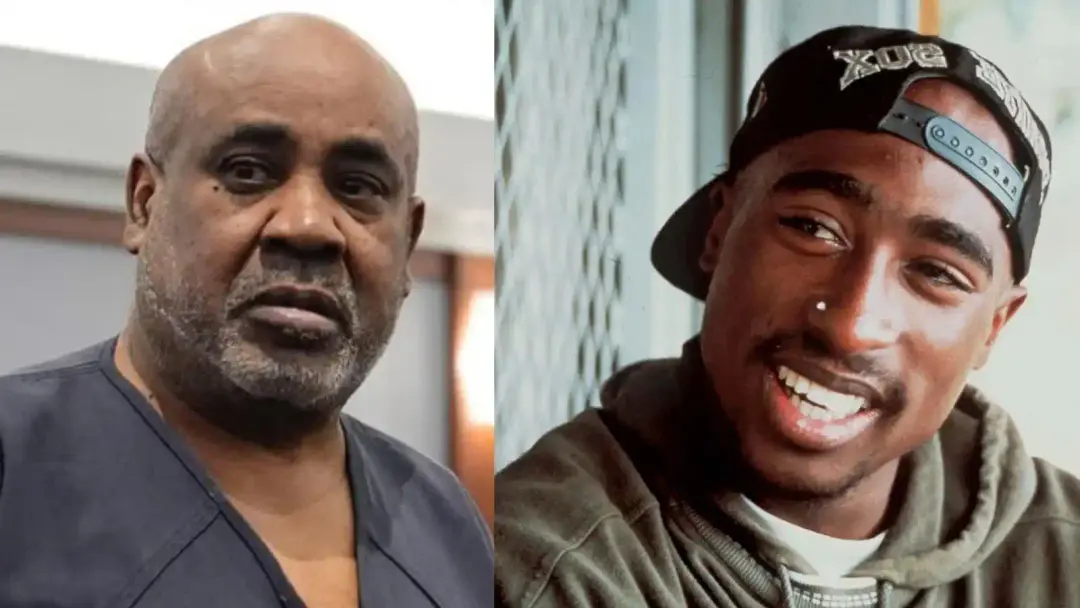

A jury in Las Vegas has convicted Duane “Keffe D” Davis of first-degree murder. The verdict closes a chapter that hip-hop fans have waited nearly three decades to see resolved. Davis, 63, orchestrated the 1996 drive-by shooting that killed Tupac Shakur. He did not pull the trigger, but the jury agreed he was responsible.
The verdict came on Monday evening, when the jury deliberated for less than three hours. They returned shortly after 4:30 pm local time. Davis sat stone-faced as the foreperson read the decision. His son covered his face with one hand. Across the courtroom, Tupac’s sister Sekyiwa “Set” Shakur cried as she hugged the prosecutors.
Chief Deputy District Attorney Binu Palal built his case on Davis’s own words. The defendant had spent years talking; he gave interviews, and he wrote a memoir. He placed himself inside the white Cadillac from which the fatal shots were fired. He described handing the gun to the back seat and called the shooting a retaliation.
The prosecution called Davis a “shot caller” and also said he acquired the weapon. They said he “went hunting” for Shakur and Death Row Records boss Marion “Suge” Knight. The hunt began after Shakur’s entourage beat up Davis’s nephew, Orlando “Baby Lane” Anderson, at the MGM Grand hours earlier.
Palal held up Davis’s 2019 memoir, “Compton Street Legend,” during closing arguments. He played an interview in which Davis encouraged people to buy the book to get the “real truth.” The defense tried to dismiss these statements as dramatized bravado, but the jury did not buy it.
Defense attorney Michael Sanft argued there was no physical evidence. No phone records placed Davis in Las Vegas that night. No surveillance footage showed him in the Cadillac. He pointed to the absence of corroboration. He asked the jury if there was any proof Davis had ever called shots before or after the shooting.
Prosecutor Marc DiGiacomo had a simple rebuttal. He pointed to a scrapbook Davis kept. It contained articles about Shakur. “This guy’s scrapbooking his murder, for God’s sake,” DiGiacomo told jurors.
The trial lasted nine days.
Twenty-four prosecution witnesses testified, but only three appeared for the defense. The case relied heavily on gang experts who described the rivalry between the South Side Compton Crips and the Mob Piru Bloods. Those gangs had aligned with competing record labels. The Crips backed Sean “Diddy” Combs’s Bad Boy Records, and the Bloods backed Suge Knight’s Death Row.
Davis is the only person still alive from the four men in the Cadillac. The driver, Terrence “T-Brown” Brown, died in 2015. DeAndrae “Dre” Smith died in 2004. Orlando Anderson, the nephew who was beaten at the MGM, died in a 1998 gang shooting. The actual shooter remains officially unidentified, though a gang affiliate testified it was likely Smith, not Anderson, who fired the fatal rounds.
The night of September 7, 1996, began with a Mike Tyson fight at the MGM Grand, which Shakur and Knight attended. Afterward, a brawl broke out in the hotel lobby as Shakur’s entourage attacked Anderson. Hours later, the white Cadillac pulled alongside Knight’s BMW at a red light on East Flamingo Road and Koval Lane. Four shots from a .40-caliber Glock struck Shakur. Two hit his chest, one hit his arm, and one hit his thigh. He died six days later, and he was just 25 years old.
For years, the case sat cold, and even the Las Vegas police faced criticism for inaction. Detectives came and went as theories of Shakur’s death multiplied. Then Davis began talking, and a 2008 proffer agreement with Los Angeles law enforcement gave him immunity for his statements. He used that freedom to build a brand where he gave interviews and wrote his book. Davis became the face of a murder he insisted he did not personally commit.
READ ALSO: BREAKING: Bandits strike Kano again, kill one, abduct APC chairman
Davis now faces life in prison as his sentencing is scheduled for October 13. He told the judge he plans to appeal and also asked for his “stuff back,” referring to property seized during his 2023 arrest. The judge ordered him to be held without bond.
The verdict brings partial closure to Shakur’s family, who have waited for more than 29 years. His music still sells millions, and his influence spans generations. But his murder remained a wound that would not heal. Now it has a name attached, and the name is Duane “Keffe D” Davis, the man who planned the killing of an icon.
From the Streets to the Courtroom: How Tupac’s Ghost Finally Got Justice
Tupac Shakur was more than a rapper. He was a poet, an actor, a revolutionary, and a martyr. Born in East Harlem to activist parents, he carried the weight of his mother’s Black Panther legacy. His music addressed racism, police brutality, poverty, and hope. He sold 75 million records worldwide. He starred in films. He dated Madonna. He was 25 years old and already a legend when the bullets found him.
His death created a void that hip-hop has never fully filled. The Notorious B.I.G. was killed six months later, cementing the East Coast-West Coast feud as the darkest chapter in rap history. Both murders went unsolved for decades. Both became obsessions for fans, journalists, and conspiracy theorists.
Duane Davis was not on most people’s radar until recently. He was a Crips gang leader from Compton. He was Tupac’s age when the murder happened. He lived in the shadows while Shakur became a global icon. Then he started talking. Maybe for money. Maybe for attention. Maybe because the secret weighed too heavy.
His 2019 memoir was the turning point. In it, he described the events of that night in detail. He admitted to being in the Cadillac. He admitted to handing over the gun. He stopped short of naming the shooter, citing “street code.” The book sold copies. It also sold him out.
Las Vegas police arrested him in September 2023. A grand jury indicted him for first-degree murder. He pleaded not guilty. He claimed the book was fictionalized. He blamed co-authors and publishers. The jury did not believe him.
The trial was a spectacle. Media from around the world packed the Clark County District Court. Fans queued for seats. Tupac’s family sat in the front row. Davis’s family sat behind him. The courtroom held the weight of 29 years of waiting.
Witnesses were reluctant. Former gang members refused to cooperate. One, Mob James, said he would have killed Tupac himself if the rapper had hit him. The culture of silence that protected Davis for decades finally cracked. But it cracked only because Davis himself had already broken it.
The verdict does not answer every question. The actual shooter is dead. The motive, while clear, still feels senseless. A casino brawl escalated into a murder. A young genius died because of pride and revenge. The waste is staggering.
For the hip-hop community, the conviction is bittersweet. Justice delayed is still justice. But Tupac is not coming back. His mother, Afeni Shakur, died in 2016 without seeing this day. His sister cried in the courtroom. The family has endured nearly three decades of pain. Now they have a verdict. It is not enough.
The case also raises uncomfortable questions about law enforcement. Why did it take so long? Why did Las Vegas police not act on Davis’s own admissions for years? Why did it require a memoir and media interviews to prompt an arrest? The system failed Tupac in 1996. It failed his family for decades. It worked only when the suspect essentially convicted himself.
For young fans discovering Tupac’s music today, the verdict is history. They were not born when he died. They know him through albums, documentaries, and TikTok clips. The trial gives them context. It shows that the violence in his lyrics was not just art. It was real. It killed him.
Watch Video Below: