
The Federal Government has unveiled a five-pillar agenda aimed at changing how Nigeria trains, supports and recognises teachers, placing innovation, mobility, artificial intelligence, inclusion and professional excellence at the heart of education reform.
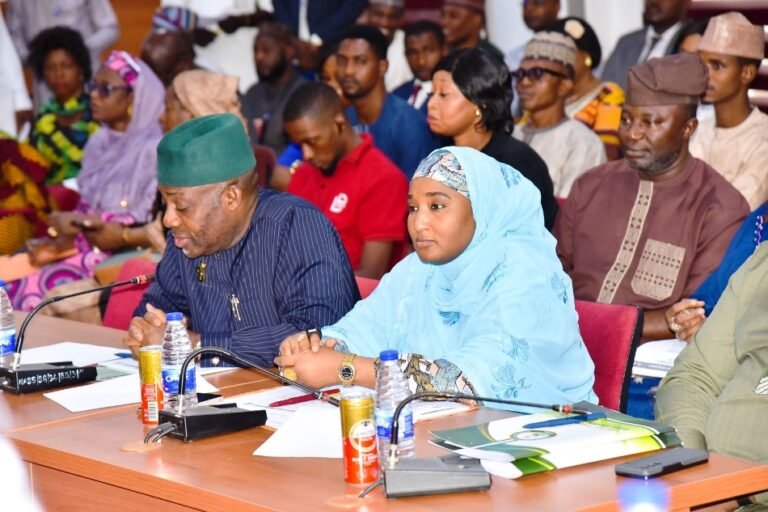
Minister of State for Education, Prof. Suwaiba Sa’id Ahmad, announced the direction in Abuja as Nigeria joined the global community to mark World Teachers’ Day on October 5, 2026. The programme is tied to the African theme, “Transforming the Teaching Profession for Africa’s Future.” The African Union’s PACTED 2026 programme has adopted the same theme for the Pan African Conference on Teachers’ Education in Eswatini.
According to the Federal Ministry of Education, the five areas are designed to strengthen teachers’ capacity while helping them respond to a rapidly changing education environment. That makes the agenda relevant to teachers, school leaders and families who depend on better learning outcomes across the country.

What the five pillars mean for teachers and schools
Innovation is the first focus. The government wants teachers to adopt creative teaching approaches, digital tools and solutions that reflect the realities of Nigerian learners. This could mean moving beyond rigid classroom methods and making learning more engaging.
Mobility is the second pillar, with greater emphasis on professional collaboration, teacher exchanges and knowledge sharing across borders. The aim is to expose educators to useful practices from other schools, states and countries and create opportunities for professional growth.
Artificial intelligence forms the third pillar. Ahmad said AI can support personalised learning, data-informed decisions and the reduction of administrative work. However, she stressed that technology should support teachers rather than replace their professional judgement.
The fourth pillar, inclusion, centres on equal access to quality education. The government says learners should not be disadvantaged because of gender, disability, income level or where they live.
Professional excellence completes the agenda. It includes continuous professional development, better welfare, supportive policies and greater recognition of teachers as leaders in education and national development.
The wider continental context reinforces the urgency. UNESCO says teachers who are well trained, supported and valued are essential to quality education, while noting a global shortage of 44 million teachers, with major pressures in sub-Saharan Africa.
Also Read: Why Artificial Intelligence Is Making This One of the Most Important Eras for Teachers
FG digitises teachers’ awards as reform expands
Alongside the five-pillar agenda, the Federal Ministry of Education has digitised the selection process for the 2026 President’s Teachers’ and Schools Excellence Awards.
The ministry said the technology-driven process replaces manual procedures and is designed to improve transparency, accountability, documentation and confidence in the selection of award recipients. State Ministries of Education were involved in nominations, while the federal ministry coordinated the process with the Nigeria Union of Teachers.
Fourteen awardees are expected to be recognised during the 2026 celebration. The top three teachers will receive major prizes, while other award recipients will receive laptops. Outstanding school performance will also be recognised.
The reforms also come as Nigeria continues to strengthen professional regulation. The Teachers Registration Council of Nigeria says it is responsible for setting professional standards, registering and licensing teachers and promoting continuous professional development. Its national register currently records more than 1.63 million certified teachers.
Back Story
World Teachers’ Day is observed every October 5 and commemorates the 1966 ILO/UNESCO Recommendation concerning the Status of Teachers. UNESCO says the 2026 observance marks 60 years since that recommendation, with renewed attention on teachers’ professional, social and material status.
Nigeria’s five-pillar agenda fits into a wider African effort to rethink the teaching profession as technology, migration, inclusion and changing labour-market demands reshape education. The African Union’s PACTED 2026 framework places teachers at the centre of Africa’s education transformation agenda.
The challenge now is implementation. Nigerian teachers need more than speeches and annual awards. They need practical training, reliable digital infrastructure, fair support, strong school leadership and policies that recognise the realities of their classrooms.
The success of the Federal Government’s agenda will ultimately be measured not by how well the pillars sound on paper, but by whether they improve the daily experience of teachers and the learning outcomes of Nigerian children.
Also Read: Why Schools Should Lead AI Education Instead of Banning Technology