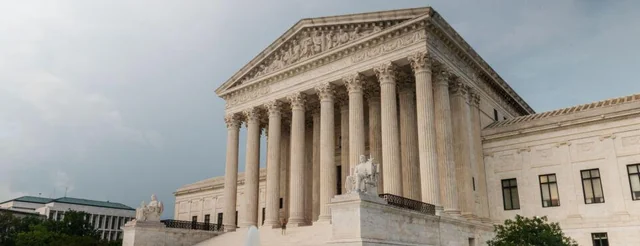

The United States Supreme Court is set to hear a major legal dispute involving Catholic preschools in Colorado and the state government over access to public education funding and the enforcement of anti-discrimination policies.
The case, scheduled for oral arguments on November 3, 2026, centres on whether religious schools receiving public funds can be required to admit children regardless of their sexual orientation or gender identity, including children from same-sex families.
The dispute, known as St. Mary Catholic Parish v. Roy, involves two Catholic parishes operating preschools under the Archdiocese of Denver. The institutions argue that Colorado’s non-discrimination requirements conflict with their religious beliefs, particularly their teachings on marriage, sexuality and gender.
At the heart of the disagreement is Colorado’s Universal Preschool Programme, which allows families to access publicly funded early childhood education at participating public, private and religious institutions.
Under the programme, eligible children receive up to 15 hours of free preschool education weekly. However, participating institutions must agree to provide equal admission opportunities without discrimination based on factors including race, religious affiliation, sexual orientation and gender identity.
The Catholic institutions maintain that the conditions interfere with their constitutional right to practise their religion freely. They argue that the state should not force religious organisations to abandon established religious teachings as a condition for receiving government assistance.
Colorado, however, maintains that its requirements apply equally to all participating institutions, regardless of their religious or non-religious identity.
According to Reuters’ report on the Supreme Court dispute, the case could have significant implications for the relationship between religious freedom, public funding and LGBTQ protections across the United States.
Also Read: OpenAI Fires Three AI Safety Researchers Amid Risk Dispute
Catholic Schools Challenge Colorado’s Funding Conditions
The Catholic parishes argue that Colorado has effectively excluded them from a public benefit because of their religious convictions.
Their position is that religious schools should have the freedom to maintain admission policies consistent with their beliefs while enjoying the same opportunities for government funding available to other private educational institutions.
The schools are also seeking an exemption from the state’s requirements, particularly provisions that could compel them to admit children whose family circumstances conflict with their religious understanding of marriage and sexuality.
Colorado has rejected the argument, insisting that the institutions remain eligible to participate in the programme if they comply with its established rules.
The state argues that public funding comes with responsibilities and that institutions receiving taxpayer money should provide equal opportunities to eligible children.
The disagreement has attracted attention from religious freedom advocates and LGBTQ rights organisations, with both sides warning about the wider consequences of the court’s decision.
Supporters of Colorado’s position believe granting religious schools exemptions could weaken protections for children and families who already experience discrimination.
Meanwhile, religious liberty advocates argue that denying funding to institutions because of their religious practices could amount to unconstitutional government interference.
Supreme Court Case Could Reshape Religious Freedom Protections
The Supreme Court’s consideration of the dispute comes amid a series of decisions examining whether religious institutions should have equal access to government-funded education programmes.
One important precedent is the 2022 ruling in Carson v. Makin, in which the Supreme Court held that Maine could not exclude religious schools from a tuition assistance programme simply because they provided religious instruction.
That decision strengthened the position of religious institutions seeking access to public education funding.
However, the current Colorado dispute raises a different question: whether governments can impose non-discrimination conditions on religious schools that voluntarily participate in publicly funded programmes.
Another important legal precedent is the 1990 case Employment Division v. Smith. The ruling established that neutral laws applying generally can remain enforceable even when they incidentally affect religious practices.
The Catholic schools argue that Colorado’s policy should not be treated as a neutral requirement because, in their view, the state allows certain exceptions while refusing to accommodate their religious convictions.
The state maintains that its programme’s requirements are designed to promote equal access rather than target religious institutions.
As the National Constitution Center explains in its analysis of the Supreme Court’s 2026 term, the case raises important questions about how existing First Amendment protections apply to religious institutions seeking public benefits.
Back Story: How Colorado’s Preschool Programme Sparked the Legal Battle
Colorado introduced its Universal Preschool Programme in 2023 to expand access to early childhood education by providing publicly funded preschool opportunities to eligible four-year-olds.
The programme allows families to choose from participating public and private providers, including religious institutions. Its non-discrimination requirements are intended to ensure that children have equal opportunities to access the educational benefit.
However, two Catholic preschools affiliated with the Archdiocese of Denver, St. Bernadette in Lakewood and St. Mary in Littleton, challenged the conditions.
The institutions argued that complying with the requirements would undermine their religious teachings and prevent them from maintaining admission policies consistent with Catholic doctrine.
The parishes subsequently took the matter to court, but the United States Court of Appeals for the Tenth Circuit ruled against them in September 2025, allowing Colorado to maintain its funding conditions.
The Supreme Court agreed to hear the appeal in April 2026, placing the dispute before the country’s highest judicial authority.
According to UConn Today, the outcome could influence how states structure funding arrangements involving religious educational institutions.
The justices are expected to examine the competing constitutional arguments during Tuesday’s hearing, with a final decision anticipated before the conclusion of the court’s current term in 2027.