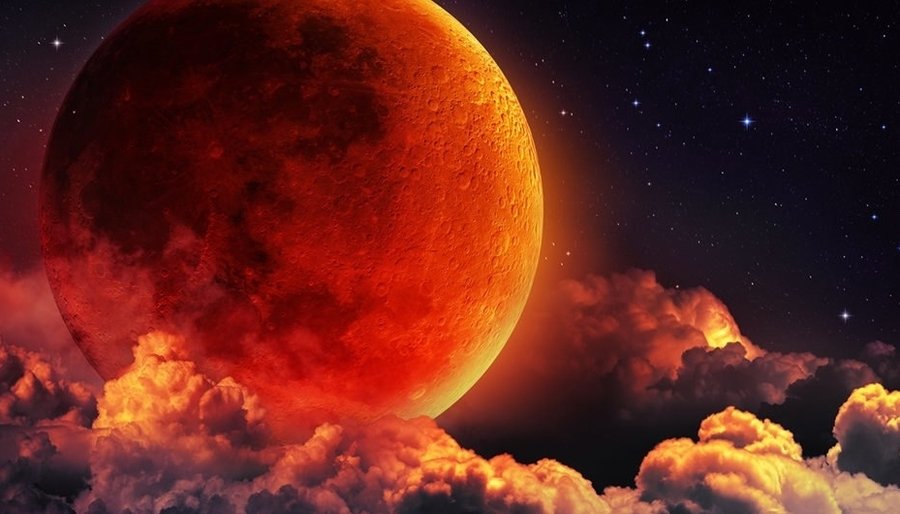

A lunar eclipse will be visible across Africa and other parts of the world, including the United States, according to the National Aeronautics and Space Administration (NASA).
Known as a “blood moon,” the eclipse will begin on Friday at 9:23 p.m. ET, when the Moon enters the outer edge of Earth’s shadow. At 10:33 p.m. ET, Earth’s shadow will begin covering the lunar surface, creating the appearance of a “bite” on the Moon.
The eclipse will reach its peak at 12:12 a.m. ET, when Earth’s shadow will cover more than 96% of the lunar surface.
The event will end at 3:01 a.m. ET when the Moon moves beyond the outer edge of Earth’s shadow. Taking to its website, NASA wrote: “Aug. 27-28, 2026, partial in Americas, Europe, Africa, Western Asia.”
Unlike a total lunar eclipse, a small portion of the Moon will remain outside Earth’s darkest shadow. The eclipsed portion can take on a reddish or copper-colored appearance as sunlight passes through Earth’s atmosphere and is scattered and refracted, producing an effect sometimes associated with a “blood moon.”
Lunar Eclipse
Lunar eclipses occur during a full moon when the Earth aligns directly between the sun and the moon, blocking solar light from reaching the lunar surface.
While lunar eclipses take place two to three times annually on average, total lunar eclipses—where the moon is completely shrouded in Earth’s shadow—account for only 29% of these events.
During an eclipse, Earth’s atmosphere refracts sunlight around its edges rather than blocking it entirely, scattering light and casting a reddish, autumnal hue onto the moon.
According to sources, The eclipse will last more than five hours, from the beginning of the penumbral phase until its conclusion, although the deep partial phase will last much less time.
Unlike solar eclipses, lunar eclipses do not require special eye protection. Viewers will have the best experience under clear skies with an unobstructed view of the horizon, while binoculars or a telescope can provide a closer look.
Backstory…
Meanwhile, this comes just two weeks after the total solar eclipse visible in parts of Greenland, Iceland and Spain on August 12. Solar and lunar eclipses often occur in pairs because the Sun, Earth and Moon align in a similar orbital arrangement.
Read Also: Lunar Eclipse Mesmerizes Nigerians in Rare Celestial Spectacle