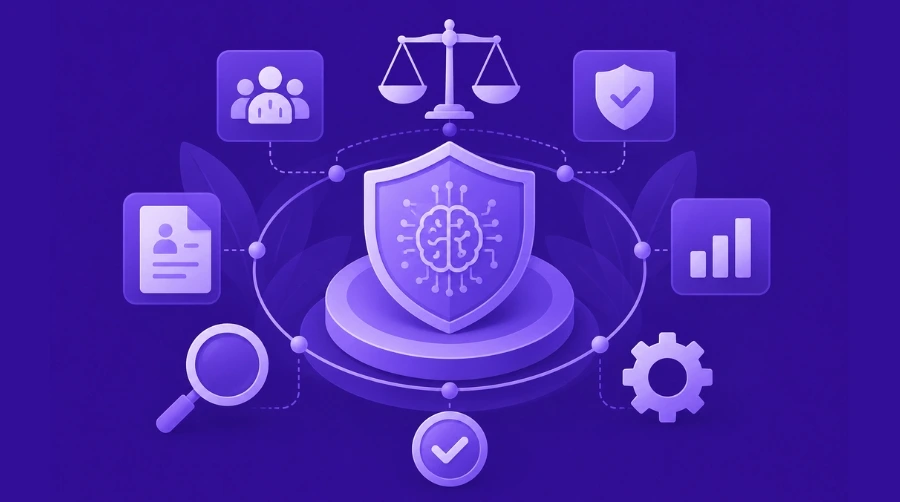

As businesses race to integrate artificial intelligence into their daily operations, many are discovering that adopting powerful AI tools is only part of the journey. The bigger challenge is ensuring these systems remain secure, accountable and aligned with business goals.
Across industries, organisations are moving beyond AI assistants that simply respond to prompts. They are now deploying autonomous AI systems, often called AI agents, that can analyse information, make decisions, execute tasks and interact with other software with little or no human intervention. While this promises significant gains in efficiency and productivity, it also introduces new risks that traditional IT policies were never designed to handle.
Technology analysts and industry experts say this shift is making AI governance frameworks a business necessity rather than an optional compliance exercise. Companies that fail to establish proper oversight risk exposing themselves to security breaches, operational failures, legal challenges and reputational damage.
Also Read: Africa’s AI Growth Could Deepen the Gap Between Bigger and Smaller Nations
Businesses Are Rethinking How AI Is Managed
For years, many organisations viewed AI governance as a collection of policies outlining how employees should use generative AI tools. That approach is rapidly becoming outdated.
Modern autonomous AI systems can access company databases, generate reports, approve workflows, communicate with customers and even trigger business processes independently. Because these systems can perform actions instead of merely providing suggestions, organisations need stronger controls to determine what an AI agent is permitted to do and how its activities are monitored.
Experts argue that governance should now extend beyond written policies. Businesses need continuous oversight throughout the entire AI lifecycle, from development and deployment to ongoing monitoring and regular audits. This includes tracking AI decisions, managing access permissions, validating outputs and ensuring humans remain accountable for critical decisions.
Analysts at Gartner note that relying solely on policy documents is no longer sufficient because autonomous AI systems operate in real time and require technical safeguards capable of enforcing governance continuously.
Another emerging concern is that organisations often apply identical governance rules to every AI system regardless of its capabilities. Industry researchers warn that treating all AI agents the same can either unnecessarily restrict simple tools or leave highly autonomous systems with excessive freedom, increasing operational and security risks.
Many organisations are therefore adopting layered governance models that classify AI systems according to their level of autonomy and potential business impact before assigning appropriate controls.
Why Governance Is Becoming a Competitive Advantage
The conversation around AI governance is no longer centred solely on avoiding regulatory penalties. Increasingly, businesses see effective governance as a way to build customer trust and improve operational resilience.
Companies investing heavily in AI want confidence that automated systems will make reliable decisions without exposing sensitive information or creating unexpected business disruptions.
Security experts also point out that AI agents should now be treated like digital employees with clearly defined identities, access privileges and responsibilities. Just as organisations carefully manage employee accounts, autonomous AI systems require strict authentication, role definitions and monitoring to prevent misuse or accidental errors.
Strong governance also helps organisations respond more effectively when problems arise. Instead of investigating AI behaviour after an incident occurs, businesses can detect unusual activity early through continuous monitoring and intervene before significant damage is done.
Many organisations are therefore creating cross-functional AI governance teams that include leaders from technology, legal, cybersecurity, compliance, risk management and business operations. This collaborative approach ensures that AI adoption supports organisational objectives while meeting ethical and regulatory expectations.
Businesses are also recognising that good governance improves investor confidence. Organisations with structured AI oversight are often better positioned to demonstrate responsible innovation, manage compliance requirements and scale AI projects with fewer disruptions.
For companies across Nigeria and Africa that are accelerating digital transformation, these lessons are becoming increasingly relevant. As more organisations introduce AI-powered customer service, financial services, healthcare solutions and educational platforms, governance will play a central role in ensuring these technologies remain safe, transparent and trustworthy.
Also Read: Why Schools Should Lead AI Education Instead of Banning Technology
Back Story
Artificial intelligence governance has evolved rapidly over the past few years alongside the explosive growth of generative AI.
Initially, governance focused mainly on responsible AI principles such as fairness, transparency and privacy. Most businesses concentrated on establishing policies to guide employee use of AI tools like chatbots and content generators.
However, the emergence of autonomous AI, often referred to as agentic AI, has fundamentally changed the conversation. Unlike earlier AI systems that simply generated recommendations, autonomous AI can independently plan tasks, make decisions and execute actions across multiple business systems.
This new capability has created fresh governance challenges involving accountability, security, regulatory compliance and operational risk. Industry surveys suggest many organisations remain unprepared for these demands despite increasing investment in AI technologies. Experts predict that businesses lacking appropriate governance structures may eventually scale back or redesign autonomous AI deployments after encountering governance failures in real-world operations.
As AI becomes more deeply integrated into everyday business processes, organisations are increasingly recognising that responsible governance is no longer a barrier to innovation. Instead, it is becoming the foundation for deploying autonomous AI with confidence while protecting customers, employees and the business itself.