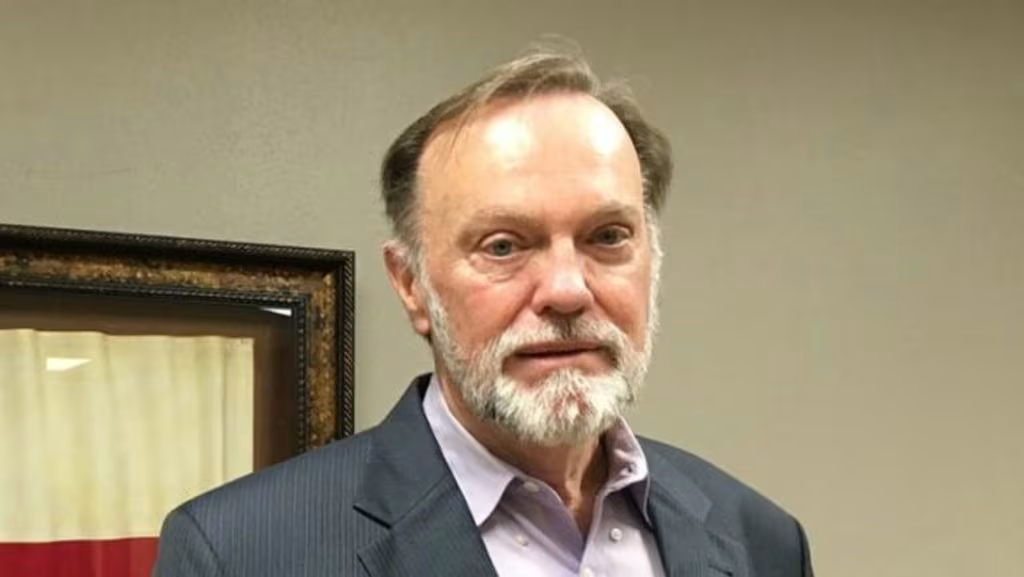

Tibor Nagy has criticised the Nigerian government over what he described as its refusal to acknowledge alleged targeted violence against Christians in the country.
For months, claims of systematic killings of Christians have continued to generate debate in Nigeria, although the government has maintained that no specific religious group is being singled out.
Nagy, however, disagreed with that position and also alleged that there were ongoing efforts in the United States to push for sanctions against US-based separatist figure Ogechukwu Nkere.
In a statement shared on X after a conversation with Nkere, Nagy described the move as part of attempts to suppress voices linked to the defunct Biafra movement.
According to him, people from the former Biafra region suffered greatly during the civil war and have yet to fully recover, adding that the government should focus on justice, security, and good governance rather than suppressing expressions of dissent abroad.
Nagy’s remarks come amid reports that Nigerian authorities are allegedly engaging with US officials over Nkere’s activities. A report by Africa Intelligence claimed that the Nigerian Financial Intelligence Unit was seeking cooperation with US authorities regarding possible sanctions against Nkere.
The report also highlighted Nkere’s lobbying efforts in Washington, where he has reportedly worked to draw attention to allegations of Christian persecution and the political marginalisation of Biafrans.
Nkere, who succeeded Simon Ekpa as prime minister of the Biafra Republic Government in Exile, condemned the alleged move, saying it would amount to using international frameworks to target a legitimate self-determination movement.
The issue has continued to fuel conversations in Washington and Nigeria over security, religious freedom, and the growing international spotlight on the Biafra question.
BACKSTORY…
The remarks come amid renewed debates over insecurity, religious violence, and separatist agitation in Nigeria, particularly in the South-East and Middle Belt regions. For years, reports of attacks on Christian communities and clashes involving armed groups have sparked both local and international concern, with rights advocates calling for stronger government action.
ALSO READ UP: Biafra: I’ll free Nnamdi Kanu as president – Peter Obi vows
At the same time, pro-Biafra movements have continued to push for self-determination, arguing that the region has faced political marginalisation and insecurity since the end of the Nigerian Civil War. These campaigns have increasingly gained international attention, especially through diaspora-based leaders and lobbying efforts abroad.
Against this backdrop, Tibor Nagy’s comments add to growing scrutiny from foreign observers over Nigeria’s handling of security challenges and allegations of religious persecution, while also drawing attention to the wider Biafra question.

Chinenye Ubunama
Chinenye Ubunama is a content writer and storyteller with a background in Biological Science. She specializes in crafting engaging, well-structured, and SEO-optimized content that simplifies complex ideas for everyday readers. With a focus on audience-centered writing, she consistently delivers value-driven content that informs, connects, and drives visibility across digital platforms.