
Enrolment has risen since Boko Haram’s insurgency devastated Borno’s education system. The next challenge is ensuring pupils have teachers, attend regularly, and learn, as Al Jazeera reports.
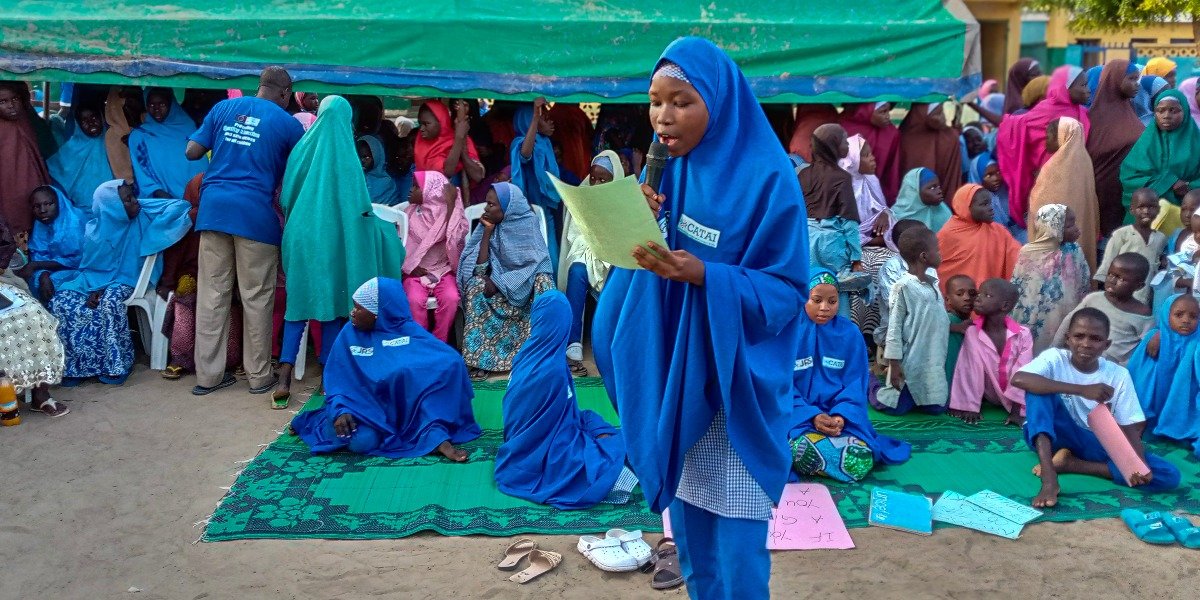
In 2025, the state recorded 1,418,279 learners in public and private schools, up from 766,551 in 2017-2018, an 85 per cent increase. Officials estimate nearly 800,000 children remain out of school. Enrolment shows access, not attendance or learning.
The numbers cover different education groups
September 2026’s Annual School Census put enrolment at 1,801,295. It is not directly comparable with 1.418 million: the census covers a wider education system across the 2024/2025 and 2025/2026 reporting cycles. The presentation also described efforts to count Islamic and Sangaya learning centres.
The commissioner said 127,652 Sangaya learners were verified on the Digital National Education Management Information System, while a separate exercise identified 498,295 learners across 5,335 centres. These results should not be added: available reporting does not establish how much they overlap. The distinction matters when officials measure progress and allocate public resources.
Also Read: US International Student Enrolment Falls as Visa Hurdles and Costs Reshape Study Choices
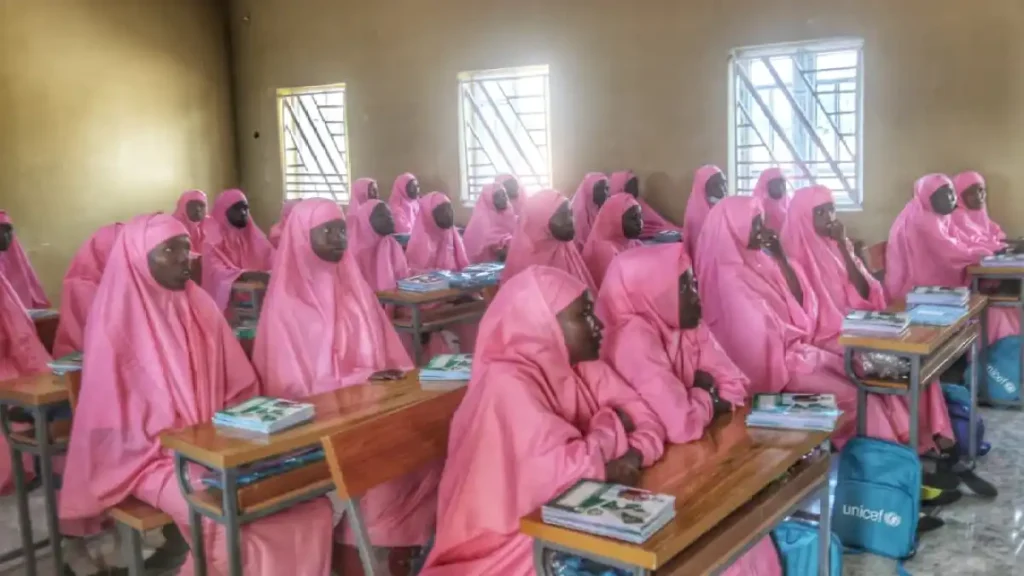
More pupils need more than buildings
Borno says it has built 104 schools and rehabilitated 2,931 classrooms. Its teaching workforce also grew: the 2026 census report put primary, junior secondary and senior secondary teachers at 17,565, up from 15,563 in 2024/2025. Officials also reported that functional public secondary schools rose from 34 in 2021 to 129 in 2026, according to the census report.
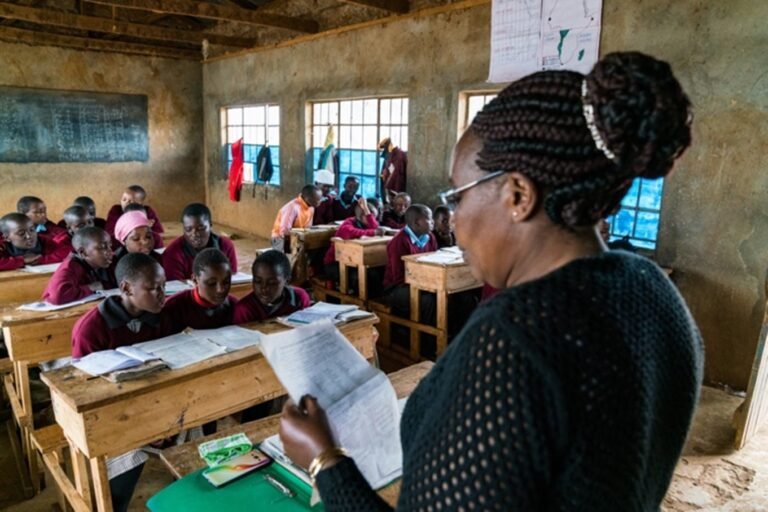
The state’s 2025 teacher-mapping report found primary schools averaged 51 pupils per teacher in 2024, above the national policy benchmark of 35. It estimated a basic-education teacher gap of 4,526, unevenly distributed among local government areas. Though a baseline, not a current headcount, it shows recruitment must be matched with deployment.
Children who missed school need routes back
Many children are older than the usual age for their class or have never attended formal school. UNICEF says the 2025 Joint Education Needs Assessment estimated two million out-of-school children across the northeast. That is a North-East estimate, not a Borno-only count.
The Accelerated Basic Education Programme offers nine months of literacy and numeracy lessons in local languages and English, helping learners catch up and enter formal education. UNICEF reported that it and partners reached 674,165 children, in and out of school, across the three states in 2025, while training 5,075 teachers in inclusive teaching and psychosocial support. These are regional programme figures.
Back Story: A damaged education system
The recovery follows a devastating period. In September 2017, UNICEF reported that more than 57 per cent of Borno’s schools were closed. Across the northeast, over 2,295 teachers had been killed and 19,000 displaced since 2009; nearly 1,400 schools had been destroyed.
Reopening schools and restoring parents’ confidence are important achievements. The next test is whether children attend consistently, gain foundational skills and progress through school. Enrolment is a recovery signal; well-staffed classrooms, credible data and catch-up programmes will determine whether it becomes lasting progress.