Nigeria’s education system stands at a pivotal crossroads. Long beset by underfunding, outdated curricula, insecurity, and uneven policy implementation, it is now showing signs of transformation. But is this enough to rescue the nation’s soaring youth potential? Here’s a comprehensive, human-centred examination.

A Shift Toward Data‑Driven Planning
For years, Nigeria’s education system has operated in the dark. Budgets were distributed based on political expediency rather than need, staffing was arbitrary, and dropout and learning outcomes remained largely unknown. However, the 2024/2025 academic year marked a strategic shift: the Federal Ministry of Education began using reliable, accessible, and actionable data to guide interventions. This allows policymakers to make informed decisions—where to deploy teachers or invest in infrastructure, like satellites aiding weather forecasts.
This move toward data isn’t just administrative—it gives hope that reforms will reach the classrooms they’re designed to help.
Chronic Underfunding & Infrastructure Decay
Nigeria’s educational financing continues to lag. In 2024, only 7% of the federal budget was allocated to education, far below UNESCO’s recommended 15–20%. This chronic underfunding has deep consequences:
- Infrastructure collapse: Many classrooms, especially in flood‑prone regions, remain dilapidated or unsafe.
- Teacher shortages: Local councils are meant to pay teacher salaries per Supreme Court rulings, but often fail, shrinking the pool of qualified educators.
- Unfilled vocational slots: Numerous technical and vocational education (TVET) programs remain understaffed and undersubscribed.
Despite legislative and advocacy efforts—like the National Union of Teachers securing an extension of the retirement age to retain veteran instructors—funding remains inconsistent

Security, Insurgency & School Closures
Insecurity affects millions of Nigerian children. Over 1,500 schools in northern states have closed due to Boko Haram, banditry, and kidnappings. Even when schools are operational, fear of attacks deters attendance. Initiatives like the Safe Schools Initiative, born from WEF partnerships, aim to shield students and educators from violence. Still, progress remains fragile and uneven across regions.
Curriculum Gaps vs. Emerging Skills
Nigeria’s syllabus is often decades behind global standards. Many students graduate without:
- Digital literacy
- Critical thinking
- Financial or emotional intelligence
Policymakers are pushing modernization. Deputy Speaker Benjamin Kalu has urged universities to bridge the academia–industry gap, integrating AI, cybersecurity, and sustainable innovation into coursework. But more action is needed—such as revamping teacher training and updating curricula—to make this shift scalable.
Vocational & Technical Education: A Vital Frontier
The low uptake of technical vocational education (TVET) deeply concerns educational authorities. The House Committee and NBTE highlighted weak enrollment rates and poor funding in TVET fields. Expanding polytechnics and vocational colleges, especially in underserved areas like Adikpo and Illela, is now seen as essential for filling the skills void and mitigating youth unemployment.
Tackling Academic Malpractice
In May 2025, results from the UTME—the university entrance exam—revealed alarmingly poor performance: only 0.24% scored 320+. While anti‑cheating policies are credited with reducing malpractice, the dismal scores point to deeper issues: lack of study culture, unqualified teachers, and insufficient educational materials.
Private Sector & Civil Society Stepping In
Amidst funding shortfalls, NGOs and private entities are boosting sector momentum. The World Bank, in April 2025, approved a $1.08 billion loan to build resilience in education and nutrition. Worker unions and civil society groups are nudging governments to craft fair tax systems and innovative domestic revenue sources to support education. Meanwhile, private schools are enrolling out‑of‑school children through targeted policies. Partnerships with companies like Seplat Energy and NNPC sponsor quiz programs to spark academic excellence.
Empowering Youth Through Digital Training
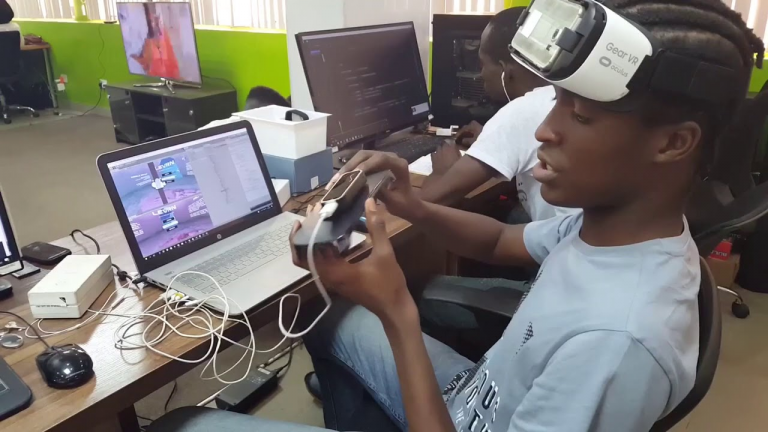
The government launched the 3 Million Technical Talent (3MTT) initiative in October 2023. With digital skills training in AI, cloud computing, cybersecurity, software engineering, and more, it strives to onboard 3 million Nigerians by 2027. By mid‑2024, over 1.8 million had applied; tens of thousands are now in training cohorts. Partnerships with universities and NGOs supply laptops and tablets on instalment plans.
This reflects a systemic shift: going beyond blackboards to turn Nigeria’s youth into global digital job competitors.
Financial Aid via NELFUND
In April 2024, the federal government established the Nigerian Education Loan Fund (NELFUND) to ease tertiary tuition strain. By early 2025, over ₦22 billion had been disbursed to more than 215,000 students across 59 institutions. Students repay through low-interest loan programs—a promising tool for widening access to higher education.
High‑Profile Setbacks in University Governance
Even top institutions face scandals. Covenant University, for example, recently came under scrutiny after allegations surfaced that a dismissed lecturer, Dr. Ukenna, died without terminal benefits—a controversy that sparked campus-wide debate. Cases like these underscore the pressing need for better academic governance and staff welfare.
What Lies Ahead: A Blended Blueprint
Experts agree Nigeria needs a hybrid reform strategy—a balance of government-driven policy and private-sector dynamism. Here’s a synthesised roadmap:
- Increase Education Spending: Hit 15–20% of the federal budget to upgrade classrooms, hire teachers, and invest in TVET.
- Broaden Data Use: Extend data systems to track enrollment, performance, attendance and use results to tailor initiatives.
- Secure Learning Environments: Expand Safe Schools programs and reinforce rural education zones.
- Modernize Curricula: Update syllabi with digital, financial, and critical-thinking skills; retrain teachers for future demands.
- Scale 3MTT & NELFUND: Ensure these programs reach remote and marginalised communities.
- Boost Private & NGO Engagement: Foster public–private partnerships in financing, technology, and governance.
- Combat Inequality: Focus on community schools, implement fee waivers, and guarantee access for vulnerable youth.
The Human Impact: More Than Statistics
Behind these policies are real people. Parents in Lagos, for example, attribute UTME failures to rising poverty and a lack of study culture. Northern families, where schools remain closed, long for consistent education. Youth enrolled in 3MTT aren’t just training—they’re gaining dignity, career immediacy, and hope. Female students, especially in extremism‑affected regions, are being guided toward empowerment through education, critical not only for individual futures but societal resilience.

In Conclusion
Nigeria’s education saga in 2025 isn’t a story of redemption yet—it’s one of deliberate transformation. From data modernisation to TVET expansion, digital training to safer schooling environments, the foundation for meaningful change is being laid. But the path ahead demands sustained funding, political resolve, and a genuine partnership with the private sector and civil society.
If Nigeria seizes this moment, thousands of classrooms—urban and rural—could become launchpads of national renewal. But failure to act risks letting an entire generation slip through the cracks. The time isn’t far off when “Education Reform in Nigeria 2025” could be remembered not as a hopeful hashtag, but as the pivotal moment that reshaped a nation.
Join Our Social Media Channels:
WhatsApp: NaijaEyes
Facebook: NaijaEyes
Twitter: NaijaEyes
Instagram: NaijaEyes
TikTok: NaijaEyes