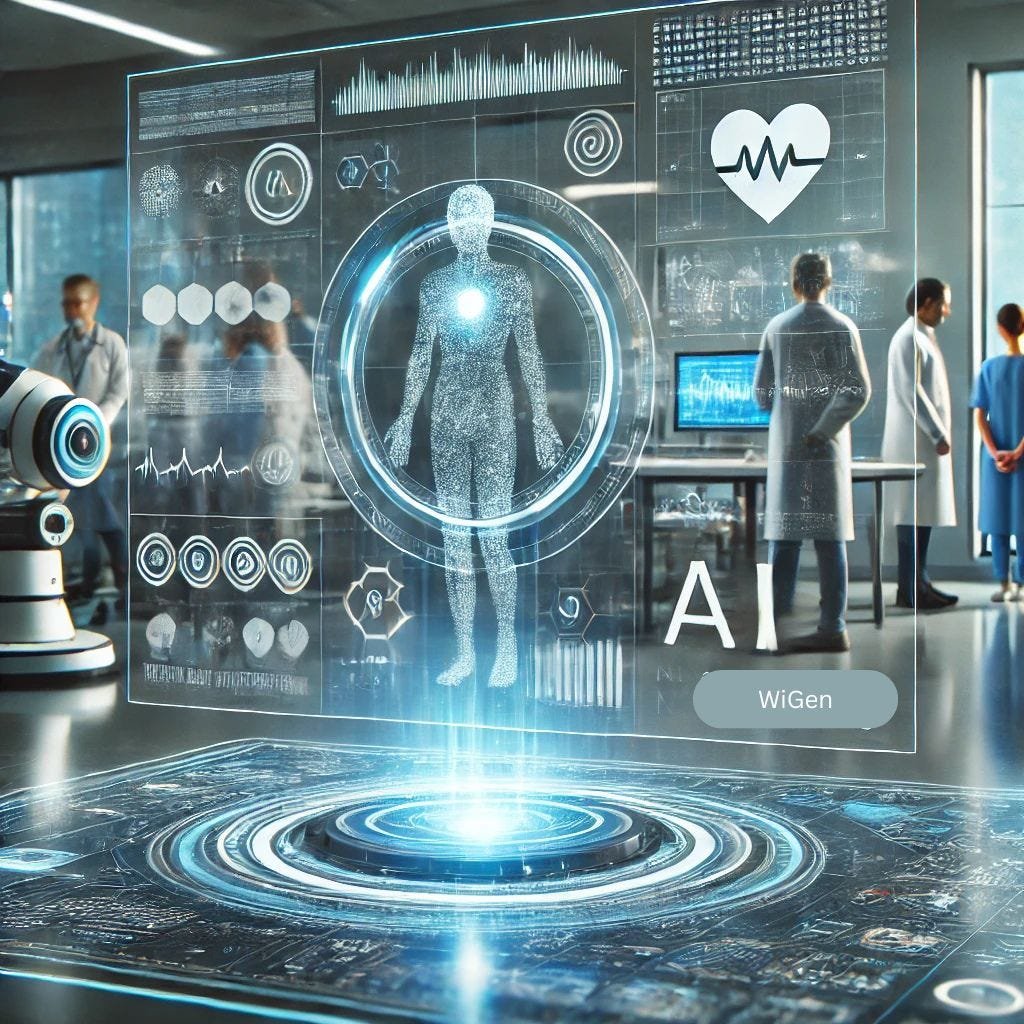

Nigeria could be entering a new phase in the fight against infectious diseases as artificial intelligence creates new opportunities to detect warning signs before outbreaks become major public health emergencies.
The country already has systems for collecting and analysing disease information. The Nigeria Centre for Disease Control and Prevention (NCDC) monitors priority diseases across the 36 states and the Federal Capital Territory through its surveillance and epidemiology system. It also operates event-based surveillance, which helps detect and verify rumours and reports of possible disease outbreaks.
The next opportunity is to make these systems more intelligent.
AI can process enormous amounts of information much faster than humans can. If properly integrated into Nigeria’s public health infrastructure, it could help identify unusual patterns in disease reports, laboratory results, community reports and other sources of information that may indicate an emerging outbreak.
For a country that continues to monitor diseases including Lassa fever, cholera, meningitis, measles, yellow fever and diphtheria, earlier detection could give health authorities more time to investigate and respond. The NCDC continues to publish situation reports covering several of these diseases.
Also Read: Tinubu’s Health Tech Drive Could Produce Africa’s Next Billion-Dollar Startups
AI Could Give Health Officials an Earlier Warning
The real promise of AI in disease surveillance is not necessarily predicting the exact day or location of the next epidemic. Its immediate value could be helping public health officials notice signals that deserve attention.
An AI system can analyse large volumes of structured and unstructured information, looking for unusual changes that might otherwise be difficult to spot. For example, a sudden increase in reports of similar symptoms across several communities could trigger an alert for further investigation.
The technology could also analyse information from different sources at the same time. Hospital records, laboratory data, surveillance reports, environmental information and community-level reports could potentially be examined together to identify patterns.
This becomes particularly important in Nigeria because disease information does not always begin inside a laboratory or government database. People may first discuss unusual illnesses, deaths or symptoms within their communities or online.
Research into AI-supported outbreak surveillance has already demonstrated the potential importance of language and local context. Systems capable of understanding Nigerian English, Nigerian Pidgin and eventually more Nigerian languages could potentially identify health-related signals that conventional English-only systems might miss.
That does not mean every social media post or community rumour represents an outbreak. Instead, AI could help health officials sort through a large volume of information and identify reports that warrant verification.
Human epidemiologists would still need to investigate the alerts, conduct tests and determine whether an actual outbreak exists.

Nigeria Already Has a Foundation for AI-Powered Surveillance
Nigeria would not be building its AI disease surveillance capabilities from nothing.
The country has spent years developing digital systems for disease monitoring and outbreak response. The NCDC adopted the Surveillance, Outbreak Response Management and Analysis System, known as SORMAS, as a digital surveillance tool. The platform supports functions including case investigation, contact tracing, rumour management and laboratory sample management.
The NCDC’s surveillance architecture has also continued to develop. Its current surveillance directorate says it is digitising its reporting system, with the first phase active in 16 states. The agency collects, collates and analyses data from states and the FCT to detect outbreaks and support policy decisions.
More recently, the NCDC’s biennial report highlighted efforts to strengthen real-time data platforms, facility-level reporting, digital systems and subnational surveillance capacity.
This infrastructure matters because AI is only as useful as the information available to it.
If Nigeria can improve the quality, speed and coverage of health data, AI could eventually be used to analyse those datasets and identify emerging patterns more efficiently.
The country is also receiving additional support to strengthen its public health institutions. In May 2026, the Federal Government and partners launched the EU Support to Public Health Institutes in Nigeria programme, a €4.2 million initiative implemented by the World Health Organisation to strengthen disease detection, information sharing and outbreak preparedness.
Also Read: Nigeria Strengthens Technical Education Through Fresh Germany Partnership to Boost Skills and Jobs
Back Story: Why Early Disease Detection Matters for Nigeria
Nigeria’s experience with recurring outbreaks explains why early detection is so important.
When a disease begins spreading, public health authorities may need to identify cases, trace contacts, conduct laboratory tests, deploy response teams and communicate risks to affected communities. Every delay can make containment more difficult.
Digital surveillance has already shown how faster information can support quicker responses. WHO has previously documented the use of mobile-based surveillance systems in north-eastern Nigeria that allowed health workers to submit information in real time and helped epidemiologists respond to alerts more quickly.
AI could take this process further by helping officials analyse information at a scale that would be difficult to manage manually.
Imagine a system continuously examining disease reports from health facilities while also comparing laboratory information, geographic patterns and community-level signals. Instead of waiting for several disconnected reports to become an obvious trend, the system could flag an unusual pattern for experts to examine.
That could be particularly valuable in rural and underserved communities where disease reporting may not always happen quickly.
However, AI should be treated as decision support, not an autonomous disease detector. Poor-quality data, incomplete reporting, false rumours and algorithmic errors can produce misleading alerts. Nigeria would therefore need strong data governance, privacy safeguards, reliable infrastructure and trained public health professionals to validate AI-generated warnings.
The opportunity is nevertheless significant.
Nigeria already has a national disease surveillance structure, digital reporting systems and a growing body of health data. Adding carefully designed AI capabilities could help turn that information into earlier and more actionable warnings.
The goal should not simply be to use AI because it is fashionable. The real objective should be straightforward: detect health threats earlier, investigate them faster and give Nigeria a better chance of stopping outbreaks before they become epidemics.