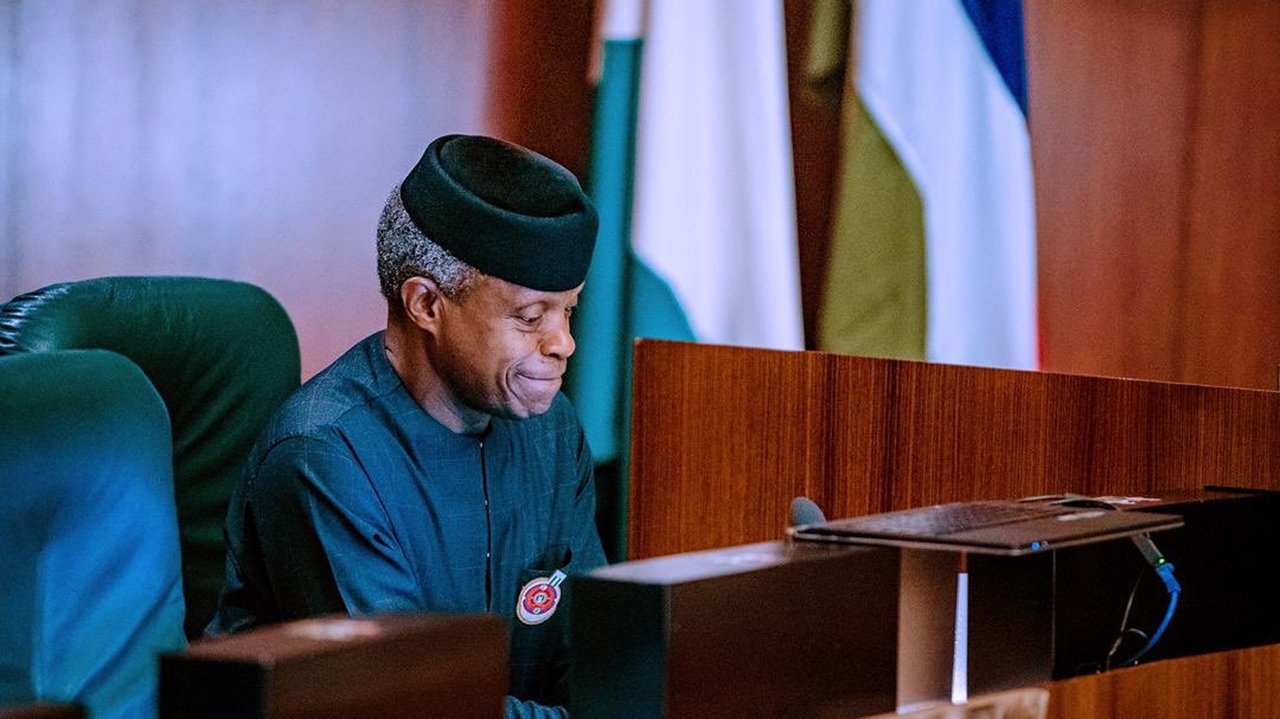

Former Vice-President Yemi Osinbajo has urged Nigeria to move faster in expanding Open and Distance Learning as the country struggles to provide enough university places for its growing population.
Speaking on Tuesday, August 25, 2026, at the fifth International Colloquium of the Distance Learning Institute of the University of Lagos, Osinbajo said Nigeria could not continue depending mainly on conventional university campuses to meet the rising demand for tertiary education.
The colloquium, held at the Nurudeen Alao Auditorium, was organised around the theme, “Re-imagining Open Distance Learning Ecosystem: Technology, Policy and Institutional Priorities.” The University of Lagos had earlier announced Osinbajo as chairman of the event.
According to a report by the News Agency of Nigeria carried by The Gazette, more than 2.2 million young Nigerians seek admission into universities every year, while the traditional tertiary education system has historically accommodated only about a quarter of them.
For students and parents, the problem is very familiar. Every admission cycle brings millions of applications, but university capacity remains limited. Osinbajo believes distance learning could provide part of the answer without requiring Nigeria to build physical facilities for every additional student.
Also Read: What Nigeria Can Learn From Singapore’s Push to Train Teachers for an AI-Powered Classroom
AI Could Change How Nigerians Learn Online
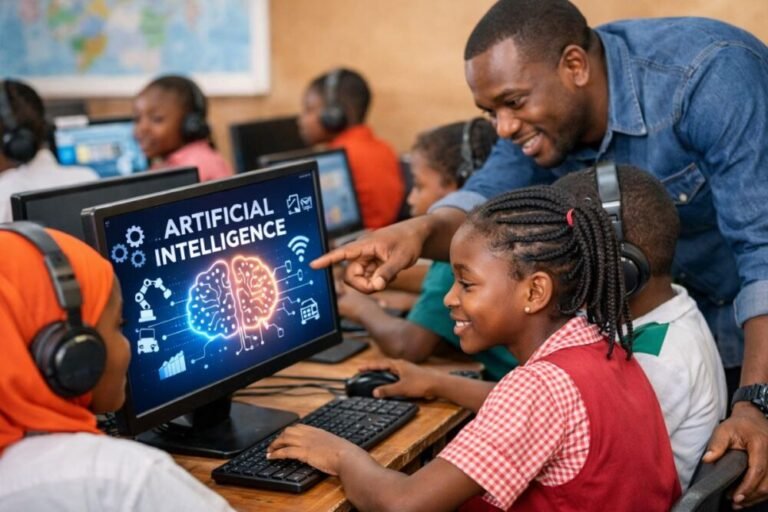
Osinbajo described Artificial Intelligence as a major force that could reshape education and broaden access. The idea is not simply to put existing lecture notes online, but to use technology to make learning more personalised and responsive to individual students.
At the UNILAG event, Osinbajo said AI could help democratise learning, widen access and strengthen skills development across different sectors of the economy. However, he also stressed that technology should support education rather than become the purpose of education itself. UNILAG’s official report on the colloquium quoted him as stressing that the purpose of education is not technology.
That distinction is important for Nigeria. AI tutors, automated feedback, personalised learning materials and digital assessments could help students learn at their own pace, but they will not automatically solve problems such as poor internet access, unreliable electricity or weak digital skills.
UNILAG Vice-Chancellor, Prof. Folasade Ogunsola, also highlighted AI’s potential for personalised learning, student support, content development, assessment and identifying learners who may be struggling. At the same time, she warned about academic integrity, data privacy, intellectual property and digital inequality.

Nigeria’s University System Faces a Growing Capacity Problem
Osinbajo’s argument comes as Nigeria’s demand for higher education continues to rise. He said the country’s population could approach 250 million by 2036, while annual university applications could increase to 2.7 million or even exceed three million.
That level of demand would place even greater pressure on classrooms, laboratories, teaching facilities and other infrastructure.
The former Vice-President therefore argued that Nigeria needs an education model capable of serving large numbers of learners without relying solely on expanding physical campuses.
The Director of DLI, Prof. Risikat Dauda, similarly described ODL as increasingly important for widening access and closing skills gaps. She pointed to several obstacles that still need attention, including inadequate broadband, high data costs, limited digital literacy, unreliable electricity and concerns about the recognition of distance-learning qualifications.
UNILAG’s position is that ODL should not be regarded as inferior to conventional education. Ogunsola said the university stands by the quality of its distance-learning credentials and wants ODL to become part of its core institutional strategy.
Also Read: US Mission Nigeria Spotlights George Azih for Fintech Innovation
Back Story
Nigeria’s distance-learning debate is not new. Universities and specialised institutions have used ODL for years to reach students who cannot participate in conventional campus-based programmes because of location, work, disability or other personal circumstances.
What is changing is the role technology is expected to play.
On August 24, 2026, one day before the main colloquium, DLI held a pre-colloquium lecture focused specifically on Artificial Intelligence, access and academic excellence. The University of Lagos reported that the discussion marked a shift from simply asking how technology can widen access to considering how AI could change the learning experience itself.
The 2026 DLI discussions therefore place Nigeria at an important crossroads. The country needs to educate a rapidly growing population, but physical expansion alone may not be enough.
For millions of aspiring students, the real attraction of AI-powered distance learning is simple: it could create another route into quality higher education.
But for that promise to become reality, Nigeria will have to address the cost of internet access, electricity, digital devices, quality assurance and public trust in online qualifications. Without those foundations, AI may improve the technology of education without solving the access problem Osinbajo wants the country to confront.