The global semiconductor industry is entering what experts now describe as its most transformative era in decades, with artificial intelligence rapidly becoming the biggest force shaping the future of technology, manufacturing, finance, healthcare and consumer electronics.
Taiwanese chip giant TSMC has now projected that the worldwide semiconductor market could exceed $1.5 trillion by 2030, a massive jump from its earlier estimate of $1 trillion. The revised forecast reflects the extraordinary speed at which AI technologies are driving demand for advanced processors, data centre infrastructure and memory chips across the world.
The announcement came ahead of the company’s technology symposium in Taiwan, where executives highlighted how AI applications are reshaping nearly every segment of the global economy. From generative AI systems to autonomous machines and cloud computing infrastructure, semiconductor demand is now accelerating at a pace many analysts did not expect just a few years ago.
Industry watchers say the new forecast confirms that the race for AI dominance is no longer just about software companies. It is increasingly becoming a battle for computing power, semiconductor manufacturing capacity and control of global chip supply chains.
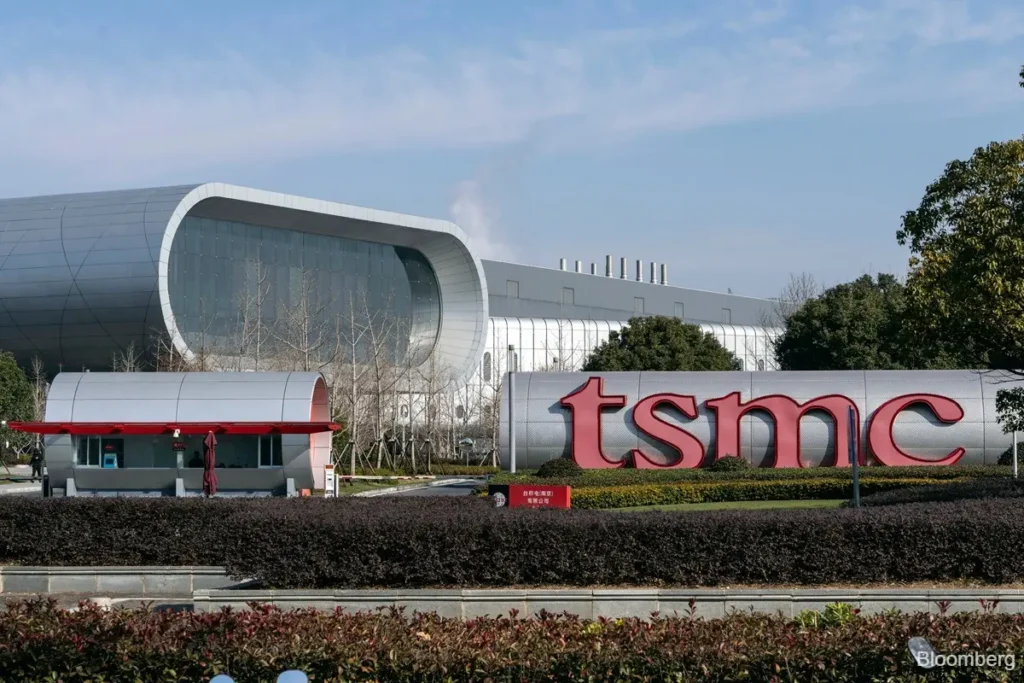
TSMC occupies a central role in that ecosystem. The company manufactures advanced chips for some of the world’s biggest technology firms, including NVIDIA, Apple, AMD and Qualcomm. Its dominance in high-end chip fabrication has made it one of the most strategically important companies in the world economy.
The semiconductor sector has already been experiencing extraordinary growth. According to the Semiconductor Industry Association, global chip sales reached nearly $792 billion in 2025 and are expected to hit the $1 trillion mark this year due largely to AI infrastructure investments by major technology firms.
That momentum is now expected to continue deep into the next decade.
AI Is Changing the Economics of the Semiconductor Industry
The explosive growth of artificial intelligence has dramatically changed how semiconductor companies plan their future investments. AI systems require massive computing power, especially for training large language models, processing complex datasets and supporting cloud-based AI applications.
This has created unprecedented demand for advanced graphics processing units, AI accelerators and high bandwidth memory chips.
Executives across the semiconductor industry believe the next five years could reshape the entire global technology landscape. Major corporations are now spending hundreds of billions of dollars building AI data centres capable of supporting next-generation applications.
TSMC believes this wave of investment will continue to fuel demand for cutting-edge chips used in servers, smartphones, robotics, autonomous systems and industrial automation.
The company has also been increasing capital expenditure to keep up with demand. Earlier this year, TSMC raised its annual revenue forecast and pledged to spend even more on manufacturing expansion as global customers rushed to secure advanced AI chips.
Analysts say one of the biggest reasons for the surge is that AI models are becoming larger and more computationally intensive. As companies compete to build smarter systems, they require increasingly sophisticated chips with higher efficiency and faster processing speeds.
That trend has created massive opportunities not only for chip designers but also for the manufacturers capable of producing these advanced semiconductors at scale.
TSMC currently leads the global foundry market and controls a significant share of advanced chip production worldwide. Its technological lead has become especially important as rivals struggle to match its manufacturing capabilities.
The AI boom has also transformed investor sentiment around semiconductor stocks. Companies linked to AI infrastructure have seen their market values surge sharply in recent months.
South Korean memory chip producer SK Hynix is now approaching a $1 trillion valuation after strong demand for AI-related memory chips pushed its shares sharply higher.
Meanwhile, technology investors continue pouring money into firms positioned at the centre of the AI supply chain.

Back Story: How the Global Chip Race Became a Strategic Battle
The semiconductor industry has always been important, but the COVID era chip shortages exposed just how dependent the modern world had become on a handful of manufacturers.
Car production slowed, electronics prices increased, and supply chains across several industries were disrupted because of shortages in semiconductor components.
That period pushed governments and corporations to rethink the importance of chip manufacturing.
Since then, countries including the United States, China, South Korea, Japan and members of the European Union have invested heavily in semiconductor production and research.
The rise of AI accelerated those efforts even further.
As AI systems became more powerful, demand for advanced chips increased beyond traditional consumer electronics. AI now powers search engines, medical systems, financial services, logistics, military applications and cloud computing infrastructure.
This shift has made semiconductor companies strategically important not just commercially but geopolitically.
TSMC, founded in Taiwan in 1987 by Morris Chang, pioneered the pure play foundry model that allowed technology companies to design chips without owning fabrication plants. Over time, that strategy helped the company become the dominant producer of advanced semiconductors globally.
Today, many of the world’s most advanced processors are manufactured in TSMC facilities.
Its position has become so influential that economists and policymakers increasingly view semiconductor manufacturing as critical infrastructure.
The growing concentration of advanced chip production in Asia has also intensified geopolitical concerns, especially as tensions between the United States and China continue around technology exports, AI leadership and supply chain security.
Industry experts say the next phase of the semiconductor race will likely focus on who can secure stable manufacturing capacity while continuing to innovate at the highest level.
What This Means for Businesses, Consumers and Emerging Economies
The projected rise of the semiconductor industry to $1.5 trillion by 2030 could have far-reaching implications for businesses and consumers around the world.
For businesses, faster and more efficient chips could accelerate the adoption of AI-powered services in banking, agriculture, education, healthcare and logistics. Companies that successfully integrate AI into their operations may gain major competitive advantages in productivity and automation.
Consumers are also expected to see smarter devices, more powerful smartphones, improved cloud services and faster AI-assisted applications integrated into everyday life.
At the same time, the AI-driven semiconductor boom may widen the gap between countries with advanced technological infrastructure and those still developing digital capacity.
Emerging economies such as Nigeria could face both opportunities and challenges in this changing landscape.
On one hand, the growing global AI ecosystem could open doors for software development, AI startups, digital services and remote technology work. On the other hand, countries without strong semiconductor capabilities may become increasingly dependent on foreign technologies and imported infrastructure.
Experts say African governments may need to invest more aggressively in digital education, technical training, electricity infrastructure and innovation ecosystems if they want to benefit from the next phase of the AI economy.
The semiconductor industry itself is also facing mounting pressure to expand production capacity fast enough to meet growing demand.
Building advanced fabrication plants costs tens of billions of dollars and requires highly specialised engineering expertise. Environmental concerns, energy requirements and geopolitical tensions also continue to complicate global supply chains.
Still, investors remain optimistic that AI demand will continue driving long-term growth across the sector.
For TSMC and other major chip manufacturers, the future now appears tied directly to how quickly artificial intelligence becomes embedded into every aspect of modern life.
And if the company’s forecast proves accurate, the world may be entering the first true trillion-dollar era of semiconductors.
Join Our Social Media Channels:
WhatsApp: NaijaEyes
Facebook: NaijaEyes
Twitter: NaijaEyes
Instagram: NaijaEyes
TikTok: NaijaEyes