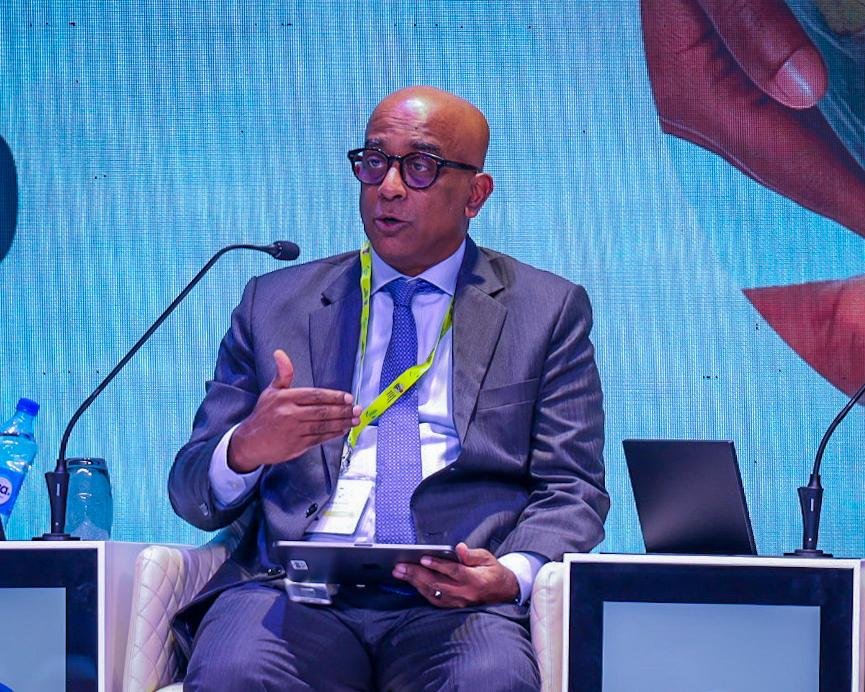

Mathew Verghis, the World Bank national director for Nigeria claims that poor income mobilization—rather than high debt—is Nigeria’s worst fiscal problem.
The World Bank’s country director for Nigeria, Mathew Verghis, stated in an interview on Channels Television on Friday that raising government income should be the nation’s top goal and that Nigeria’s debt profile is not the main issue.
“From our assessment, Nigeria doesn’t have a high indebtedness problem, it has a low revenue problem,” Verghis said.
According to him, the nation’s debt load is lower than that of many peer nations and shouldn’t be compared to those in debt difficulty.
Providing further details, he explained that the country’s debt level, relative to the size of its economy, is lower than that of many peer countries and should not be compared with countries facing debt distress.
“When we looked at the numbers, Nigeria is a moderately indebted country, meaning it has less debt relative to its economy than most of its neighbours and many other countries,” he said.
“Nigeria is in a very different situation than Ghana, for example, which is going through a debt restructuring.”
The world bank official also noted borrowing is necessary to finance investments whose benefits materialise over time, arguing that countries often raise debt to fund projects that improve economic growth and living standards.
Our Priority Should Be To Increase Government
Additionally, Verghis warned that dangerously low revenue collections—not soaring debt levels—pose the most immediate threat to Nigeria’s public finances, urging the administration to treat revenue generation as its absolute economic priority.
According to him, increasing income collection will allow the government to make greater investments in human capital and infrastructure, improve employment, and eventually lower poverty.
“Nigeria’s debt is not particularly high, and in fact, it’s quite moderate by international standards,” the country director said.
“Its revenues are very low by international standards, and unless those revenues are raised, then it will not be able to pay back debt.”
Read Also: ‘Where Is the Impact?’ — Obi Raises Concern Over N200tn National Debt
Backstory…
Concerns over Nigeria’s fiscal health have intensified in recent years amid rising public debt and persistent revenue shortfalls. While the country’s debt stock has continued to grow, economists and development partners have repeatedly argued that the more pressing challenge is Nigeria’s weak revenue generation.
With one of the lowest tax-to-GDP ratios in Africa, the Federal Government has struggled to generate sufficient income to fund critical infrastructure, healthcare, education and security without relying heavily on borrowing.
The issue has become more pronounced following recent economic reforms, including the removal of fuel subsidies and foreign exchange policies, which were introduced to strengthen public finances.