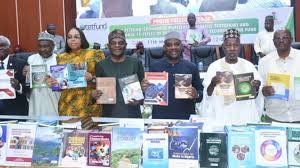

Nigeria’s effort to strengthen the quality of higher education received a fresh boost as the Federal Government unveiled 82 newly produced academic textbooks authored by Nigerian scholars. The initiative, announced during a public presentation in Abuja, reflects a growing determination to support indigenous academic publishing and improve the availability of relevant learning materials across universities, polytechnics and colleges of education.
For years, many lecturers and students across Nigeria’s tertiary institutions have relied heavily on foreign textbooks. While those books remain valuable, they often fail to fully capture the realities, research priorities and educational context of Nigerian institutions. This latest intervention aims to change that narrative by placing Nigerian scholarship at the centre of academic learning.
Education stakeholders say the unveiling of the books signals a deeper commitment by government and policymakers to strengthen teaching, research and knowledge production within the country’s higher education system.
At the centre of the initiative is Nigeria’s Education Minister, Dr Tunji Alausa, who described the project as an important milestone in efforts to rebuild academic culture and ensure that Nigerian students have access to textbooks that reflect local realities, research findings and professional expertise.
The books were developed under the Higher Education Book Development Intervention Project coordinated by the Tertiary Education Trust Fund, a federal agency created to support funding and development in government-owned tertiary institutions across Nigeria.
The initiative highlights a renewed national conversation about knowledge production in Africa and the urgent need for universities to produce more locally relevant research materials.
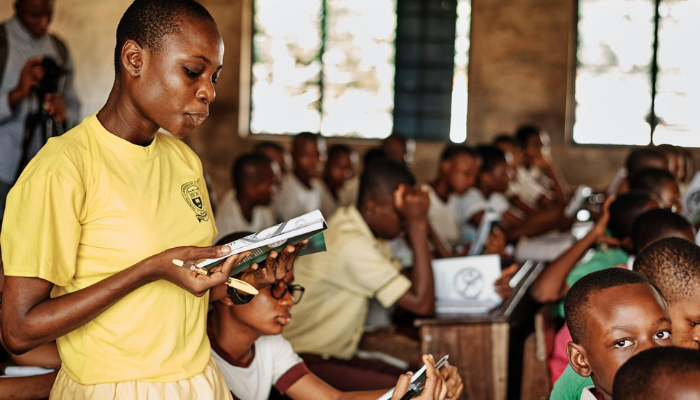
Addressing the Shortage of Locally Authored Academic Materials
One of the biggest challenges in Nigeria’s university system has been the shortage of high-quality textbooks written by local scholars. For decades, academic departments across disciplines have depended largely on imported texts.
While these books are often comprehensive, many of them focus on foreign case studies and examples that may not always align with Nigeria’s socio-economic environment. The result is that students sometimes struggle to connect theoretical knowledge with the realities around them.
Government officials say the newly unveiled textbooks are designed to address this gap.
According to the Minister of Education, the project produced 72 academic textbooks through the TETFund book development programme, while an additional 10 titles authored by respected Nigerian scholars were also secured for distribution to tertiary institutions nationwide.
These books span multiple disciplines, including science, technology, engineering and other academic fields considered vital for national development.
The minister explained that the initiative also aims to reduce Nigeria’s dependence on foreign publications, which often require large amounts of foreign exchange to import.
At a time when Nigeria continues to manage foreign exchange pressures, encouraging local academic publishing is seen not only as an educational strategy but also as an economic one.
Education experts say this shift could gradually transform the way Nigerian universities approach research, teaching and knowledge creation.
The Role of TETFund in Strengthening Higher Education
The textbook initiative forms part of a broader effort by the Tertiary Education Trust Fund to improve the quality of tertiary education across the country.
Established by the Federal Government, the fund provides financial support for infrastructure, research development, academic staff training and other strategic interventions aimed at strengthening universities, polytechnics and colleges of education.
Through this intervention, TETFund has increasingly focused on encouraging Nigerian academics to produce textbooks and scholarly materials that reflect indigenous perspectives.
Speaking during the presentation ceremony, the Executive Secretary of the fund noted that the shortage of locally produced academic textbooks has long been a challenge within Nigeria’s tertiary education system.
Without sufficient textbooks written by Nigerian scholars, lecturers often rely on foreign publications that may not adequately address the local academic context.
The book development initiative, therefore, serves several purposes. It supports Nigerian scholars who are contributing to academic knowledge. It provides students with relevant educational materials. It also strengthens the research culture within universities.
The project has already attracted attention within academic circles because it represents one of the most significant efforts in recent years to promote scholarly publishing within Nigeria’s higher education sector.
Education analysts say sustained support for similar programmes could help reposition Nigeria as a major hub for academic publishing in Africa.

Why Indigenous Academic Publishing Matters for Nigeria’s Future
Beyond simply providing textbooks, the initiative also reflects a broader shift in Nigeria’s educational philosophy. Increasingly, policymakers and education experts believe that the country must produce more of its own academic content if it wants to compete globally in research and innovation.
When universities rely primarily on foreign textbooks, knowledge production often remains external. However, when local scholars produce textbooks and research materials, universities become centres of intellectual leadership within their own societies.
The newly unveiled books, therefore, represent more than just academic materials. They symbolise the importance of Nigerian voices in shaping knowledge, research priorities and educational direction.
For students, this shift could make learning more meaningful. Textbooks written by Nigerian academics are more likely to include case studies drawn from local industries, communities and policy environments.
For lecturers and researchers, the programme provides recognition for academic work that might otherwise remain unpublished or underutilised.
The Minister of Education emphasised that the ultimate goal is to ensure that Nigerian scholars contribute more actively to global knowledge production while also addressing the needs of the local education system.
He encouraged authors involved in the project to continue developing academic materials that can serve students not only within Nigeria but across Africa and beyond.
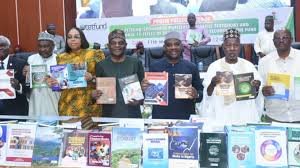
There are also plans to make the textbooks more widely accessible so that they can reach students in different institutions and potentially attract international academic audiences.
Many education stakeholders believe that initiatives like this could gradually rebuild the culture of scholarship that once made Nigerian universities among the most respected institutions on the continent.
If sustained over time, the programme may also inspire a new generation of academics who see textbook writing as an essential part of academic contribution.
Ultimately, the success of the initiative will depend on continued investment in research, publishing support and academic collaboration.
For now, however, the unveiling of 82 Nigerian-authored textbooks marks an important step toward strengthening the country’s higher education system and empowering local scholars to shape the future of knowledge production.
Join Our Social Media Channels:
WhatsApp: NaijaEyes
Facebook: NaijaEyes
Twitter: NaijaEyes
Instagram: NaijaEyes
TikTok: NaijaEyes