Nigeria’s education space has been thrown into fresh controversy following remarks by the Minister of Education, Tunji Alausa, who warned that students studying social science courses may struggle to find jobs in the future. The statement, made during a recent engagement with students in Abuja, has triggered strong reactions from academics, policy experts, and labour stakeholders, many of whom argue that the problem is not about course relevance but a wider economic crisis affecting all graduates.
Alausa’s Position Sparks Debate on Education Priorities
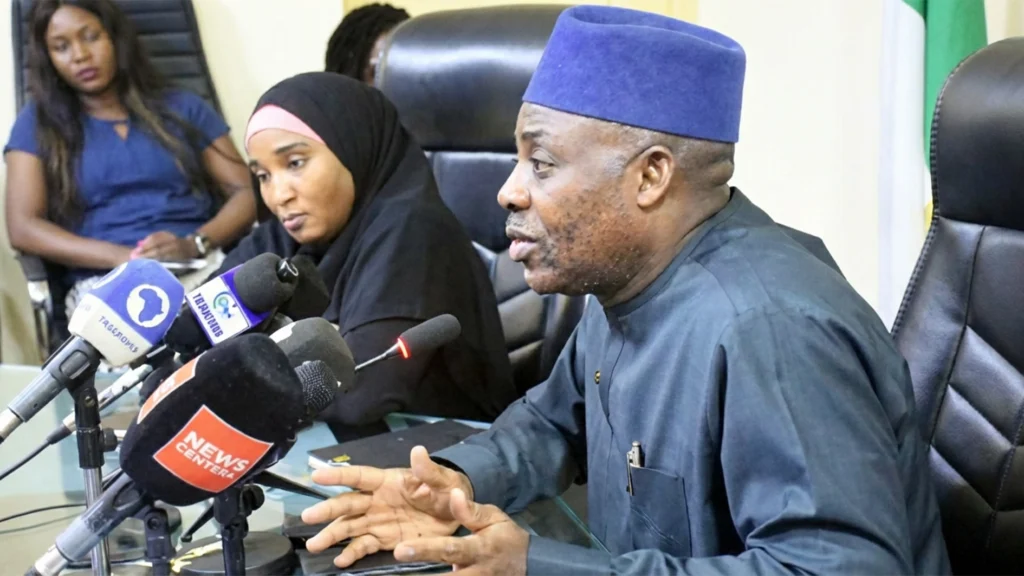
Speaking candidly to students, Alausa stressed the need for Nigerian graduates to focus more on entrepreneurship and practical skills rather than rely solely on white-collar jobs. He cautioned that certain courses, especially within the social sciences, may no longer align with the realities of the labour market, adding that the Federal Government is considering phasing out programmes with limited employment prospects.
The minister also advised students to be cautious about taking loans under the Nigerian Education Loan Fund for courses that may not guarantee economic returns. According to him, discussions are already ongoing with university administrators to review and possibly discontinue some academic programmes considered outdated or less relevant to national development goals.
This position forms part of a broader policy direction aimed at aligning Nigeria’s education system with global trends, especially in science, technology, engineering and innovation-driven sectors. However, the remarks have not gone down well with many stakeholders who see them as overly simplistic and potentially harmful.

Experts Push Back, Cite Structural Job Deficit
Critics argue that the minister’s comments overlook the deeper structural issues within Nigeria’s economy. Data indicate that unemployment and underemployment cut across all fields, not just the social sciences. Even graduates with higher education qualifications continue to face significant challenges in securing stable employment.
Analysts point out that Nigeria produces over 600,000 graduates annually, yet only a fraction secure formal jobs within their first year. A large percentage end up in the informal sector or in roles unrelated to their training, highlighting a systemic mismatch between education output and economic capacity.
Labour experts insist that the issue is not about “wrong courses” but rather a weak economy that is unable to absorb its skilled workforce. They warn that narrowing the focus of education to only technical disciplines without addressing job creation could worsen inequality and limit opportunities for young Nigerians.
Academic voices have also emphasised that social sciences play a critical role in governance, policy development, and economic planning. Fields such as economics, sociology, political science and psychology provide insights into human behaviour and institutional systems, which are essential for national development.
Education Funding and Policy Gaps Under Scrutiny
The controversy has also revived concerns about the effectiveness of Nigeria’s education funding. Although government spending on education has increased in recent years, experts say the impact has been limited due to poor allocation and implementation.
Reports indicate that while overall funding has risen significantly, capital investment in infrastructure such as laboratories and research facilities has declined. This has weakened the ability of institutions to produce job-ready graduates, even in fields that policymakers prioritise.
Nigeria’s education budget still falls below global benchmarks recommended by international bodies, raising questions about long-term sustainability and competitiveness. Stakeholders argue that without adequate investment in quality education and innovation, shifting focus to specific disciplines alone will not solve the employment crisis.
Students, Stakeholders Divided as Debate Continues
Reactions to the minister’s comments have been mixed. While many academics and civil society groups have criticised the remarks as dismissive of non-STEM disciplines, some student representatives have defended the position as a reflection of economic realities.
Supporters argue that the global economy is increasingly driven by technology and innovation, making it necessary for Nigeria to prioritise fields that directly contribute to industrial growth. However, even among supporters, there are calls for more careful communication from policymakers, given the influence their words carry.
Others warn that such statements could discourage students from pursuing careers in fields that are still vital to society, including media, public administration, development work and finance. They stress that a balanced education system, rather than a narrow focus, is what Nigeria truly needs.
As the debate continues, one point remains clear. Nigeria’s unemployment challenge is complex and deeply rooted, requiring more than curriculum changes. Without strong economic reforms, improved infrastructure and deliberate job creation strategies, graduates across all disciplines may continue to face uncertain futures.
Join Our Social Media Channels:
WhatsApp: NaijaEyes
Facebook: NaijaEyes
Twitter: NaijaEyes
Instagram: NaijaEyes
TikTok: NaijaEyes