At its annual GPU Technology Conference, widely regarded as the global gathering point for artificial intelligence innovation, Nvidia has once again positioned itself at the centre of the AI revolution. The 2026 edition of the event, held in San Jose, drew tens of thousands of developers, engineers and business leaders, all eager to see what comes next in a rapidly evolving space, according to NVIDIA.
What emerged from the keynote was not just another product update, but a clear shift in how Nvidia sees the future of computing. The company is no longer just building chips. It is building an entire AI ecosystem that spans hardware, software, infrastructure and even autonomous digital agents.
Chief executive Jensen Huang made it clear that artificial intelligence is entering what many experts describe as its most commercially impactful phase yet. According to projections shared at the conference, Nvidia believes the total market opportunity for AI chips could exceed one trillion dollars by 2027, effectively doubling earlier expectations.
This forecast reflects the explosive growth of AI adoption across industries, from healthcare and finance to education and manufacturing. For countries like Nigeria and across Africa, where digital transformation is accelerating, this signals a future where AI infrastructure could become as essential as electricity or internet access.
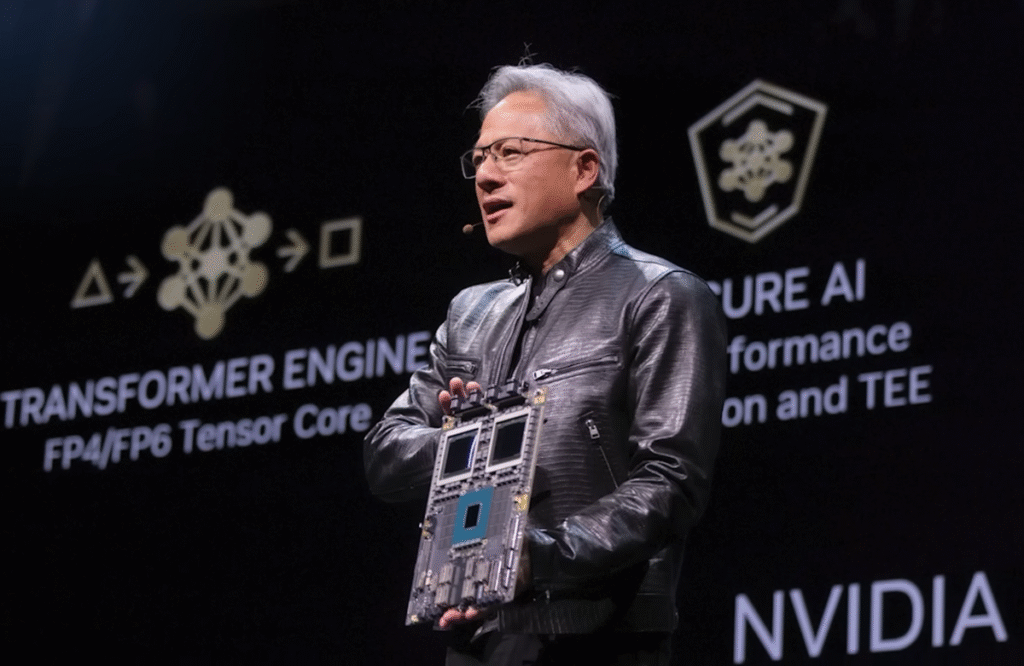
New Chips and the Shift Towards AI Inference
One of the biggest highlights of the conference was Nvidia’s renewed focus on AI inference. While training large AI models has dominated headlines in recent years, inference is the stage where those models are actually used in real time, powering chatbots, recommendation engines and intelligent applications.
Nvidia unveiled new technologies designed specifically for this phase, including systems built around its upcoming Vera Rubin architecture and a new class of inference chips developed with technology from startup Groq.
These chips are engineered to dramatically increase the speed and efficiency of AI responses. In practical terms, this means faster chatbots, more responsive virtual assistants and improved real-time analytics across industries. Reports indicate that some of these systems could deliver performance improvements of up to thirty-five times for certain workloads.
Nvidia also introduced a new way of handling inference tasks by splitting them into two stages. The first stage, known as prefill, prepares the data, while the second stage, decode, generates outputs. By assigning these tasks to specialised chips, Nvidia aims to optimise performance and reduce costs.
This shift is important because it reflects a broader industry trend. As AI becomes more integrated into everyday tools, the demand is moving away from building models to actually running them efficiently at scale. For businesses in emerging markets, including startups in Lagos or Abuja, this could lower the barrier to deploying advanced AI solutions.
Software Takes Centre Stage in Nvidia’s Strategy
While the hardware announcements were significant, Nvidia’s software strategy arguably stole the show. Huang emphasised that software remains the company’s strongest competitive advantage, particularly its CUDA platform, which has been the backbone of AI development for nearly two decades.
CUDA allows developers to program Nvidia GPUs more efficiently, and its widespread adoption has created a powerful ecosystem that is difficult for competitors to replicate. Millions of developers and organisations worldwide rely on it, making it a critical pillar of Nvidia’s dominance in AI.
Beyond CUDA, Nvidia introduced a new wave of software tools aimed at enabling what it calls agentic AI. This includes OpenClaw, an open source platform for building AI agents, and NemoClaw, a secure enterprise version designed for businesses.
AI agents are systems that can perform tasks independently, make decisions and interact with digital environments. Nvidia believes these agents represent the next major leap in computing, comparable to the rise of the internet or mobile apps.
However, the company also acknowledged the risks associated with this technology, particularly around security and privacy. NemoClaw is designed to address these concerns by introducing safeguards such as network controls and privacy layers.
For developers and organisations, especially in regions where data protection frameworks are still evolving, these tools could play a crucial role in enabling safe AI adoption.

A Full Stack Vision That Extends Beyond Earth
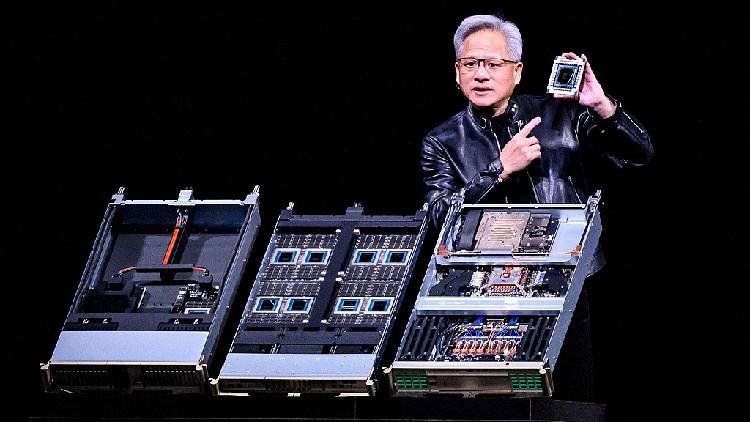
Perhaps the most striking aspect of Nvidia’s announcements is how comprehensive its vision has become. The company is not just focused on chips or software in isolation. It is building a full-stack AI platform that integrates everything from data centres to applications.
This includes a detailed roadmap for future chip architectures, with the Rubin platform expected to launch in 2026 and the Feynman architecture planned for 2028.
The Rubin platform alone is expected to deliver significant improvements in performance and cost efficiency, potentially reducing the cost of running AI models while increasing their capabilities.
Nvidia is also expanding into unconventional territories. One of the more surprising announcements was the development of AI chips designed for space-based data centres. These systems could process satellite data and support autonomous spacecraft operations, opening up entirely new frontiers for AI deployment.
Back on Earth, the company continues to strengthen its position in cloud computing, robotics, autonomous vehicles and even gaming, where it introduced the next generation of AI-driven graphics technologies.
All of these points point to a company that is no longer just reacting to trends but actively shaping the direction of the global technology landscape.
What This Means for Africa and the Global AI Race
For many observers, the announcements at GTC 2026 highlight an important reality. The future of AI will be defined not just by innovation but by access to infrastructure.
As Nvidia pushes towards a trillion-dollar AI market, the question for countries like Nigeria is how to participate meaningfully in this ecosystem. The growing availability of cloud-based AI services, powered by advanced chips like those unveiled at GTC, could provide an entry point for developers, startups, and institutions across Africa.
At the same time, competition is intensifying. Tech giants such as Google and Intel are investing heavily in their own AI hardware, while new players are exploring alternative approaches to reduce costs and improve efficiency.
This competitive pressure is likely to drive further innovation, but it also underscores the importance of strategic investments in education, infrastructure and policy.
For students, developers and entrepreneurs in Nigeria, the message is clear. The AI revolution is not coming. It is already here. And the tools to build the future are becoming more powerful and more accessible than ever before.
Join Our Social Media Channels:
WhatsApp: NaijaEyes
Facebook: NaijaEyes
Twitter: NaijaEyes
Instagram: NaijaEyes
TikTok: NaijaEyes