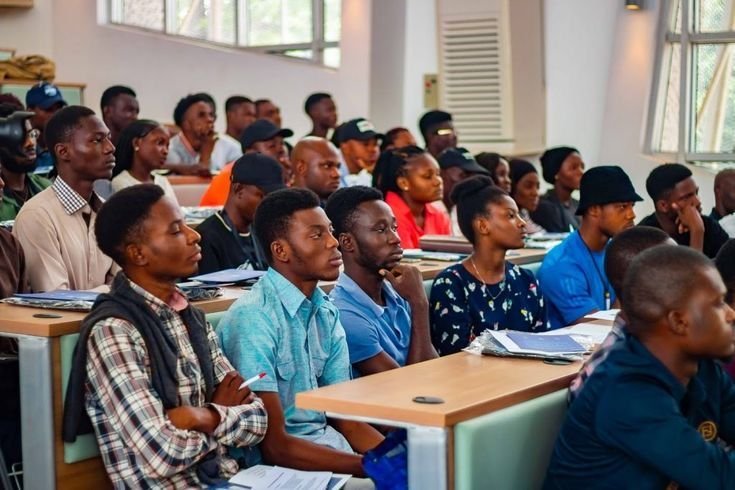

Nigeria’s long-standing National Youth Service Corps programme is facing renewed scrutiny as economic realities shift and youth unemployment rises. For decades, the scheme has served as a rite of passage for graduates, but a growing number of voices now argue that its structure no longer aligns with present-day needs. Instead, they propose a radical rethink: scrap the scheme and redirect its funding into empowering young Nigerians to build businesses.
The debate is not new, but it is becoming louder. At its core lies a simple but urgent question: should Nigeria continue to invest in a one-year service programme, or should it invest directly in the economic independence of its graduates?

The Case Against NYSC in a Changing Nigeria
The National Youth Service Corps was introduced in 1973 after the Nigerian Civil War to promote unity and national integration among young graduates. National Youth Service Corps Its purpose was clear and noble: rebuild trust, foster cultural understanding, and encourage national cohesion.
However, Nigeria today is vastly different from the Nigeria of the 1970s. Critics argue that the scheme has struggled to evolve alongside economic realities, technological advancement, and the expectations of a modern workforce.
One of the strongest criticisms is that NYSC delays graduates from entering the labour market or pursuing entrepreneurial ambitions. In an economy where jobs are scarce, a mandatory one-year pause can feel like a costly detour rather than a stepping stone. Some analysts point out that graduates without NYSC certificates are restricted from many formal job opportunities, effectively making the programme a gatekeeper rather than an enabler.
There are also concerns about safety. Over the years, reports of insecurity in certain regions have made parents and graduates increasingly anxious about deployment. The fear is not theoretical; it reflects broader national security challenges that the programme cannot fully control.
Beyond that, critics question the value derived from the year of service. While some participants gain meaningful experience, others report being underutilised or placed in roles unrelated to their field of study. This mismatch raises doubts about whether the scheme is still delivering on its promise of skill development and national contribution.
A New Proposal: Pay Graduates to Build Businesses
Amid these criticisms, a bold alternative is gaining traction: redirect NYSC funding into structured entrepreneurship support for graduates.
The argument is straightforward. Instead of spending billions annually on camps, logistics, and allowances, the government could invest directly in young people by providing startup grants, training, and mentorship.
Supporters of this idea believe it could address multiple challenges at once. First, it would tackle unemployment by encouraging self-employment. Second, it would stimulate economic growth by increasing the number of small and medium enterprises. Third, it would empower graduates to apply their knowledge in practical, innovative ways.
There is some logic to this approach. Studies on youth employment policies in Nigeria suggest that existing programmes often struggle due to poor implementation and a lack of a long-term strategy. Redirecting resources into a more structured and accountable entrepreneurship model could potentially yield better outcomes.
Moreover, Nigeria already has examples of government-led youth empowerment initiatives, such as N-Power, which aim to provide skills and stipends to young people. While not perfect, such programmes show that large-scale intervention is possible when properly designed.
The idea of paying graduates to build businesses is not just about money. It is about shifting the mindset from job-seeking to job creation. In a country with a rapidly growing youth population, this shift could be transformative.
Why the Debate Is Deeply Divided
Despite its flaws, many Nigerians still defend the NYSC. They argue that the programme offers benefits that go beyond economics. For many participants, it is their first exposure to a different part of the country, a different culture, and a different way of life.
Proponents believe this exposure helps build national unity in a way that no classroom or online programme can replicate. In a country as diverse as Nigeria, this argument carries weight.
Additionally, the scheme provides a structured transition from school to work. For some graduates, the service year offers a chance to gain experience, build networks, and explore career options. According to some opinions, even a modest allowance can help graduates save and prepare for the future.
There is also the concern that scrapping NYSC without a well-designed replacement could create more problems than it solves. Nigeria’s track record with policy implementation has been mixed, and any new system would need careful planning, transparency, and accountability to succeed.

Economic Realities Driving the Conversation
The renewed push to rethink NYSC is largely driven by economic pressure. Youth unemployment remains a significant issue, and many graduates struggle to find meaningful work after completing their service year.
In this context, the idea of spending a year in service without clear economic benefit feels increasingly outdated to some. Critics argue that the funds used to run the programme could be more impactful if channelled into sectors that directly generate income and employment.
There is also a growing recognition that the nature of work is changing. Digital skills, remote work, and entrepreneurship are becoming more important than traditional employment pathways. A rigid, one-size-fits-all service year may not be the best way to prepare graduates for this new reality.
At the same time, Nigeria’s population continues to grow, placing additional pressure on the job market. Without innovative solutions, the gap between graduates and available opportunities is likely to widen.
Back Story: How NYSC Became a National Institution
To fully understand the debate, it is important to look at how NYSC came to be.
The programme was established in 1973 under the military government of Yakubu Gowon as part of efforts to heal the divisions caused by the Nigerian Civil War. Its primary goal was to foster unity by deploying young graduates to states other than their own, encouraging them to live and work among people from different ethnic and cultural backgrounds.
Over time, NYSC became more than just a policy. It became a national tradition, deeply embedded in the identity of Nigerian graduates. The orientation camps, the khaki uniforms, and the shared experience of service have created a sense of belonging that many alumni still value.
However, what worked in a post-war context may not necessarily work in a rapidly evolving economy. The challenge now is how to preserve the positive aspects of the scheme while addressing its shortcomings.

The Way Forward
The question is no longer whether NYSC has value. It clearly does. The real question is whether that value is still sufficient in its current form.
Scrapping the programme entirely would be a drastic move, and one that requires careful consideration. However, maintaining the status quo may also not be sustainable.
A middle ground may be the most realistic path forward. Instead of abolishing NYSC, Nigeria could transform it into a more flexible, impact-driven programme. For example, participants could choose between traditional service, vocational training, or entrepreneurship tracks, with funding and support tailored to each path.
Such a model would preserve the spirit of national service while aligning it with modern economic needs. It would also give graduates more control over their future, allowing them to pursue paths that match their skills and aspirations.
Ultimately, the debate reflects a broader issue: how Nigeria prepares its young people for the future. Whether through NYSC or a reimagined alternative, the goal should be the same. Equip graduates not just to survive, but to thrive.
The conversation is far from over, but one thing is clear. Nigeria’s youth are ready for a system that works better for them, and the time to rethink old structures may already be here.
Join Our Social Media Channels:
WhatsApp: NaijaEyes
Facebook: NaijaEyes
Twitter: NaijaEyes
Instagram: NaijaEyes
TikTok: NaijaEyes