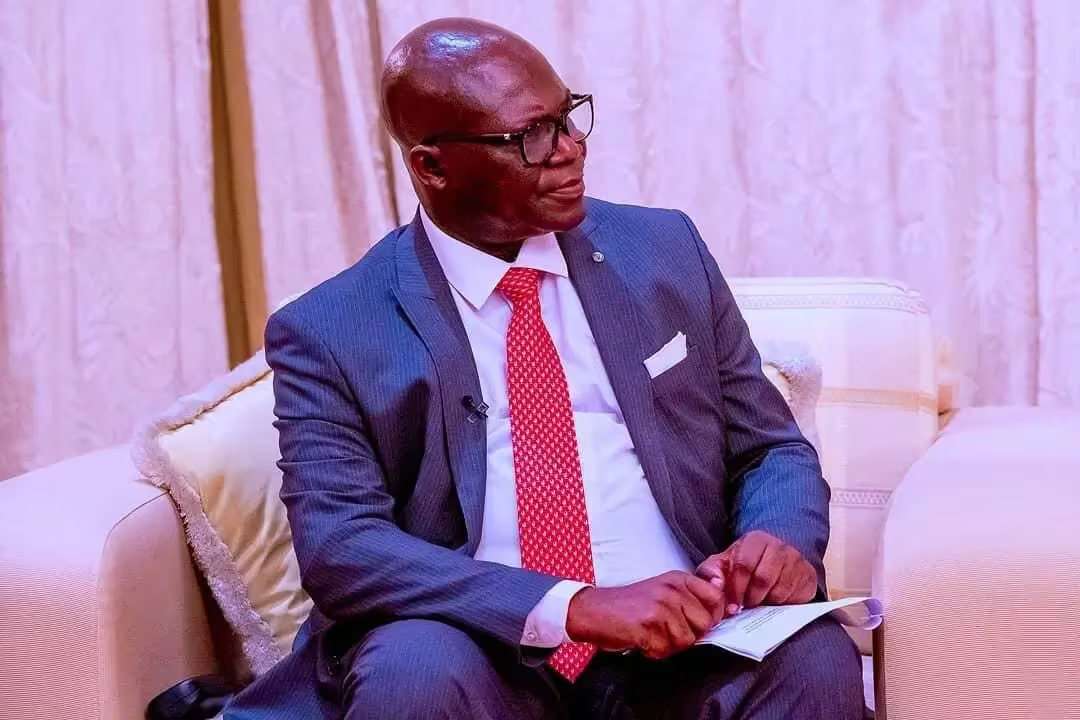

Reuben Abati, veteran journalist and former presidential aide, has suggested that former Nasir El-Rufai may remain in custody until after the election, pointing to both political and legal factors surrounding the case.
Speaking on Arise Television’s Morning Show on Wednesday, Abati described El-Rufai’s bail terms as tough, noting that the court had refused to review them despite claims that the former governor could not meet one of the key requirements.
According to Abati, one of the bail conditions requires El-Rufai to present a Level 17 official from the Federal Capital Territory as surety, a condition he reportedly said he could not fulfil.
Abati also noted that the case involves allegations of wiretapping and corruption, among other issues, with proceedings now adjourned until September.
He argued that beyond the legal process, the matter appears to carry political undertones, adding that in his view, El-Rufai is unlikely to regain freedom before the election.
Abati stressed that while the case may have political implications, it also raises questions of accountability and responsibility, noting that the court has the discretion to determine bail terms, regardless of how difficult they may be for the accused to meet.
BACKSTORY…
The remarks come amid growing public attention over the legal troubles surrounding former Kaduna State governor Nasir El-Rufai, whose case has continued to stir debate across political circles.
Also READ UP: El-Rufai: DSS Moves to End Wire Tapping Trial, as El-Rufai Files No-case Submission
El-Rufai’s detention and the strict bail conditions imposed by the court have raised questions about whether the matter is purely legal or influenced by broader political interests, especially with elections drawing closer. His inability to meet one of the major bail requirements has further complicated his chances of release.
Commenting on the situation, Reuben Abati pointed to the timing of the case and the seriousness of the allegations as factors fueling speculation. The development has since sparked conversations about accountability, judicial discretion, and the possible intersection of law and politics in high-profile cases.

Chinenye Ubunama
Chinenye Ubunama is a content writer and storyteller with a background in Biological Science. She specializes in crafting engaging, well-structured, and SEO-optimized content that simplifies complex ideas for everyday readers. With a focus on audience-centered writing, she consistently delivers value-driven content that informs, connects, and drives visibility across digital platforms.