
Nigeria’s healthcare sector is entering a period where artificial intelligence is moving from conference-room discussions into practical conversations about medical records, diagnosis, maternal health and the delivery of care.
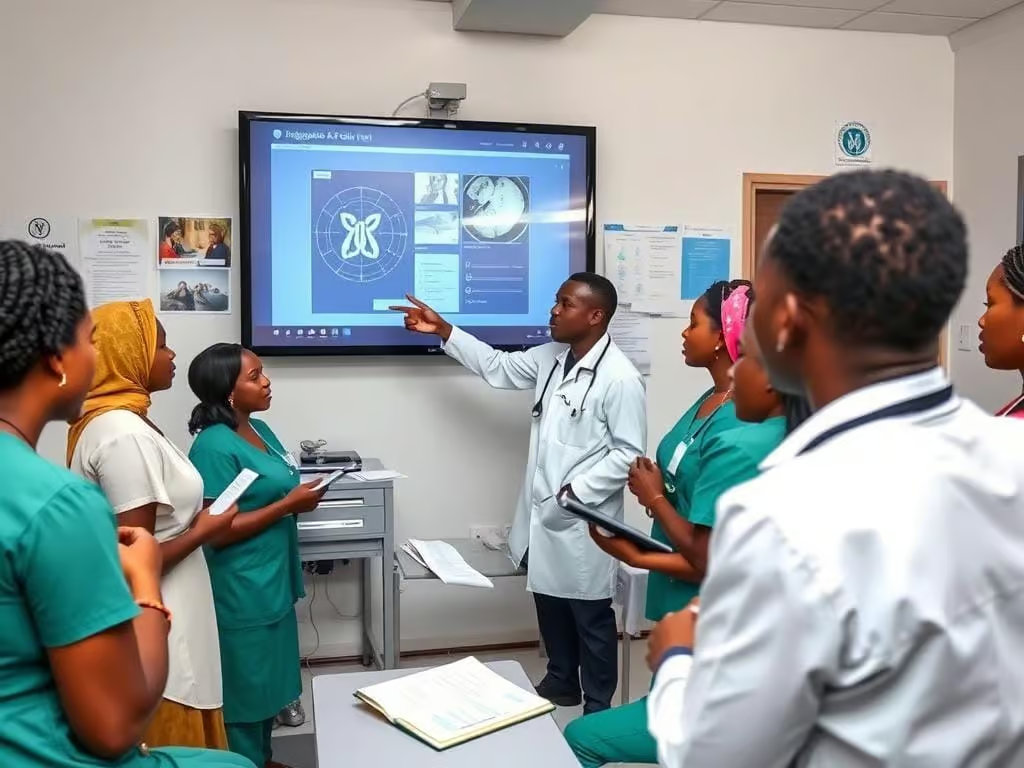
That shift was a major theme at MedVerge 2.0, a health technology gathering held in Lagos on August 15, where healthcare founders, clinicians, innovators and other industry stakeholders examined how technology can help tackle some of the continent’s most persistent health problems.
At the event, Dr Abiodun Adereni argued that Africa should stop treating imported health technology as the default solution. He said Nigeria has the talent, the healthcare challenges and the technological capacity to develop products around local realities. Vanguard reported his call for Nigeria to become a place where health technology is developed, tested, improved and scaled, rather than simply a market for foreign solutions.
Back Story: Why the Health-Tech Conversation Is Changing
Nigeria’s growing interest in AI healthcare is not happening in isolation. For years, the country has been expanding digital health through telemedicine, electronic medical records and technology-enabled health services.
The pressure is also coming from practical problems. Health facilities need better patient information systems, healthcare workers face heavy workloads, and fragmented records can make it difficult to follow a patient’s history.
Experts at MedVerge 2.0 renewed calls for the Federal Government to make electronic medical records mandatory in hospitals. PUNCH reported that stakeholders believe digital records can improve the accuracy and availability of patient information, support clinical decisions and strengthen health system planning.
The Guardian also reported that experts want broader health insurance coverage and stronger innovation to address gaps in access, affordability and patient information management.
These developments point to an important lesson. AI cannot do much for a health system that still struggles to collect, organise and securely share reliable data.
Why Local AI Could Matter More for Nigeria
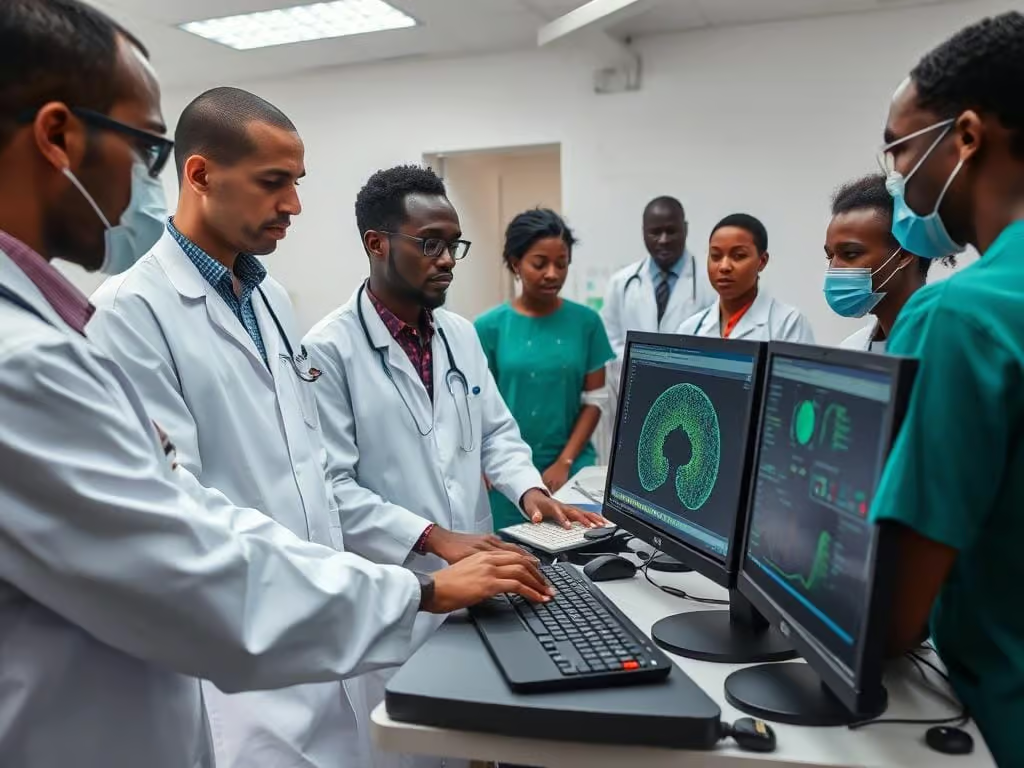
For Nigeria, the strongest case for AI is not about replacing doctors. Adereni himself said he does not expect AI to replace clinicians, but sees it helping them work faster and become more efficient, particularly in diagnosis.
That distinction is important.
A locally developed system can be designed around the realities of Nigerian healthcare, including the way hospitals operate, the types of records they keep, local disease burdens and the constraints faced by health workers. It can also be adjusted as those realities change.
There are already examples of this approach. SmartMRS is developing an AI-powered electronic medical records platform aimed at healthcare providers, while HelpMum Africa has been using technology and AI in maternal and child health. Dobic Health is also building technology-enabled clinical services. Vanguard identified all three ventures as part of the MedVerge initiative.
The broader digital health direction is also visible in government planning. Nigeria’s Federal Ministry of Health and Social Welfare has been promoting a stronger, more resilient digital health system, while Lagos has continued to pursue digital health initiatives designed to improve the use of health data.
The value of these systems will ultimately depend on whether they can move beyond isolated demonstrations and become part of everyday healthcare.
Nigeria Must Move From Innovation to Scale
This is where the conversation becomes more serious.
Creating a health app is one thing. Building a system that can work across Nigerian hospitals, survive funding cycles, protect sensitive patient information and deliver measurable results is another.
Adereni argued that government should adopt and scale innovations that have already demonstrated value. That approach could help prevent promising African health technologies from remaining stuck in small pilot projects.
Funding young innovators is another part of the equation. During MedVerge 2.0, HelpMum Africa awarded ₦10 million to three teams from its CareCode Hackathon. Lavender Care received ₦5 million, ChopBeta ₦3 million and Bumply ₦2 million.
For Nigeria, the opportunity is bigger than AI itself. The country needs stronger health data infrastructure, wider health insurance coverage, better digital skills, sustainable funding and clearer pathways for government procurement and adoption.
Africa cannot build its health future by importing every important solution. It needs to develop technologies that understand African patients, African hospitals and African realities.
Nigeria has a chance to lead that effort. But the real test will not be how many AI products are launched. It will be how many of them become reliable tools that improve healthcare for ordinary people.