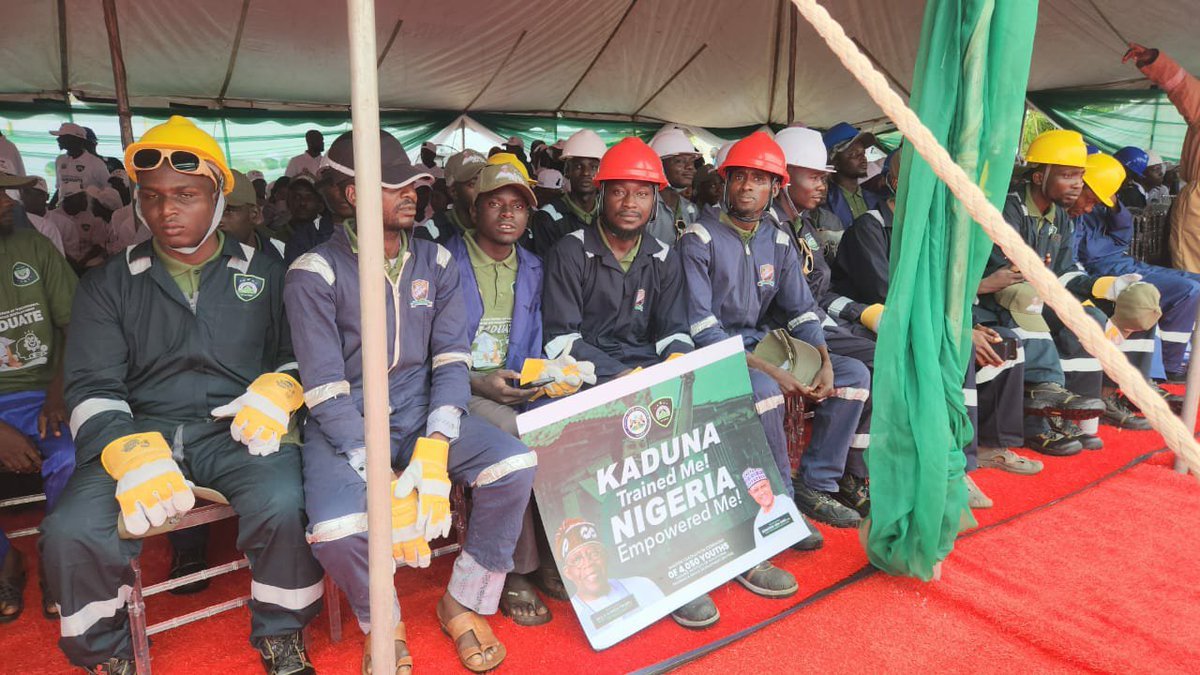

Nigeria is asking industries to look inward for skilled workers as the Kaduna State Institute of Vocational Training and Skills Development graduates 4,050 trainees prepared for the labour market.
The call came from the Minister of Education, Dr Maruf Tunji Alausa, during the institute’s maiden graduation ceremony held on Thursday, August 27, 2026, at the Balarabe Musa Campus in Rigachikun, Igabi Local Government Area of Kaduna State.
Representing the minister at the ceremony, the Executive Secretary of the National Board for Technical Education, Prof Idris Bugaje, urged Nigerian companies to recruit graduates from the Kaduna institute rather than continue sourcing skilled manpower from other countries.
According to TheCable, Bugaje said industries should come to Kaduna and recruit from the institute, pointing to areas such as welding, scaffolding, integrity testing and construction where Nigeria still imports skilled workers.
The Federal Government’s position reflects a growing concern that Nigeria cannot continue to train young people while companies look outside the country whenever they need technical workers.
Also Read: What Nigeria Can Learn from Egypt’s German-Style Technical Schools
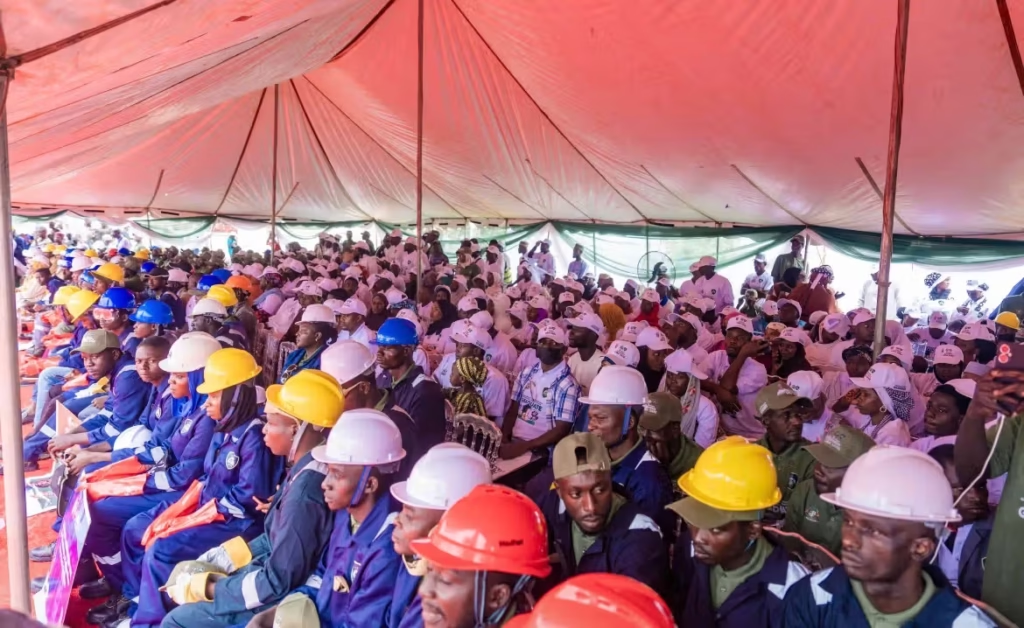
Kaduna graduates trained for practical jobs
The 4,050 graduates come from three campuses of the Kaduna State Institute of Vocational Training and Skills Development and were trained across 14 vocational areas.
The programmes include welding, plumbing, electrical installation, solar installation, automotive mechatronics, computer repairs, fashion design, catering and several other practical trades. Information from the Kaduna State Government confirms that the graduates are now being supported as they move from training into employment and business.
This is particularly significant because vocational education is often criticised for stopping at certificates without providing a clear route into the workplace.
Kaduna is taking a different approach by linking the training with financial assistance and industry opportunities. Governor Uba Sani approved ₦200,000 for each graduate, translating to ₦810 million in total.
The state government said the money will be administered through the Kaduna State Enterprise Development Agency and can be used to purchase essential tools, provide initial working capital, complete professional registration or cover transport costs while graduates seek employment.
Government wants Nigerian talent to fill local jobs
For many years, Nigeria has had an uncomfortable contradiction. The country has a large young population and many unemployed people, yet employers in some technical fields continue to depend on foreign workers.
At the graduation ceremony, Bugaje said skilled workers, including welders, scaffolders, integrity testers and construction workers, are still being brought into Nigeria from other West African countries and Asian nations.
The minister’s message, therefore, goes beyond asking businesses to employ Kaduna graduates. It is a call for industries to recognise that Nigerian workers can be trained to meet technical and professional standards required by modern businesses.
The Guardian reported that the Federal Government believes the Kaduna institute can help reduce Nigeria’s dependence on imported skilled labour.
There is also an attempt to ensure that what is being developed in Kaduna does not remain within the state. According to reports from the event, the institute has produced 14 training manuals covering its different trade areas, with approval granted for their use across Nigeria. This could give other training institutions access to a standardised framework developed from Kaduna’s experience.
Also Read: Breaking: Kaduna Electric Company Sacks 900 Workers
Back Story: Kaduna’s investment in vocational training
The Kaduna State Institute of Vocational Training and Skills Development was established as part of the state’s effort to develop practical skills and improve economic opportunities for young people.
The institute operates across three campuses located in Rigachikun, Soba and Samaru Kataf, allowing it to serve Kaduna’s three senatorial zones. The state’s wider ambition is considerably larger than the 4,050 people who graduated this week.
The Kaduna State Government said it is engaging companies and industries to create opportunities for graduates through direct employment, apprenticeships, internships, mentorship and subcontracting.
That industry connection may ultimately determine whether the programme produces lasting results. Training thousands of Nigerians is useful, but the impact becomes much greater when those graduates can secure jobs, establish businesses and eventually employ other people.
For the graduates, the next stage is now the most important. They have completed their training and received government support, but they still need businesses willing to give local talent a genuine opportunity.
For Nigeria, the bigger lesson is equally clear. A country seeking to reduce unemployment, strengthen local industries and retain economic value cannot rely only on academic qualifications. It also needs people who can build, repair, install, manufacture and solve practical problems.
Kaduna’s latest graduation has put that argument firmly back in the national conversation.