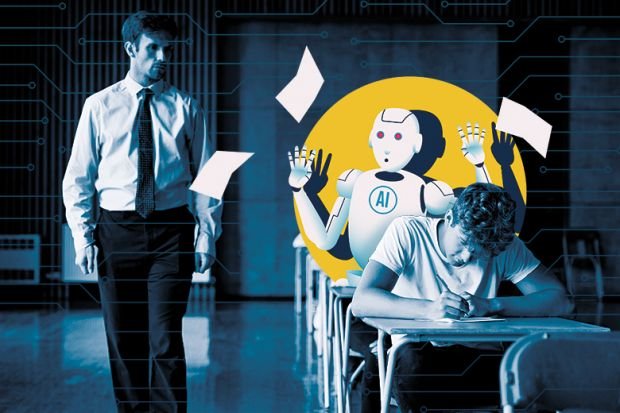

Teachers are changing how they conduct classroom examinations as artificial intelligence (AI) tools make it increasingly easy for students to generate essays, solve mathematical problems and complete assignments without demonstrating their own understanding.
The shift is moving assessments away from take-home essays and predictable questions towards supervised writing, oral examinations, classroom discussions and practical activities. Rather than relying entirely on students’ final answers, educators want to understand how learners develop ideas, solve problems and explain their reasoning.
According to a Reuters report published on October 28, 2026, teachers across the United States are experimenting with different assessment methods to determine what students can genuinely do without depending on chatbots.
The changes reflect a growing concern among educators that assignments completed outside the classroom may no longer provide sufficient evidence of independent learning. However, the response is not simply to ban AI. Some teachers are also exploring ways to incorporate the technology into lessons while ensuring that students continue developing essential academic skills.
Also Read: How AI Could Help Nigeria Detect Disease Outbreaks Before They Become Epidemics
Teachers Turn to Oral Exams and Supervised Writing
One of the most noticeable changes is the return of oral examinations, where students must explain their understanding directly to a teacher.
Tristen Chang, a sixth-grade humanities teacher in San Francisco, has replaced take-home essays with short oral tests. Students answer questions about literary characters, plots, themes and metaphors, allowing the teacher to assess their understanding through direct interaction.
Other educators are increasing the amount of writing completed during lessons. Instead of assigning an essay and receiving a finished document days later, teachers guide students through the writing process in class, observing how they organise their thoughts and develop arguments.
Mathematics teachers are also adjusting their approach. Bobson Wong, a high school mathematics teacher in New York, has reduced the number of homework questions students receive and increased classroom practice. Students are encouraged to explain why they prefer particular problem-solving methods rather than simply provide the correct answers.
These approaches make it easier for teachers to identify gaps in understanding and offer support where necessary. They also place greater emphasis on reasoning, communication and independent thinking, skills that cannot be reliably measured by a final answer alone.
Why AI Detection Is Not Enough
As generative AI becomes more accessible, teachers are discovering that identifying suspected cheating is not a straightforward process. AI-generated work can appear convincing, while detection software may produce inaccurate results.
The University of Minnesota’s guidance on assessment and generative AI recommends redesigning assessments with AI use in mind rather than depending on detection tools or blanket restrictions.
Some teachers are responding by creating less predictable questions that require students to interpret evidence, defend unusual viewpoints or connect classroom concepts to specific situations. Others are asking learners to submit outlines, drafts and explanations of how they reached their conclusions.
Handwritten assignments and practical demonstrations are also returning to some classrooms. In these settings, teachers can observe students working through problems and responding to questions in real time.
However, these measures come with challenges. Oral assessments can be time-consuming, particularly in large classes, while handwritten examinations may not be suitable for every student. Schools must therefore balance examination integrity with accessibility, fairness and the practical demands of teaching.
Back Story: AI Is Forcing Schools to Rethink Assessment
The debate over AI-assisted cheating intensified following the rapid adoption of tools such as ChatGPT, which can produce essays, summarise reading materials and answer complex questions within seconds.
A Washington Post report published on September 6, 2026 documented how educators are redesigning assignments, introducing new classroom procedures and experimenting with controlled AI use to assess students more effectively.
The issue is also attracting attention in Nigeria. On October 27, 2026, Punch reported that the non-governmental organisation Wholesome Character had called for teacher training and stronger policies to protect examination integrity amid concerns about the misuse of AI in secondary schools.
The organisation also warned that unequal access to technology could deepen educational inequalities, leaving some students with advanced digital tools while others struggle to access basic learning resources. Its concerns highlight the need for policies that promote responsible AI use without disadvantaging learners from low-income backgrounds.
For Nigerian schools and universities, the emerging debate presents an opportunity to strengthen assessment methods while preparing students for a technology-driven economy.
As AI becomes a permanent feature of education, the central challenge for teachers is no longer simply determining whether students have used the technology. It is establishing whether they have actually learned, can think independently and can apply their knowledge beyond the classroom.
Also Read: African Universities Push for New Student Assessment Methods as AI Transforms Education