

Nigeria is exploring whether its satellite operator can extend internet access to schools beyond reliable terrestrial networks. Success will also require electricity, devices, trained teachers and affordable learning content.
TechReviewAfrica reported on November 7, 2026, that Nigerian Communications Satellite Limited (NIGCOMSAT) Managing Director Jane Egerton-Idehen led an executive delegation to meet Education Minister Maruf Tunji Alausa. It said both sides discussed a possible satellite technology partnership to widen educational access. The report gave no details of a signed agreement, funding commitment, beneficiary schools or implementation timetable. The engagement should therefore be treated as exploratory, not as a launched programme.
What NIGCOMSAT Could Bring to Underserved Schools
NIGCOMSAT operates broadband through NigComSat-1R. Its Very Small Aperture Terminal (VSAT) services use C-band, Ku-band and Ka-band frequencies, with tele-education among the listed applications.
This could help where fibre-optic cables or mobile infrastructure are costly or slow, supporting online lessons, digital libraries and teacher training.
However, the announcement does not identify the satellite platform, provider, bandwidth package or technical model proposed. Those details matter: schools need stable connections with enough capacity for classes and multiple users, not simply a satellite dish. Satellite service also requires a terminal at each school and ongoing subscription arrangements. For government, the cost per connected school, reliability and repair response may matter as much as geographical coverage. Any procurement plan should specify who maintains equipment when a school loses connection. Procurement should compare satellite links with available fibre, mobile broadband and fixed wireless at each site, rather than assume one technology suits every school.
A Connection Does Not Automatically Create a Digital Classroom
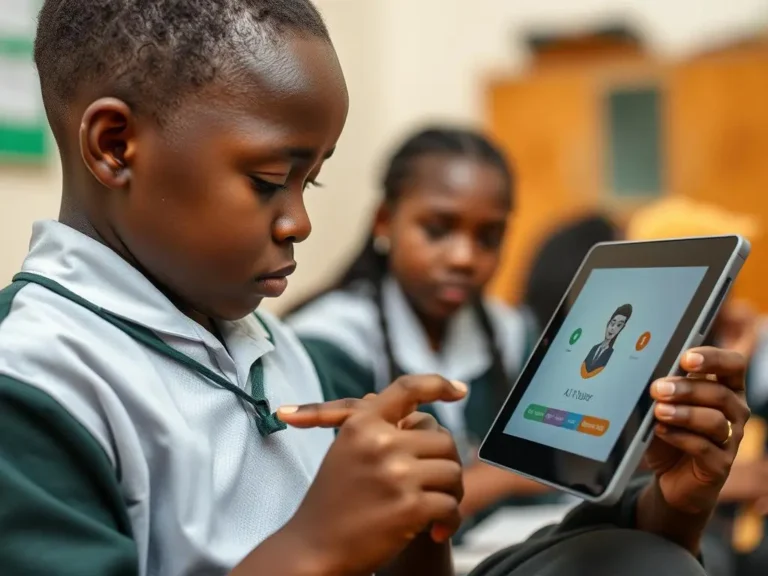
Schools also need electricity, computers or tablets, local networks, relevant content, technical support and digitally capable teachers. Without these, connectivity may be underused.
Nigeria’s National EdTech Strategy for 2025–2030 recognises this combination. It links connectivity with electricity, devices, teacher capacity, sustainable financing, governance and inclusion. Costs continue after installation: schools must pay for subscriptions, repairs, replacement devices and training.
Back Story: A Wider School-Connectivity Push Is Already Planned
The discussions come amid a wider expansion. On October 15, 2026, the Nigerian Research and Education Network (NgREN) reported plans to begin extending internet infrastructure to public primary and secondary schools in 2027, with a pilot across all 36 states.
At an NgREN stakeholders’ meeting, the Universal Basic Education Commission’s executive secretary said its digital technology, hardware and infrastructure initiatives had reached about 2,000 schools out of more than 200,000. The Nigerian Communications Commission and Universal Service Provision Fund also described a separate connectivity effort using Starlink while fibre coverage expands. Satellite connectivity is therefore already among the options being considered, not solely part of the NIGCOMSAT proposal.
The Next Step Is a Measurable Delivery Plan
The partnership could complement NgREN where terrestrial broadband is difficult to deploy. Government should clarify how schools will be selected, who will pay recurring costs, what service levels providers must meet and how learning outcomes will be assessed.
Satellites can provide remote connectivity and support tele-education. The harder question is whether Nigeria can turn that reach into dependable, affordable classroom access. Until implementation details are published, the opportunity is evident, but its scale and timing remain unknown.
Also Read: Experts Push Satellite Technology, AI to Strengthen Nigeria’s Fight Against Insecurity