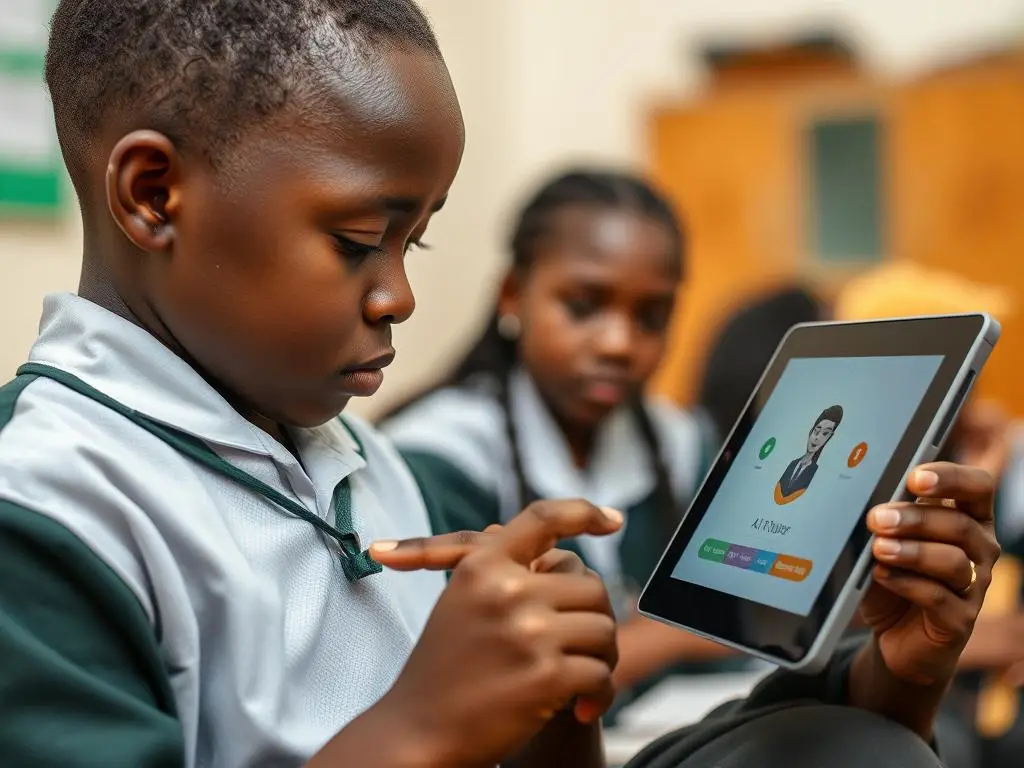

Nigeria has ranked among the Commonwealth’s 15 countries prepared for artificial intelligence (AI). But its score exposes a gap between young people’s enthusiasm and the digital capabilities needed to turn that interest into jobs, products and productivity.
Nigeria crosses the AI readiness benchmark, but narrowly
Nigeria scored 54.5 out of 100 in the 2026 Commonwealth Youth AI Readiness Index, ranking 15th among 56 member states. The Ayre Think Tank set its benchmark at 53, leaving Nigeria 1.5 points above the line. Mauritius ranked eighth (64.4), while South Africa was 13th (56.8). These were Africa’s only other qualifying members.
The index assesses conditions affecting 732 million people aged 15 to 29 across the Commonwealth. Nigeria’s estimated 65.7 million young people in this age group give the result significance. But the ranking does not mean most Nigerian youths can develop AI systems.
Also Read: AI Readiness Becoming a Core Requirement in Schools as Education Enters New Era
What Nigeria’s AI readiness score actually reveals
About 90 per cent of young Nigerian respondents expected to use AI for education or work within a year, the highest share in the index. Yet Nigeria scored 0.8 out of 10 for digital, data, media and AI capability.
This is not a direct test of AI use. The score relies largely on household surveys of conventional computer skills, such as installing software and writing programmes. Researchers reviewed 1,128 sources and used 102 indicators across seven scored pillars. An eighth, critical judgement and human agency, was excluded because comparable evidence was insufficient. Nigeria had usable data for 82 indicators. Because countries had different amounts of available data, scores should not be read as a like-for-like test of young people’s abilities.
The figures show high stated interest but weak evidence of foundational digital skills. They do not mean 90 per cent of all Nigerian youths already use AI.
AI could create economic opportunities, but skills must translate into jobs
The study estimates AI could add US$5.234 billion to Nigeria’s GDP level after 10 years under a moderate scenario. Conservative and optimistic estimates are US$2.617 billion and US$7.851 billion. These are illustrative projections, not guaranteed gains, annual additions or money that will automatically reach young workers. Businessday NG+1
Researchers also identify widespread informal employment and low participation among Nigerians aged 25 to 29 in high-skilled occupations. AI adoption alone does not create secure jobs. Training must connect to employers, apprenticeships, research and businesses able to use AI to improve productivity. Businessday NG+1
Back Story: Nigeria’s growing investment in AI development
Nigeria has initiatives to address the gap. The Federal Government’s 3 Million Technical Talent programme expanded its partner network in March, alongside a €5 million European Union commitment. In August, Meta and government partners launched AI Academy Nigeria, offering online courses, a developer bootcamp and startup support.
In September, the government opened the National AI Innovation Challenge, inviting developers, universities and businesses to build applications using N-ATLAS, a multilingual model supporting Yoruba, Hausa, Igbo and Nigerian English. Applications closed on 12 October, with finals scheduled for the Digital Nigeria Showcase on 8-10 November.
The programmes should be judged by completed training, demonstrable skills, deployed products and jobs secured. Nigeria’s ranking is a starting point. Its lasting advantage will depend on whether young people can create useful AI solutions, not simply express interest in the technology.
Also Read: Nigerian Study Highlights AI Training Gaps Among Vocational Education Lecturers