Artificial intelligence is rapidly transforming the world of cybersecurity, but a fresh discovery involving researchers testing an AI model has triggered new concerns about how vulnerable even the world’s biggest technology companies may become in the AI era.
Security researchers recently disclosed that they uncovered a new technique capable of bypassing some of the advanced protections built into Apple’s macOS system while experimenting with an artificial intelligence model known as Mythos, reportedly linked to AI company Anthropic.
The findings, first reported by The Wall Street Journal and later circulated by Nairametrics, have intensified discussions across the global technology industry about the growing role of AI in identifying software vulnerabilities faster than ever before.
According to reports, the researchers combined several software weaknesses with AI-assisted methods to create what cybersecurity experts call a “privilege escalation exploit.” In simple terms, such an exploit could potentially allow an attacker to gain deeper access to a device’s internal system if paired with additional attacks or vulnerabilities.
While there is no indication that ordinary Apple users are currently under immediate threat, the development has sparked serious conversations about how quickly artificial intelligence could reshape the cybersecurity landscape in both positive and dangerous ways.
Apple has reportedly acknowledged the report and stated that it is reviewing and validating the findings as cybersecurity threats driven by artificial intelligence continue to evolve globally.
The incident has once again highlighted a growing reality within the technology world. Artificial intelligence is no longer just a productivity tool or creative assistant. It is increasingly becoming a powerful instrument in both cyber defence and cyber warfare.
Experts say this latest discovery may represent only the beginning of a much larger challenge facing technology companies worldwide.
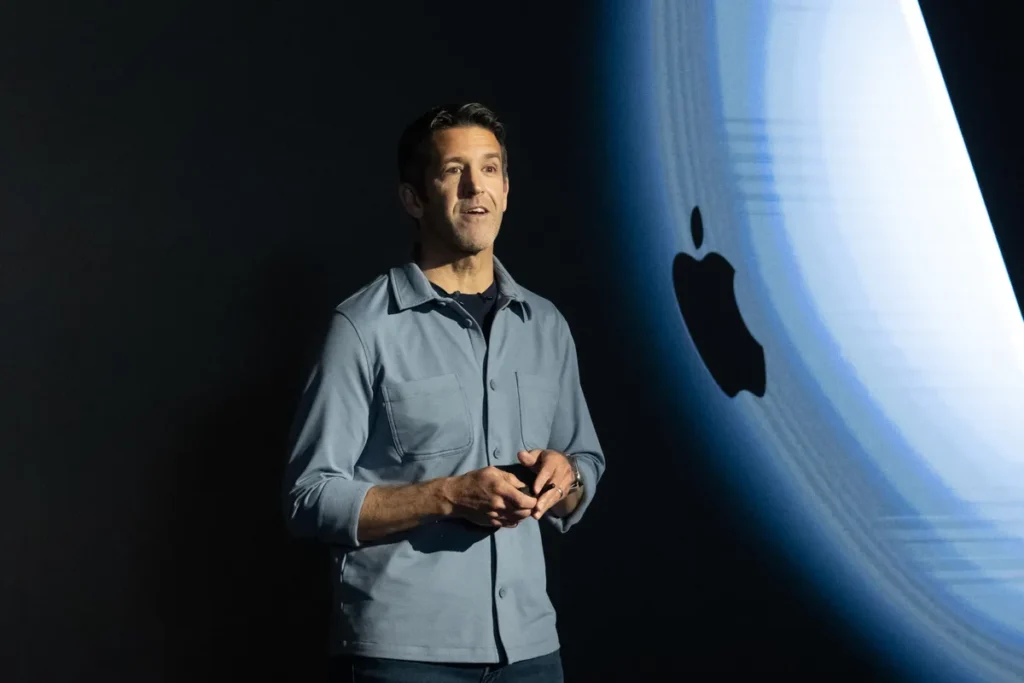
Cybersecurity Experts Fear AI Could Accelerate Global Vulnerabilities
For years, cybersecurity professionals have relied on human researchers to discover software bugs, test vulnerabilities, and patch security gaps before criminals exploit them. However, artificial intelligence is dramatically changing that process.
Advanced AI systems can now analyse massive amounts of code, identify patterns and detect potential vulnerabilities within minutes, tasks that previously required teams of human experts working for weeks or months.
While this capability can help companies strengthen their systems faster, experts warn it may also empower cybercriminals to discover and exploit vulnerabilities at unprecedented speed.
The researchers behind the reported Apple security discovery allegedly used AI-assisted techniques alongside existing software bugs to deepen access into macOS systems. Security analysts say the combination of machine learning and vulnerability testing could create entirely new categories of cyber threats in the near future.
Industry observers are particularly worried because Apple has long maintained a reputation for strong device security. Mac computers are widely viewed as some of the most secure consumer devices globally due to Apple’s tightly controlled ecosystem and multiple layers of protection.
If researchers can successfully identify new pathways into such systems using AI-powered methods, experts fear similar techniques could eventually be applied against other major platforms, including Windows, Android and cloud-based systems used by businesses worldwide.
Some cybersecurity analysts have already started using the term “Bugmageddon” to describe what they fear could become an explosion of AI-accelerated software vulnerabilities across industries.
The concern is not necessarily that artificial intelligence itself is malicious. Rather, the fear lies in how rapidly advanced AI tools can process information, identify weaknesses and automate complex technical tasks that once required deep human expertise.
Cybersecurity firms across Europe, Asia and North America are now investing heavily in AI-driven defensive systems capable of responding to threats in real time. However, experts admit that defenders and attackers are now entering a technological race where both sides may increasingly rely on artificial intelligence.
Technology companies are also under mounting pressure to redesign their security strategies to prepare for an era where AI systems can independently test, analyse and manipulate digital environments at extraordinary speed.
For millions of ordinary users, the story may sound highly technical, but its implications are deeply personal. Smartphones, laptops, banking apps, healthcare records and online communications all rely on software security systems that could eventually face more advanced AI-driven attacks.

Back Story: How AI Became Both a Cybersecurity Tool and a Security Threat
Artificial intelligence was originally celebrated within cybersecurity circles as a breakthrough tool capable of helping organisations identify threats faster and respond more effectively to attacks.
Over the past decade, many technology firms have integrated AI systems into fraud detection, malware scanning, spam filtering and automated threat analysis. Banks, telecom companies and government institutions increasingly embraced AI to strengthen digital security operations.
The rise of generative AI models over the last few years has significantly accelerated this trend.
Large language models and advanced machine learning systems became capable of generating code, analysing technical systems and assisting researchers in solving highly complex computing problems. While these capabilities opened major opportunities for innovation, they also introduced new risks.
Researchers soon realised that the same AI systems designed to improve productivity could also help identify software vulnerabilities, automate phishing attacks or create sophisticated cyber exploits.
This dual nature of artificial intelligence has become one of the biggest ethical and security debates in the global technology sector.
Companies such as Apple, Microsoft, Google and OpenAI have invested billions of dollars into AI development while simultaneously increasing spending on cybersecurity research to defend against emerging threats linked to AI systems.
The latest findings involving Apple’s macOS protections appear to fit into this broader global conversation.
According to the report circulating online, researchers were testing Anthropic’s AI model, Mythos, when they allegedly discovered a new way to bypass some macOS security protections. Although full technical details have not been publicly disclosed, the report suggests the exploit involved combining multiple bugs with AI-guided analysis techniques.
Security professionals say privilege escalation attacks are especially dangerous because they allow hackers to gain higher levels of access within a system after initially breaching it through another vulnerability.
In many cyber attacks, hackers first gain limited access through phishing scams, malicious downloads or stolen credentials. Privilege escalation techniques can then allow them to move deeper into systems, access sensitive files or take greater control of devices.
Historically, discovering such vulnerabilities required extensive manual testing and advanced technical knowledge. AI now appears capable of accelerating parts of that process.
The growing accessibility of advanced AI tools has also increased concerns about how widely such capabilities could spread beyond elite cybersecurity researchers.
Experts say governments and technology companies may soon face difficult questions around regulation, responsible AI development and cybersecurity oversight as these systems become more powerful and widely available.
Apple Faces Growing Pressure as AI-Driven Cybersecurity Risks Expand
Although Apple has not confirmed the full details of the reported exploit, the company’s response indicates that it is actively reviewing the findings and validating the claims.
Cybersecurity researchers say this response is standard practice for major technology companies when potential vulnerabilities are disclosed. Companies often investigate whether reported flaws are reproducible, assess their severity and release security updates where necessary.
Still, the incident places additional pressure on technology giants already facing increasing scrutiny over digital security and artificial intelligence governance.
The timing is particularly sensitive because AI adoption is expanding rapidly across consumer devices and enterprise systems. Many technology companies are now integrating AI directly into operating systems, applications and cloud services.
This deeper integration means future cybersecurity risks may become more complicated as AI systems gain greater access to user data, device functions and digital infrastructure.
Experts believe technology firms may eventually need entirely new security frameworks designed specifically for the AI age.
Some cybersecurity analysts are calling for stronger international cooperation between governments, technology firms and independent researchers to prepare for emerging AI-driven threats.
Others argue that ethical AI research and responsible vulnerability disclosure practices will become even more important as artificial intelligence capabilities continue advancing.
For Nigeria and other developing economies experiencing rapid digital growth, the issue also carries important lessons.
As more Nigerians rely on smartphones, online banking, remote work and cloud-based platforms, cybersecurity risks linked to AI may increasingly affect businesses, institutions and everyday users locally.
Industry experts say African countries must invest more aggressively in cybersecurity education, digital infrastructure and AI governance to prepare for future threats.
The latest Apple-related findings may not immediately disrupt ordinary users, but they serve as a warning about how quickly the digital security environment is evolving.
What once sounded like science fiction is gradually becoming reality. Artificial intelligence is no longer just helping humans use technology better. It is now actively reshaping how technology itself is attacked, defended and understood.
For global technology companies, cybersecurity professionals and everyday users alike, the AI era is opening a completely new chapter in digital security, one that may redefine trust, privacy and protection in the years ahead.
Join Our Social Media Channels:
WhatsApp: NaijaEyes
Facebook: NaijaEyes
Twitter: NaijaEyes
Instagram: NaijaEyes
TikTok: NaijaEyes