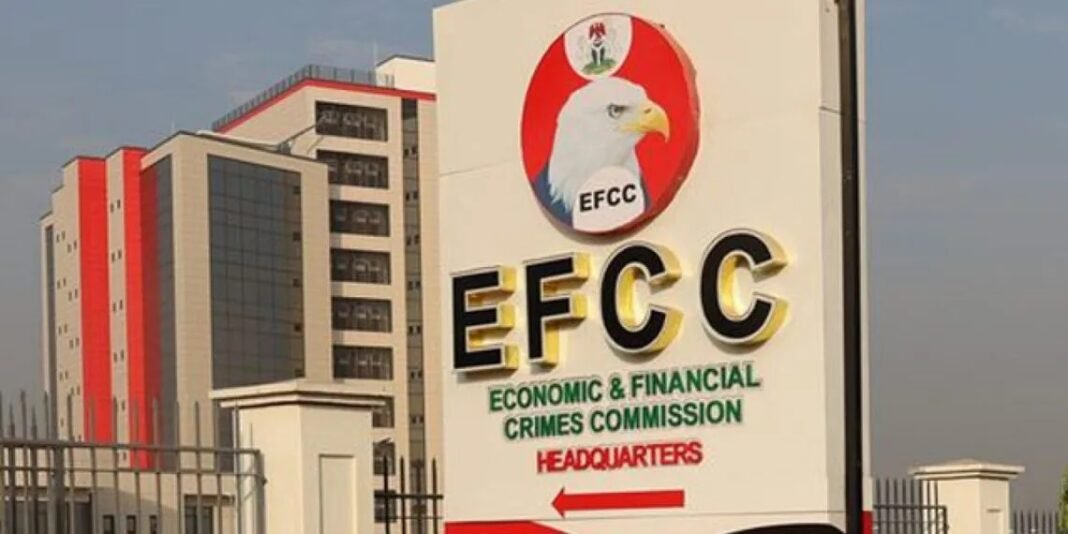

Nigeria’s anti-graft agency has uncovered troubling cases of financial misconduct across tertiary institutions, with evidence pointing to the diversion of students’ fees and other widespread irregularities that threaten trust in the country’s education system.

EFCC flags growing financial misconduct in universities
The Economic and Financial Crimes Commission has raised serious concerns over what it describes as entrenched financial malpractice within Nigerian universities. The agency’s chairman, Ola Olukoyede, disclosed that ongoing investigations have revealed multiple cases of fraud involving funds meant for students.
Speaking at a major stakeholders’ conference in Kano, Olukoyede warned that these practices are not isolated incidents but part of a broader pattern affecting several institutions nationwide.
According to him, the diversion of students’ fees represents a direct betrayal of trust. Parents, students, and taxpayers who invest heavily in education expect accountability, yet findings suggest that some university systems have failed to uphold basic financial integrity.
He emphasised that universities manage large financial inflows from tuition, government interventions, and grants. However, weak oversight has created loopholes that allow funds to be mismanaged or siphoned off.
Fraud patterns expose deep accountability gaps
Investigations by the commission uncovered a range of fraudulent practices beyond fee diversion. These include inflated contract awards, ghost workers on payroll systems, and questionable procurement processes.
Each of these practices reflects deeper structural problems in institutional governance. Inflated contracts, for instance, often involve deliberate overpricing of projects to enable illegal gains, while ghost workers point to manipulation of payroll systems to channel funds to non-existent employees.
The presence of such practices suggests that financial controls within many institutions are either weak or deliberately bypassed. Experts say this pattern mirrors broader corruption trends in Nigeria, where weak enforcement systems and poor transparency enable misconduct to thrive.
For students, the impact is immediate and personal. Fees paid for education may not be fully utilised for academic development, infrastructure, or welfare, leading to deteriorating learning conditions despite rising costs.

Push for technology-driven reforms to curb fraud
In response to these findings, the EFCC is advocating for the adoption of advanced technology, particularly Artificial Intelligence, to strengthen financial management systems in universities.
Olukoyede highlighted several areas where digital tools could make a difference, including automated auditing, payroll monitoring, procurement tracking, and fraud detection systems.
The proposal aligns with global trends where institutions are increasingly using data-driven systems to detect anomalies and prevent financial crimes. AI tools can analyse large volumes of transactions in real time, flag suspicious patterns, and reduce human interference in sensitive financial processes.
While the idea holds promise, experts caution that implementation will require strong political will, investment in infrastructure, and capacity building for staff. Without these, technology alone may not solve deeply rooted governance issues.
Stakeholders call for transparency and institutional reform
The revelations have triggered renewed calls for accountability across Nigeria’s education sector. Stakeholders argue that beyond technological solutions, there is a need for stronger institutional reforms, including independent audits, transparent reporting, and stricter enforcement of financial regulations.
Education advocates stress that restoring trust in universities is critical for national development. When financial systems are compromised, it affects not only students but also the credibility of degrees, research output, and the overall reputation of the country’s academic institutions.
There are also concerns that unchecked financial misconduct could discourage international partnerships and funding opportunities, further limiting growth in the sector.
For many observers, the EFCC’s intervention represents a critical moment. Whether it leads to lasting change will depend on how seriously institutions respond and whether enforcement actions follow the revelations.
Back story: corruption concerns and Nigeria’s education sector
The latest findings are part of a long-standing struggle against corruption in Nigeria’s public institutions. Over the years, various sectors, including education, have faced allegations of financial mismanagement and weak accountability systems.
Historically, corruption has been linked to structural challenges such as poor oversight, inadequate enforcement of laws, and entrenched patronage networks. These factors have created an environment where financial misconduct can persist with limited consequences.
Within the education sector, the stakes are particularly high. Universities handle significant funds from tuition fees, government allocations, and intervention agencies. Without strong governance frameworks, these resources can be vulnerable to abuse.
Recent concerns around deductions from student funds and irregular financial practices have further highlighted the need for urgent reforms. The EFCC’s latest disclosure adds to growing evidence that systemic issues must be addressed to safeguard the future of higher education in Nigeria.
As investigations continue, attention is now focused on whether concrete actions such as prosecutions, policy reforms, and institutional restructuring will follow. For students and parents, the expectation is clear: accountability must move beyond rhetoric to real change.
Join Our Social Media Channels:
WhatsApp: NaijaEyes
Facebook: NaijaEyes
Twitter: NaijaEyes
Instagram: NaijaEyes
TikTok: NaijaEyes