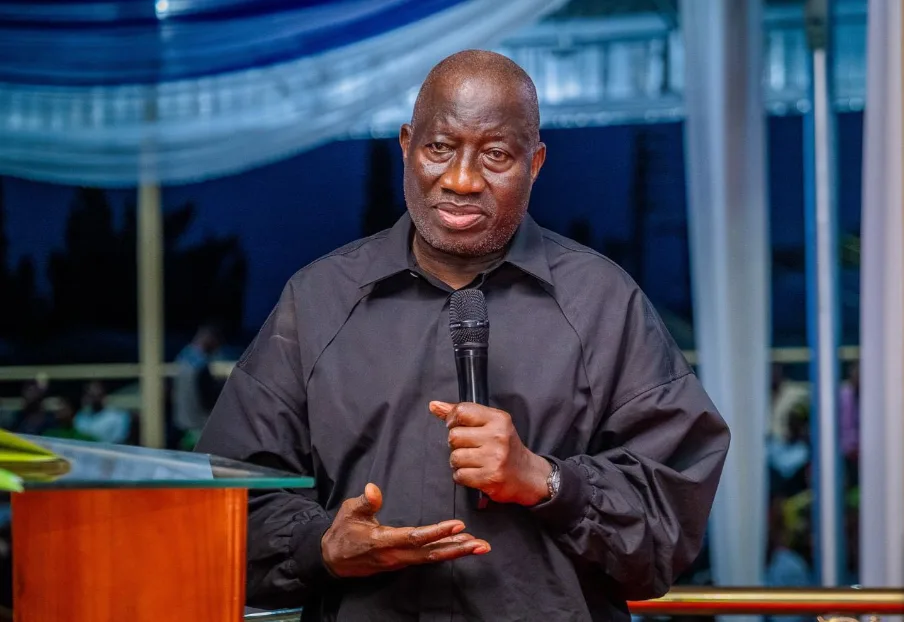

Former President Goodluck Jonathan’s explanation for conceding the 2015 presidential election has resurfaced at the presentation of Muhammadu Buhari’s authorised biography in Abuja. The account matters beyond the personal regard Jonathan reportedly had for his opponent. It can be compared with what he said publicly at the time, while results were still being collated and tensions remained high.
At Thursday’s event, November 19, former Senate President Anyim Pius Anyim represented Jonathan and said the former president regarded Buhari as a statesman who loved God and Nigeria. Anyim said Jonathan saw no reason for confrontation because he believed Buhari would put the country first. Jonathan did not attend, so this should be attributed to Anyim’s account, not presented as a fresh speech or interview.
That reported explanation should not be treated as the only reason for his decision, because his own 2015 statement also stressed restraint, national stability and constitutional channels for resolving disputes.
What Jonathan said in 2015
Jonathan’s public statement on March 31, 2015 offers an important comparison. He said nobody’s ambition was worth the blood of any Nigerian and placed national unity, stability and progress above personal ambition. He congratulated Nigerians and said he had conveyed his best wishes to Buhari.
He also urged people aggrieved by the announced results to seek redress under the Constitution and electoral laws. Conceding the political contest, therefore, did not mean that every electoral complaint had to be abandoned.
Also Read: Nigeria Unity Colleges Resume as King’s College Concession Review Continues
The result that changed Nigeria’s political history
The election was held on March 28, 2015. INEC’s final figures gave Buhari of the All Progressives Congress 15,424,921 votes and Jonathan of the Peoples Democratic Party 12,853,162, a margin of 2,571,759. INEC announced the final result in the early hours of April 1.
Jonathan had called Buhari to concede on March 31, before the formal declaration. It was the first time since the 1999 return to civilian rule that an opposition party won the presidency and an incumbent president conceded defeat.

What observers said about the transition
The European Union Election Observation Mission described Jonathan’s concession as commendable and said it helped create a more peaceful environment for subsequent state elections. But observers also recorded procedural weaknesses, violence and problems in the collation process.
The distinction matters. The peaceful handover was a democratic achievement, but it did not erase concerns about election administration or the need for credible institutions. Nigeria’s progress cannot depend only on whether rival leaders trust one another.
Back Story: Why the concession still matters
The Commonwealth Observer Group described the 2015 polls as generally peaceful and transparent, while acknowledging organisational and technical shortcomings. Buhari took office on May 29, 2015, ending the PDP’s 16-year hold on the presidency.
Anyim’s latest account adds a personal explanation: Jonathan reportedly believed Buhari was committed to Nigeria. Jonathan’s 2015 statement, however, emphasised national unity and lawful redress. Together, the accounts point to a lasting lesson: peaceful transfers of power need responsible leaders and institutions capable of managing disputes fairly.
Also Read: Buhari’s Ex-Aide: Bashir Ahmad Criticises Obasanjo, Yar’Adua, and Jonathan