
The Defence Headquarters’ denial that the Nigerian military supplied camouflage uniforms seen in a video involving suspected bandits answers one question but leaves another unresolved: where did the clothing come from?
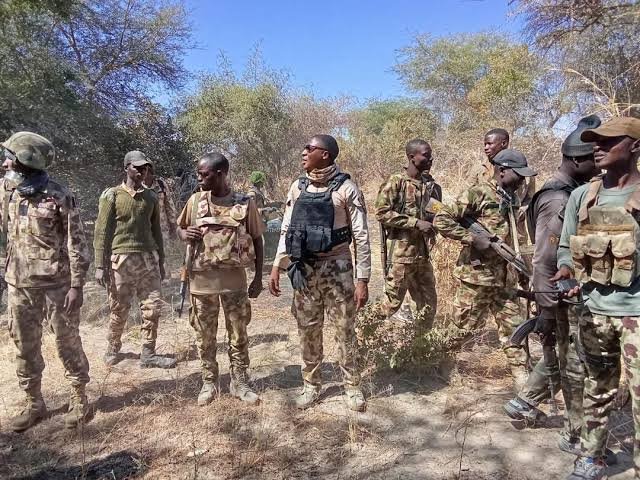
The footage, reported by Punch on November 20, showed woodland and desert-pattern uniforms spread on the ground, with others packed in sacks. Director of Defence Media Operations, Maj. Gen. Michael Onoja, said the uniforms were not from the Nigerian military. He said the DHQ had received no report of a military supply vehicle being attacked and looted.
Those statements establish the military’s position, not the garments’ origin or the footage’s authenticity. The issue is not only whether the military supplied the clothing directly, but whether restricted military-style garments are reaching criminal networks through other routes.
The limits of the DHQ denial
Onoja rejected two possible links: direct military supply and the looting of military supply vehicles. His denial should be reported, but it does not amount to a completed investigation into the garments’ provenance.
The report does not identify where or when the video was recorded, who first uploaded it, or whether the clothing carries labels, batch numbers or markings traceable to a manufacturer or authorised supplier. It does not say whether investigators have examined military stores or procurement records.
Also Read: IGP Approves New Uniforms, Kits for Police Officers Nationwide
Evidence needed to trace the garments
Camouflage patterns can resemble official designs without proving that garments came from government stock. Establishing provenance would require examining the items and tracing how they were produced, sold, issued or transferred.
Why the source of the uniforms matters
Military clothing can signal official authority. In areas affected by insecurity, that appearance may help criminals deceive residents, gain access to places or discourage people from challenging them. The risk is impersonation, not simply the wearing of a particular pattern.
The supply question therefore matters even if the military denies direct involvement. If the clothing is counterfeit, investigators would need to identify its manufacturers and distribution network. If it is genuine government stock, they would need to establish how it left authorised custody and whether inventory controls failed. Neither explanation has been established.
Back story: restrictions have existed for years
In November 2016, the DHQ warned that criminals were using military uniforms to pose as personnel and gain access to public places. Its statement cited the arrest of a person posing as a Major in Abuja and an attack in Rivers State in which four security operatives were killed by gunmen wearing military uniforms.
In February 2024, the Federal Government reaffirmed restrictions on military camouflage. The Ministry said the Armed Forces could use it, and police only during joint operations with the military; other paramilitary agencies were told to stop.
The latest footage revives an enforcement problem. The next step is verifiable information about the uniforms’ source, not speculation. The DHQ has denied that they came from the military; a traceable investigation could establish whether they were counterfeit, diverted or obtained another way. The investigation should make its evidence publicly clear.
Also Read: Nigerian Army intercepts suspected terrorist supplier, recovers 150 combat boots in Zamfara State