
Nigeria’s education system needs a major curriculum review to prepare students for the realities of the modern workplace, the United Nations Children’s Fund (UNICEF) has warned, highlighting the growing gap between what young people learn in school and the skills employers require.
UNICEF Deputy Representative in Nigeria, Dr Rownak Khan, made the call during a joint visit by UNICEF and Airtel Africa to schools in Lagos and youth skills programmes at Yaba College of Technology (YABATECH). The visit, held in October 2026, showcased efforts to expand digital learning and improve employment prospects for young Nigerians.
Khan said the country had an established education system, but much of its curriculum had not kept pace with technological developments and changing labour market demands. She warned that young people often encounter difficulties when they move from the classroom into the workplace because their qualifications do not always translate into practical, marketable skills.
According to THISDAY’s report on UNICEF’s curriculum review proposal, Khan called for stronger collaboration between government, educational institutions, private companies and development partners to ensure that education prepares students for real employment opportunities.
Her message carries particular significance for Nigeria, where thousands of young people complete secondary and tertiary education each year but still face the challenge of finding jobs that match their qualifications. A curriculum that combines academic knowledge with digital competence, technical training and practical experience could help narrow this gap.
UNICEF also stressed that digital skills development must go beyond classroom instruction or the collection of certificates. Training programmes should equip young people with competencies they can use to secure employment, establish businesses and build sustainable livelihoods.
Also Read: UNICEF, Airtel Expand Free Digital Learning to One Million Nigerian Students
Digital Learning Initiative Reaches Schools and Young People
The UNICEF and Airtel Africa partnership is helping to expand access to digital education and practical skills training, with connectivity playing a central role in reaching learners who might otherwise struggle to access online resources.
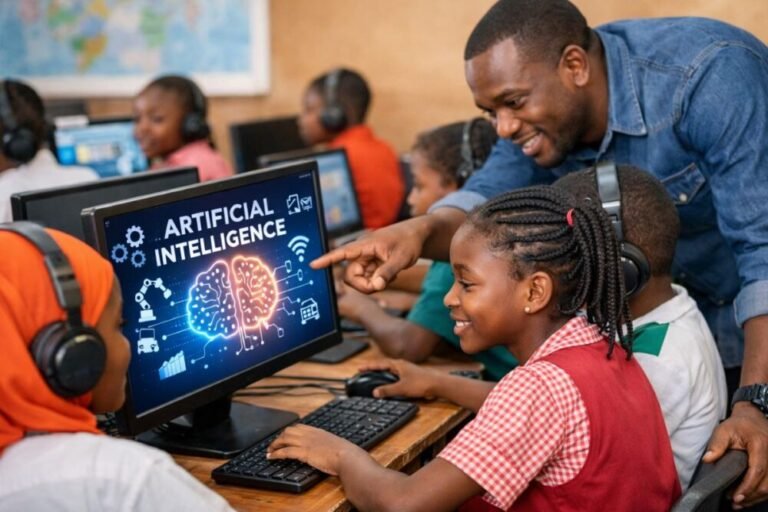
During the visit, students and teachers demonstrated the use of digital tools, including artificial intelligence, in classroom activities. At YABATECH, young people showcased how programmes such as Passport to Earning and the Youth Agency Marketplace (YOMA) support skills development, entrepreneurship and employability.
According to UNICEF Nigeria’s announcement on digital learning, the partnership has connected nearly 2,000 schools across Nigeria, reaching approximately one million students and more than 20,000 teachers. More than 19,000 teachers have also received digital literacy training.
The collaboration provides free access to selected learning platforms by removing data charges, helping learners overcome one of the barriers to digital education. These platforms include the Nigeria Learning Passport, which offers digital educational content, and YOMA, which connects young people with opportunities to develop skills and improve their employment prospects.
However, expanding internet access alone will not solve Nigeria’s education challenges. Schools also need functional digital equipment, reliable electricity, qualified teachers and learning materials that reflect the needs of the modern economy.
Back Story: Nigeria’s Growing Digital Skills Gap
Nigeria has made efforts to expand digital learning, but unequal access to technology and differences in educational quality continue to affect many children and young people.
In its report on connecting every child to digital learning, UNICEF highlighted barriers including limited internet access, inadequate digital infrastructure and gaps in teachers’ information and communications technology skills.
These challenges are particularly significant in underserved communities, where learners may have limited opportunities to use computers, access online learning platforms or acquire practical digital experience.
The Nigeria Learning Passport is one initiative designed to address some of these difficulties by providing curriculum-aligned digital resources. Its online and offline learning options can support students in areas where internet connectivity remains unreliable.
UNICEF’s latest call for curriculum reform builds on this broader effort to ensure that young people are not only enrolled in school but also acquire the knowledge and competencies needed to participate in the economy.
Curriculum Reform Must Translate Into Real Opportunities
For Nigeria, the next step is to ensure that education policy responds to the changing demands of employers and emerging industries. Regular curriculum reviews should involve teachers, technology experts, businesses and other stakeholders who understand the skills required in today’s workplace.
Students should have greater opportunities to develop computer literacy, problem-solving abilities, communication skills and technical expertise alongside their traditional academic subjects. Vocational education and practical workplace experience should also receive greater attention.
Teacher training will be equally important. Educators need the resources and support to integrate digital tools effectively into lessons, rather than simply introducing technology without improving learning outcomes.
The government must also ensure that rural communities, girls and children with disabilities are not excluded from digital education initiatives.
UNICEF’s appeal presents Nigeria with an important opportunity to reconsider how its education system prepares the next generation. By modernising curricula, expanding digital access and connecting learning with employment, the country can help more young people turn their qualifications into meaningful careers and sustainable livelihoods.
Also Read: Nigeria’s Agriculture Education Reform Targets More Practical Training in Polytechnics