

Artificial intelligence has quickly become a normal part of student life across universities and colleges around the world. From generating essays to summarising lecture notes, tools powered by generative AI are now helping students complete tasks in minutes that previously required hours of research and writing. But new research is raising concerns that the convenience of these tools may come with a hidden cost, according to Kisii Press Club.
A recent academic study has found that students who rely heavily on AI for quick answers may struggle to retain information over time. The research suggests that while AI can help students finish assignments faster, it may reduce the depth of learning that occurs during the process.
This finding is especially significant as artificial intelligence becomes deeply integrated into education systems. In many universities today, AI tools are used for drafting essays, solving mathematical problems, summarising research papers and even preparing exam notes.
The convenience is undeniable. However, educators are beginning to ask a difficult question. Are students learning less when machines do most of the thinking for them?
Experts say the issue is not about whether AI should be used in education, but about how it should be used responsibly.
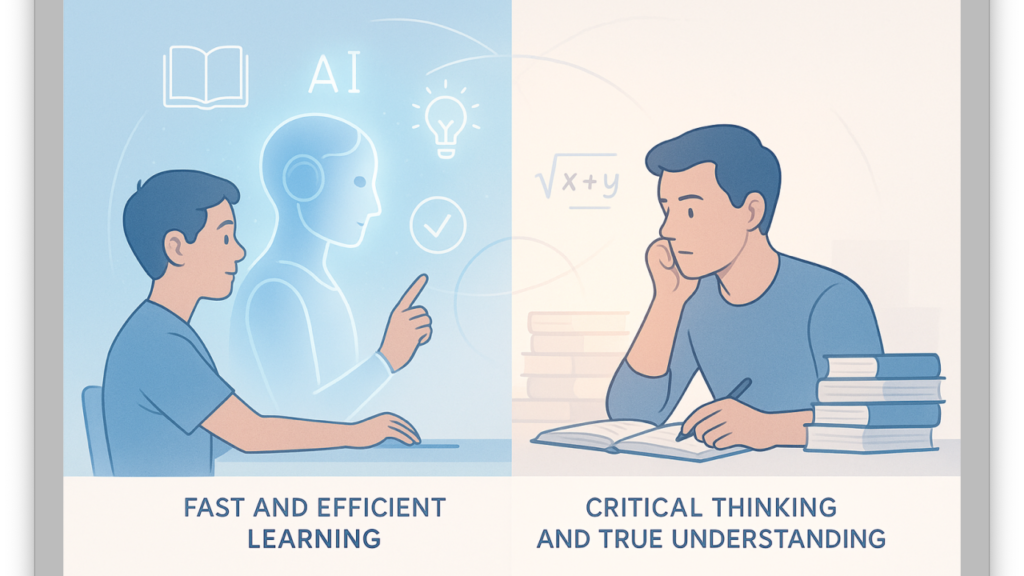
What the research discovered about memory and learning
The study that triggered the discussion was designed as a controlled experiment involving university students. Participants were divided into groups and asked to complete study tasks using different methods. Some students relied on AI tools for assistance, while others used traditional approaches such as textbooks, personal notes and independent writing.
After completing the tasks, the researchers tested the students again later to measure how much information they still remembered. The results revealed a clear difference.
Students who depended on AI tools tended to remember significantly less of what they had studied compared to those who worked through the material on their own.
Researchers believe this happens because AI often delivers ready-made answers instantly. While that speed can be helpful, it reduces the mental effort required to analyse information, structure arguments and recall facts.
Learning experts have long argued that the brain remembers information better when it struggles with the material first. When students actively work through a problem or organise ideas themselves, the brain builds stronger memory connections.
When AI generates the solution immediately, that mental effort may disappear.
A separate investigation conducted by researchers at the MIT Media Lab produced similar conclusions. Participants who used AI writing tools during essay tasks showed lower levels of brain engagement and weaker memory recall than those who wrote without AI assistance.
These findings are beginning to reshape how educators think about artificial intelligence in learning environments.
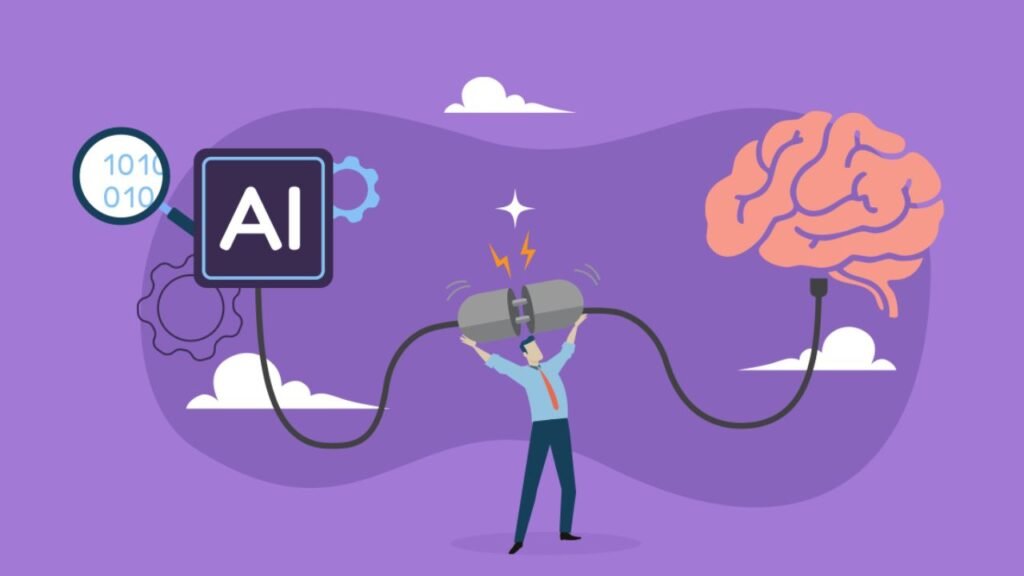
Why quick answers may weaken deep thinking
At the centre of the debate is the concept of cognitive effort. Psychologists have long observed that deeper learning happens when students engage actively with ideas rather than simply receiving answers.
AI tools are designed to produce results quickly. Many systems can generate summaries, explanations and completed assignments almost instantly. While this saves time, it may also remove the thinking process that normally helps students understand complex concepts.
Education researchers warn that this pattern could lead to what some call “surface learning.” In this situation, students complete tasks successfully but fail to internalise the knowledge behind them.
As AI adoption increases, universities are already seeing changes in how students approach assignments. Some learners use AI mainly to check their understanding or generate ideas, which can support learning. Others rely on it primarily for finished answers.
Studies show that AI use among students has risen dramatically in recent years, with adoption rates reaching more than ninety percent in some academic environments.
Yet only a small portion of students receive formal training on how to use these tools effectively for learning rather than simple task completion.
Education specialists say the problem is not the technology itself. Instead, it is the way many people use it.
When students use AI to clarify difficult concepts, generate practice questions or organise study plans, it can improve productivity and comprehension.
But when AI replaces the learning process entirely, the brain may not absorb the knowledge.
Rethinking how AI should be used in education
The growing influence of artificial intelligence is forcing schools and universities to rethink teaching methods and assessment systems.
Many educators now believe that banning AI tools is unrealistic. Instead, they argue that students must learn how to use them in ways that support thinking rather than replace it.
Some institutions are beginning to redesign assignments so that students explain their reasoning, defend their arguments orally or demonstrate understanding through projects that cannot easily be automated.
Others are introducing courses that teach AI literacy, helping students understand how these tools work and when it is appropriate to use them.
Education experts also emphasise the importance of maintaining “productive struggle” in learning. This means ensuring that students still face challenges that require independent reasoning, reflection and creativity.

In many cases, the most effective approach may involve using AI as a tutor rather than a shortcut. For example, AI systems can guide students through step-by-step explanations instead of providing the final answer immediately.
Such methods encourage active engagement with ideas while still benefiting from the speed and accessibility of modern technology.
Ultimately, the research does not suggest that AI should disappear from classrooms. Instead, it highlights the need for balance.
Artificial intelligence has the power to expand access to knowledge, personalise learning and support students who need extra help. But it must be used carefully to ensure that convenience does not replace understanding.
As universities around the world adapt to this new reality, one thing is becoming clear. Technology may change how students learn, but the fundamental process of thinking, questioning and remembering still belongs to the human mind.
Join Our Social Media Channels:
WhatsApp: NaijaEyes
Facebook: NaijaEyes
Twitter: NaijaEyes
Instagram: NaijaEyes
TikTok: NaijaEyes