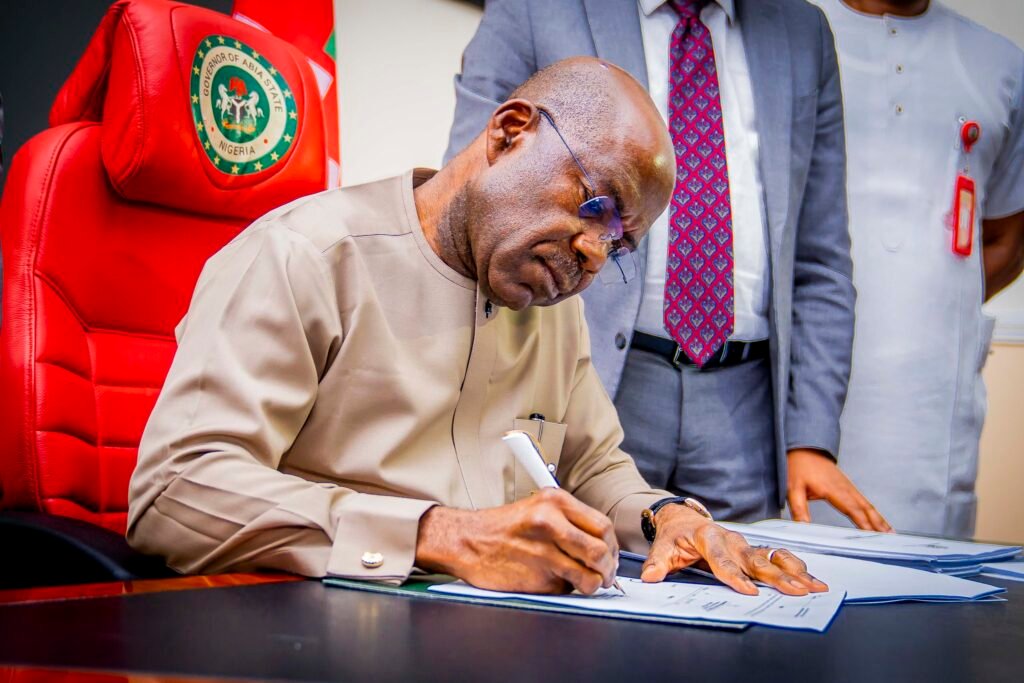
In a significant endorsement of local educational policy, the United Nations Educational, Scientific and Cultural Organisation has applauded the strides made by the Abia State Government under Governor Alex Otti in transforming learning and human capital development across the state. The international agency’s commendation comes amid growing calls for improved educational standards in Nigeria.
During a high‑level visit to the Governor’s office in Isiala Ngwa South Local Government Area, the UNESCO Head of Office and Country Representative to Nigeria and ECOWAS, Dr Jean‑Paul Ngome‑Abiaga, expressed deep satisfaction with the reforms introduced by the Otti administration since 2023. He described the initiatives as laying a solid foundation for boosting learning outcomes and building a stronger next generation.
Ngome‑Abiaga highlighted that the reforms are already producing noticeable improvements, attributing this to both increased investment and innovative policy shifts within the education sector. He also reaffirmed UNESCO’s commitment to further support Abia State in education and related development areas.
UNESCO Applauds Bold Policy Decisions and Budget Prioritisation
At the heart of UNESCO’s commendation is the state’s decision to allocate 20 per cent of its annual budget to education. This level of prioritisation aligns with international education funding benchmarks and signals a serious commitment to strengthening schools, increasing access, and improving teaching quality. UNESCO has also underscored the importance of sustained funding for health education and teacher training as components of holistic human capital development.
In his remarks, Dr Ngome‑Abiaga pointed to tangible results from existing collaborations between UNESCO and Abia State institutions, specifically noting:
- Training of over 1,000 teachers in health education
- Engagement of more than 700 community and religious leaders in HIV and health awareness
- Inclusion of over 300 schools in the Abia First Education Programme
These achievements, he said, illustrate the positive impact that coordinated efforts between state government and international partners can deliver.
The UNESCO representative urged the Abia State Government to deepen partnership efforts with the agency, advocate for increased budget allocations in priority areas, and expand cooperation in science, culture, communication, and information — all of which fall within UNESCO’s broad mandate.

Broader Support Framework and Technical Assistance
Beyond recognition, UNESCO has pledged ongoing technical expertise and institutional support to Abia State. Dr Ngome‑Abiaga made it clear that the organisation remains available to assist the state government at every stage of programme design and implementation. He emphasised that the collaboration was not temporary but rather meant to evolve alongside the state’s developmental goals.
“We are here to assist you, to support your work,” Ngome‑Abiaga emphasised, reinforcing UNESCO’s willingness to share experience, best practices, and professional guidance wherever needed. This message of partnership underscores the international agency’s confidence in Abia’s leadership and its determination to see reforms succeed.
State Government’s Response and Forward Plans
Governor Otti welcomed the UNESCO delegation and expressed appreciation for the support and recommendations put forward. He reaffirmed the state’s commitment to free and compulsory education, noting that school fees had been a major barrier to enrolment in the past. Removing this barrier, he said, has contributed to a notable uptick in school attendance.
In detailing his administration’s education strategy, Otti noted how:
- Thousands of teachers were recruited to expand capacity
- Massive school renovations were undertaken
- Smart schools were introduced
- Curricula were standardised
- Security was enhanced across learning environments
The governor highlighted that these actions have collectively begun to change the dynamics of schooling in Abia. He also stated that the state continues to devote 15 per cent of its budget to health, recognising the inter‑linked nature of education and wellbeing.
Otti assured stakeholders that Abia State would work with UNESCO and other partners to build on progress and tackle persistent challenges, including reducing the number of out‑of‑school children and scaling programmes with measurable impacts.
Collaborative Platforms and Broader Education Initiatives
During the visit, Olapeju Ibekwe, Chief Executive of Sterling One Foundation, spoke about the Africa Social Impact Summit, an event that brings together government, private sector leaders, and development organisations to fast‑track the United Nations Sustainable Development Goals across Africa. Ibekwe said the summit has already unlocked more than $100 million in development financing for key sectors including education.
Ibekwe also spoke about the Business Coalition for Education, launched in partnership with the Office of the Vice President. This initiative is designed to encourage private sector participation in addressing the crisis of out‑of‑school children in Nigeria. She extended an invitation to Governor Otti and pledged support for Abia to join the coalition as a pioneer public sector partner.
Looking ahead, Ibekwe said events like the upcoming Social Impact Summit, scheduled to hold in Lagos in July, offer a platform for shared learning and collective action. These gatherings, she believes, are essential in crafting cross‑sector solutions that can uplift the entire education ecosystem.

Implications for Education Reform in Nigeria
UNESCO’s endorsement of Abia State’s education reforms has broader implications beyond the state. It resonates with ongoing national conversations about education funding, curriculum relevance, teacher quality, and student outcomes. Across Nigeria, there is recognition that adequate investment and effective policy implementation are critical for achieving meaningful progress.
While the Federal Government has introduced various policies and frameworks for broader educational reform, including emphasising implementation over theory, state‑level actions like those in Abia demonstrate what is possible when leadership prioritises investment and collaboration.
UNESCO’s support of Abia’s work may inspire other states to strengthen their own education systems by adopting similar funding commitments, fostering partnerships, and focusing on measurable outcomes. This could help accelerate progress towards national and global education targets, including reducing the number of out‑of‑school children, improving teacher competency, and enhancing overall learning quality.
As Nigeria continues to grapple with longstanding challenges within its educational sector, the Abia example offers a hopeful narrative of progress through sustained commitment, international cooperation, and innovative policy action. With UNESCO’s backing, there is momentum for meaningful change that prioritises learners and prepares them for the demands of a rapidly evolving world.
This endorsement also strengthens the case for harmonised efforts between sub‑national governments, federal authorities, development partners, and civil society to ensure that every child has access to quality education.
Join Our Social Media Channels:
WhatsApp: NaijaEyes
Facebook: NaijaEyes
Twitter: NaijaEyes
Instagram: NaijaEyes
TikTok: NaijaEyes
READ THE LATEST EDUCATION NEWS