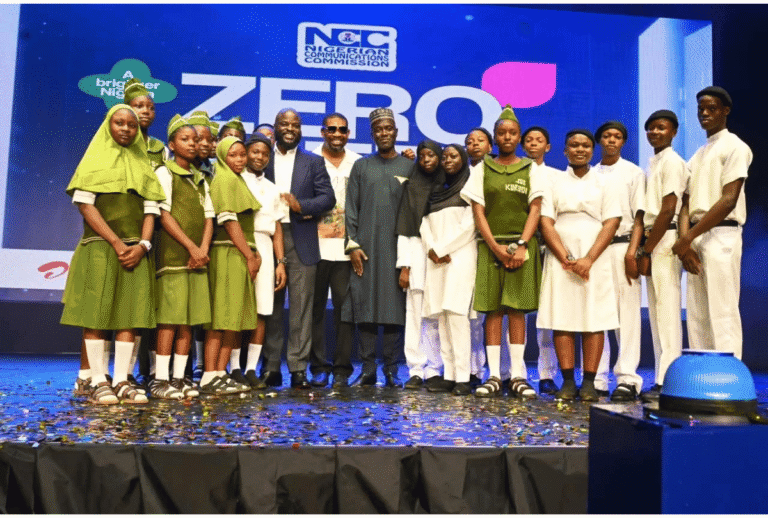

Nigeria’s ambitious student loan programme has reached a defining milestone, with total disbursements under the Nigerian Education Loan Fund crossing N206 billion in less than two years. The figure reflects both the scale of demand for financial support in tertiary education and the growing reliance on structured credit to bridge affordability gaps for students nationwide.
Latest official data shows that more than 1.16 million students across about 270 tertiary institutions have benefited from the scheme since its rollout in 2024. This development signals a significant shift in how access to higher education is being financed in Nigeria, particularly for students from low and middle-income backgrounds.
A rapid rise in applications and nationwide reach
The numbers tell a compelling story. Since the loan portal opened in May 2024, over 1.75 million applications have been received, with more than a million already processed and funded.
This level of participation highlights two realities. First, the demand for tertiary education remains strong despite economic pressures. Second, the financial barriers that once kept many Nigerians out of school are now being addressed more directly through policy-backed intervention.
The spread of beneficiaries across 270 institutions also suggests that the programme is not limited to elite universities alone. Federal, state-owned and other public tertiary institutions are all part of the ecosystem, allowing students from different regions and backgrounds to tap into the opportunity.
What is particularly notable is the steady increase in applications. Even at this scale, the fund continues to record new entries daily, an indication that awareness is still growing and trust in the system is gradually strengthening among young Nigerians and their families.
How the N206 billion has been shared
A closer look at the disbursement structure reveals a dual approach designed to tackle both academic and living costs.
Out of the total N206 billion released so far, about N128.84 billion has been paid directly to institutions as tuition fees. Another N77.45 billion has gone to students as upkeep allowances to support accommodation, feeding and other day-to-day expenses.
This model reflects a deliberate attempt to address the full cost of education rather than just tuition. In Nigeria, where hidden costs often determine whether a student stays in school or drops out, this approach could prove decisive.
Education analysts say this structure reduces the risk of misuse while still giving students the flexibility they need to survive the realities of campus life. By paying schools directly, the system ensures that tuition obligations are met. By providing upkeep funds, it acknowledges that learning does not happen in isolation from basic welfare.
The balance between these two components may ultimately determine the long-term success of the scheme, especially as inflation and cost-of-living pressures continue to affect students nationwide.
Government vision and institutional collaboration
The loan programme was introduced under the administration of President Bola Ahmed Tinubu as part of a broader push to expand access to higher education. It operates on an interest-free model with repayment structured to begin only after beneficiaries complete the National Youth Service Corps and secure employment.
According to the fund’s leadership, the goal is simple but ambitious: no qualified Nigerian student should be denied education because of a lack of money.
Managing Director Akintunde Sawyerr has repeatedly emphasised that the scheme is designed to remove long-standing financial barriers that have forced many students to abandon their academic dreams midway.
There are also signs that institutions themselves are beginning to align with this vision. In a notable example, Delta State University, Abraka, allowed students with verified loan status to sit for examinations pending full disbursement confirmation. This kind of flexibility points to a growing partnership between the fund and universities.
Such collaboration is critical. A loan scheme of this scale cannot succeed without the cooperation of institutions that interact directly with students. Policies that recognise loan approvals, reduce administrative bottlenecks and prioritise academic continuity will play a major role in sustaining confidence in the programme.
At the policy level, supporters argue that the initiative fits into a broader national agenda focused on human capital development. By investing in students today, the government is effectively investing in the future workforce.
Impact, optimism and emerging concerns
There is little doubt that the programme has already made a measurable impact. For over a million students, access to funds has meant the difference between continuing their education and dropping out.
Support groups and policy advocates have described the scheme as one of the most tangible interventions in Nigeria’s education sector in recent years. They point to the scale of disbursement and the number of beneficiaries as evidence that the programme is not just theoretical but actively changing lives.
Yet, beyond the optimism, questions remain about sustainability and long-term outcomes.
One key issue is repayment. While the terms are designed to be student-friendly, the success of the programme will depend heavily on job creation and economic stability. If graduates struggle to find employment, repayment rates could become a challenge, potentially affecting the fund’s ability to support future students.
There are also concerns about administrative efficiency. As application numbers grow, maintaining transparency, preventing delays and ensuring accurate disbursement will require strong systems and oversight.
Another layer of concern revolves around awareness and inclusion. While over a million students have benefited, millions more may still be unaware of the opportunity or unable to navigate the application process due to digital or informational barriers.
Despite these challenges, the general outlook remains cautiously optimistic. The steady rise in applications suggests increasing public confidence, while the expanding institutional participation indicates that the programme is gaining acceptance across the education sector.
For many students, the loan scheme represents more than financial assistance. It is a signal that the system is beginning to recognise and respond to their realities.
As Nigeria continues to grapple with the cost of education and the need for a skilled workforce, the evolution of the student loan programme will be closely watched. Whether it becomes a permanent pillar of the education system or struggles under its own weight will depend on how effectively these early gains are consolidated.
For now, the N206 billion milestone stands as both an achievement and a test. It is proof that large-scale intervention is possible, and a reminder that sustaining it will require discipline, transparency and a continued focus on the students it was designed to serve.
Join Our Social Media Channels:
WhatsApp: NaijaEyes
Facebook: NaijaEyes
Twitter: NaijaEyes
Instagram: NaijaEyes
TikTok: NaijaEyes