
In recent years, educators across the world have begun using data to improve learning outcomes. One of the most promising areas is learning analytics. Schools and universities now gather enormous amounts of information about their students from digital platforms, attendance systems, and classroom interactions. When this information is properly analysed, it can reveal early signs that a student may be struggling and in danger of leaving school early. Instead of reacting too late, schools can act early to support learners and keep them on track.
Learning analytics is broadly defined as the measurement, collection, analysis and reporting of data about learners and their environments with the goal of understanding and improving learning and the places where it takes place. As schools use more online tools like learning management systems, attendance tracking, and digital assessments, they generate data that can be mined for insight into student behaviour, performance patterns and engagement levels.
In many countries, dropout rates remain a serious challenge. A student who leaves school before graduation faces higher risks of unemployment, poverty and limited opportunities later in life. Learning analytics does not solve all of these issues by itself, but it offers a tool that helps educators detect risk much earlier than traditional methods like final exams or periodic tests.

Understanding At‑Risk Students and Why It Matters
A student who is considered at risk is someone whose academic performance, engagement or attendance indicate a higher probability of dropping out than their peers. In many places, these learners are identified by looking at attendance patterns, scores on assignments and participation in class activities. Schools that ignore these signs risk losing students completely before there is time to intervene.
Research shows that engaging learning environments and timely support dramatically improve the chances that a learner will stay in school and complete their programme. This is important in Nigeria and across Africa, where access to quality education is a key driver of economic progress. When teachers and administrators can identify struggling students early, they can provide tutoring, counselling, mentoring and other forms of help long before it’s too late.
Traditionally, dropout prediction was based on static information like past grades and attendance history, but this often misses emerging patterns that only appear when data is reviewed over time. With learning analytics, patterns from many different sources can be analysed together, giving insights into how a student learns and behaves on a weekly or even daily basis.
How Schools Use Data to Predict Risk
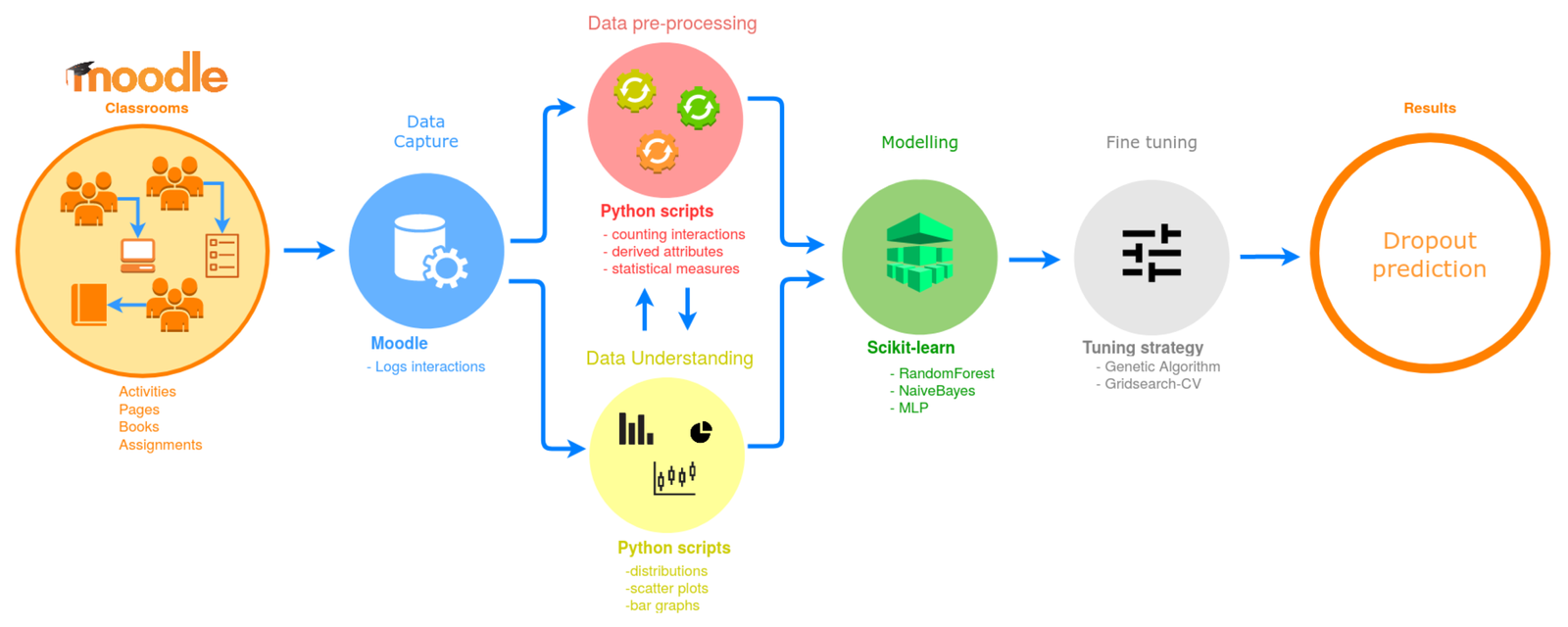
Learning analytics works because students today leave digital footprints. Every online lesson accessed, assignment submitted, discussion post made and quiz attempted adds to a rich dataset that reveals how a student is progressing. For example, many schools use platforms like Moodle, Google Classroom, Edmodo or Blackboard. These systems record interactions and time spent on tasks, which can be used to identify unusual patterns early.
The data used in learning analytics falls into several categories:
- Engagement metrics: how often a student logs in to online platforms and interacts with course materials.
- Attendance and punctuality: records of class attendance and time spent in lessons.
- Performance data: scores on assignments, tests, quizzes and other assessments.
- Participation indicators: how frequently students contribute to discussions or ask questions in class or online.
By combining these indicators, learning analytics tools can highlight early warnings such as a sudden decline in participation, long periods without logging into learning platforms, or falling scores on key assignments. These patterns often surface before a student shows obvious signs of trouble.
Some modern systems go beyond simple data lists and use predictive modelling and machine learning to generate a risk score. This score estimates the likelihood of a student dropping out based on their recent behaviour compared with patterns seen in past data sets. Educators can then act on this information faster and in a more targeted way.

Real‑Life Impact of Learning Analytics in Schools
The power of learning analytics lies in early detection and intervention. Rather than waiting for quarterly tests or year‑end exams, teachers can see trends week by week. For instance, a learner who used to submit assignments on time but suddenly starts missing tasks could be flagged for support. Equally, a student who stops attending class regularly may be invited for counselling. These small nudges can make a huge difference in keeping a student engaged.
In some institutions, learning analytics dashboards have been integrated into teacher workflows. These dashboards provide visual summaries of each student’s progress, highlight those who may need additional attention and even suggest interventions based on past trends. Schools report that using these insights helps teachers prioritise their time and tailor their support to students who need it most.
Another advantage is that learning analytics can help personalise learning. When data reveals that a student is struggling with a specific topic, teachers can adapt instruction or provide additional learning resources to fill those gaps before frustration and disengagement build up. This personalised approach has been shown to increase retention and support long‑term success.
Research also indicates that students who are aware of their own data and progress become more engaged. When learners see personalised feedback on their strengths and weaknesses, they feel a sense of ownership over their learning. This makes it easier for them to set goals, seek help when needed and stay motivated.
Challenges and Ethical Considerations
While the benefits of learning analytics are clear, it is not without challenges. One of the main concerns is privacy. Collecting and analysing student data must be done with great care and in compliance with relevant laws and regulations. Students and parents must understand how the data is used and have confidence that it is protected.
There is also the risk of over‑reliance on data. Numbers can tell a part of the story, but they do not always capture the full context of a student’s life. Personal factors such as family situations, health, mental well‑being and socioeconomic challenges can also influence a learner’s performance but are often not represented in datasets. That is why many educators emphasise that analytics should support human judgement, not replace it.
Another challenge is ensuring all teachers are trained to interpret and act upon analytics reports. Data without understanding is of limited value. Schools must invest in professional development so that educators can make informed decisions based on analytics and apply interventions that truly help.
Finally, it is important to remember that not all analytics tools are effective in every context. The accuracy of predictions can vary depending on the quality of data and the algorithms used. Regular evaluation and improvement of analytics systems are necessary to ensure they remain relevant and useful.
Looking Ahead: The Future of Learning Analytics
The use of learning analytics is only expected to grow in the years ahead. As technology becomes more integrated into education, data will become richer and insights deeper. Artificial intelligence and machine learning models will continue to improve their ability to predict risk and recommend interventions.
In addition, analytics is moving toward real‑time alerts. Instead of waiting for weekly reports, teachers could receive instant notifications when a student shows early signs of struggle. This shift will enable even faster responses and help schools stay ahead of problems before they escalate.
In the future, analytics may also incorporate emotional and social learning indicators, such as student morale or stress levels. These softer metrics are harder to measure but could provide deeper insight into overall well‑being and risk of disengagement.
What matters most is that data becomes a tool for caring. When analytics is used responsibly and ethically, it empowers schools to act with empathy and precision. Educators can focus their time and energy on teaching and supporting students, knowing they have a clearer picture of each learner’s journey.
Join Our Social Media Channels:
WhatsApp: NaijaEyes
Facebook: NaijaEyes
Twitter: NaijaEyes
Instagram: NaijaEyes
TikTok: NaijaEyes