

Nigeria is undergoing a quiet but powerful shift in how young people think about education, jobs, and long-term success. For decades, university degrees were seen as the gold standard. Today, that narrative is changing fast. Across cities and towns, more Nigerians are turning to Technical and Vocational Education and Training, widely known as TVET, as a direct and practical route to stable income, entrepreneurship, and global relevance.
This growing interest is not happening by chance. It is being driven by economic realities, a changing labour market, and a renewed understanding of what it truly means to be employable in the 21st century. From carpentry workshops in Aba to digital skills hubs in Lagos, the rise of TVET is reshaping Nigeria’s workforce in real time.
A Shift from Certificates to Skills in Nigeria’s Job Market
One of the biggest forces behind the rise of TVET is the widening gap between formal education and employable skills. Many graduates leave universities with theoretical knowledge but struggle to find jobs because they lack practical experience. TVET is filling that gap by focusing on hands-on training that directly matches industry needs.
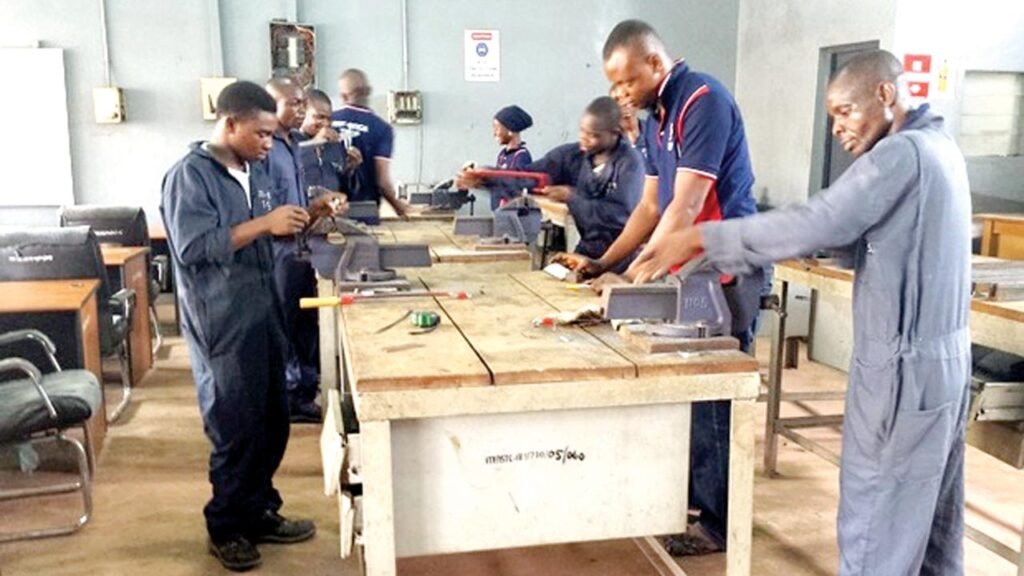
At its core, TVET is designed to prepare individuals for specific occupations, equipping them with technical know-how and real-world competencies. Unlike traditional academic routes, it emphasises learning by doing. Students are trained in workshops, labs, and real job environments, making them job-ready from day one.
This approach is particularly relevant in Nigeria, where industries are actively seeking skilled workers in areas such as construction, renewable energy, ICT, and manufacturing. TVET graduates often have a competitive advantage because they can immediately contribute value in the workplace.
The result is a gradual but noticeable cultural shift. Employers are beginning to prioritise what candidates can do over what certificates they hold. For many young Nigerians, this is a game-changer.
How TVET Is Tackling Unemployment and Driving Entrepreneurship
Youth unemployment remains one of Nigeria’s most pressing challenges. However, TVET is increasingly being recognised as part of the solution. Equipping individuals with practical and marketable skills enables them to either secure jobs or create their own opportunities.
TVET programmes are strongly linked to entrepreneurship. Many trainees leave with skills that allow them to start small businesses, whether in tailoring, electrical work, software development, or agriculture. This reduces dependence on white-collar jobs, which are often limited.
Evidence shows that TVET helps bridge the gap between education and employment while also encouraging business creation and innovation. It empowers young people to become job creators instead of job seekers.
In a country where the informal sector plays a major role in the economy, this is significant. Skilled artisans, technicians, and digital freelancers are increasingly forming the backbone of local economies. From mechanics in Onitsha to solar installers in Kaduna, TVET-trained individuals are building sustainable livelihoods.
Moreover, TVET contributes to reducing poverty by providing individuals with saleable skills that can generate income almost immediately. This direct link between learning and earning is one of the reasons it is gaining popularity.

Government Reforms and Industry Demand Fuel the Momentum
Another factor driving the growth of TVET in Nigeria is increased attention from policymakers and industry stakeholders. In recent years, there have been renewed efforts to reposition technical education as a central pillar of national development.
Government initiatives and policy reforms are focusing on improving training quality, updating curricula, and strengthening partnerships between training institutions and industries. These collaborations ensure that what students learn aligns with what employers actually need.
At the same time, industries are evolving rapidly due to technology and global trends. There is a growing demand for skilled workers who can operate machinery, manage digital systems, and adapt to new tools. TVET is uniquely positioned to meet this demand because of its flexible and practical structure.
Experts note that TVET plays a crucial role in developing human capital and supporting economic growth by producing a skilled workforce. Businesses are more likely to expand when they can access workers with the right technical skills, creating a ripple effect across the economy.
In addition, the global nature of skills is making TVET even more attractive. Many vocational skills are transferable across borders, giving Nigerian youths opportunities to work internationally or participate in the global gig economy.
Why Young Nigerians Are Choosing TVET Over Traditional Degrees
Perhaps the most compelling evidence of TVET’s rise is the growing number of young Nigerians deliberately choosing it over conventional university education. This decision is often based on practical considerations rather than tradition.
First is speed. TVET programmes are typically shorter, allowing individuals to enter the workforce much faster. In a tough economy, this is a major advantage.
Second is affordability. Compared to university education, many vocational training programmes are more accessible financially, making them a viable option for families across different income levels.
Third is relevance. TVET focuses on skills that are in demand, reducing the risk of unemployment after training. Graduates are equipped to work in sectors that are actively hiring or to start businesses in areas with proven market needs.
There is also a growing sense of pride associated with skilled work. The old stigma around vocational careers is gradually fading as more people recognise the financial and professional rewards they offer.
Importantly, TVET is not a dead end. It provides pathways for continuous learning and career advancement. Many programmes offer opportunities for further certification, specialisation, and even progression into higher education. This flexibility allows individuals to grow and adapt throughout their careers.
In today’s fast-changing world, the ability to learn, unlearn, and relearn is more valuable than ever. TVET supports this by promoting lifelong learning and adaptability.

Conclusion
As Nigeria navigates economic uncertainty and a rapidly evolving job market, Technical and Vocational Education is emerging as a practical and forward-looking solution. It aligns education with reality, empowers individuals with tangible skills, and supports national development in a meaningful way.
The growing popularity of TVET is not just a trend. It reflects a deeper transformation in how success is defined in modern Nigeria. Increasingly, it is no longer about the title you hold but the value you can create.
For a generation eager to work, build, and thrive, TVET is proving to be more than an alternative. It is becoming the main path.
Join Our Social Media Channels:
WhatsApp: NaijaEyes
Facebook: NaijaEyes
Twitter: NaijaEyes
Instagram: NaijaEyes
TikTok: NaijaEyes
READ THE LATEST EDUCATION NEWS