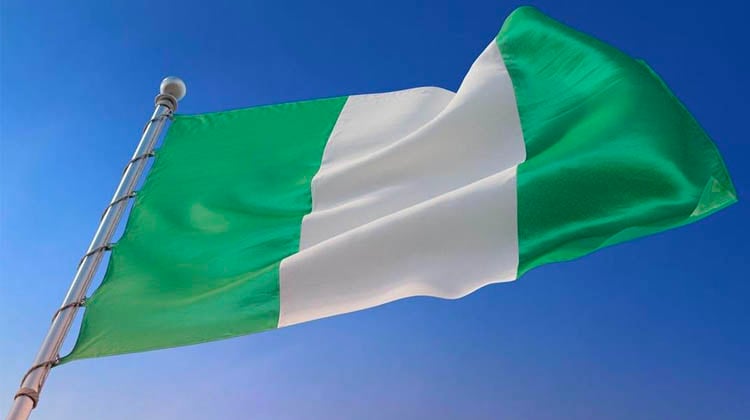

NIGERIA at 66 : Sixty-six years is a long enough time in the life of a nation. It is long enough for a child born at independence to become a grandfather or grandmother; long enough for countries to rise from poverty, build functioning institutions and transform the lives of generations.
Nigeria as a nation has had those 66 years too.
Yet in 2026, the country is still wrestling with questions that have followed it for decades: Why does Africa’s most populous nation still struggle to provide reliable electricity? Why does insecurity continue to determine where people can safely live, work or travel? Why has corruption remained so deeply embedded in public life despite years of anti-graft campaigns? Why does a country with enormous human and natural resources still struggle to convert those advantages into a consistently better standard of living for millions of its citizens?
Nigeria’s story since her first independence on October 1, 1960 has not been one of complete failure, nor has it been an uninterrupted march toward development that successive governments have promised.
It has been more complicated: periods of progress followed by reversals; ambitious reforms followed by unfinished implementation; new institutions built on the weaknesses of old ones; and enormous opportunities repeatedly meeting the limitations of governance.
The Government has picked “From Reforms to Stability: Consolidating Nigeria’s Renewed Hope for Shared Prosperity” as the theme for the 66th Independence anniversary.
President Tinubu, in a pre independence message ahead of the anniversary, has also urged Nigerians not to lose hope, adding that the country is on the path to greatness and that mistakes and missed opportunities are being addressed.
But the 66th independence calls for something more than celebration or despair. It calls for an examination of the distance travelled and, more importantly, the distance it has failed to cover.
Nigeria at 66: The Strange Persistence of Nigeria’s Problems
Perhaps the most striking feature of Nigeria’s 66-year story is not that the country has failed to change, but that some of its most stubborn problems have managed to change governments without disappearing.
The names of those in power have changed, political systems have come and gone, new policies have been announced and institutions created, yet unreliable electricity, insecurity, corruption, weak public services and economic hardship continue to occupy the national conversation.
Each administration arrives with its own diagnosis and reform agenda, but many of the problems confronting Nigerians in 2026 are variations of questions that have been asked for decades.
Democracy Survived. But Did Governance Improve Enough?
In 1999, Nigeria entered another important phase. Military rule ended and democratic government returned. Since then, the country has experienced something it had never previously achieved: an uninterrupted stretch of civilian government.
In June 2026, Tinubu described the 27 years since May 29, 1999 as Nigeria’s longest period of civilian rule, with successive governments transferring power through elections rather than military intervention.
That is an achievement worth recognising. But political continuity is not the same thing as effective governance.
A democracy is ultimately judged not only by how often citizens vote but also by what government institutions deliver between elections.
For many Nigerians, the measure remains painfully practical: Can they switch on a light and expect it to remain on, travel without fear of kidnapping, find decent work? Can their children access quality education, obtain healthcare without facing financial ruin? Can public money be traced to the projects for which it was appropriated?
Tinubu himself made a similar distinction in his Democracy Day address, arguing that the political freedom secured by previous generations must now be matched by economic freedom and improvements in people’s quality of life.
That may be one of the central questions of Nigeria at 66: Can democratic continuity eventually produce institutional continuity — the kind that allows successful policies and public services to outlive individual governments?
Electricity: Why Is Power Still a National Project?
Few issues better demonstrate the strange persistence of Nigeria’s problems than electricity.
For decades, governments have announced power-sector reforms. Electricity companies have been restructured, regulations rewritten, generation projects launched, distribution companies privatised and new plans introduced.
Yet reliable electricity remains out of reach for millions.
The latest World Bank data puts electricity access in Nigeria at 62.5 percent in 2024, leaving a substantial share of the population without access to electricity.
Even where electricity is technically available, reliability remains another matter. Businesses and households have consequently built alternative systems around generators, solar installations, inverters and other private sources of power.
The Federal Government has acknowledged the scale of the problem. In his June 2026 Democracy Day address, Tinubu pointed to generation shortfalls, unreliable gas supply, fragile transmission infrastructure, distribution losses and a major metering deficit as weaknesses the administration is attempting to address.
The question is no longer whether Nigeria knows that its electricity system is broken. It does.
The harder question is why a country that has spent decades identifying the problem has struggled to make reliable electricity a normal part of everyday life.
Meanwhile, electricity is not merely an infrastructure issue. It affects the cost of doing business, employment, education, healthcare and household income. Every hour a factory runs a generator, every small business that buys fuel to keep its equipment operating and every household that invests in alternative power is effectively paying for the weakness of the public electricity system.
Insecurity: The Problem That Keeps Changing Its Name
The country has confronted different forms of insecurity at different moments in its history. The civil war was followed decades later by militancy in the Niger Delta, while the emergence of Boko Haram transformed the security landscape in the North-east. More recently, banditry, kidnapping, communal violence and other forms of organised criminality have become major concerns in several parts of the country.
The World Bank continues to identify banditry, kidnapping, insurgency and separatist agitations among Nigeria’s major challenges.
Human Rights Watch’s 2026 country report also documented continued killings, kidnappings and violent raids in parts of northern Nigeria during 2025, alongside persistent intercommunal violence in the North-central region.
The significance is not simply that Nigeria has insecurity. Many other countries face insecurity threats as well.
The deeper problem is that the nature of Nigeria’s security challenges keeps changing while the state continues to fight symptoms that have complex political, economic and social roots.
Tinubu acknowledged the connection between security and the meaning of democracy in his June address, saying democracy without security was not solid enough and announcing increased recruitment for the security agencies.
For citizens, however, the question is more immediate.
What does independence mean to a farmer who cannot safely reach his farm? What does economic opportunity mean to a business owner who fears travelling between cities? What does freedom mean to a family that has to consider kidnapping risks before deciding to send their children to school.
Read Also: The Business of Kidnapping-Inside Nigeria’s Expanding Ransom Economy
Nigeria at 66: Corruption- Six Decades of Fighting the Same Enemy
Then there is corruption — a problem that has survived governments, military regimes, democratic transitions and successive anti-corruption campaigns.
Nigeria’s anti-corruption architecture is not new. The Independent Corrupt Practices and Other Related Offences Commission was established in 2000, while the Economic and Financial Crimes Commission followed under the 2002 EFCC Act. Other institutions and mechanisms have subsequently been created to strengthen transparency, procurement oversight and financial intelligence.
Yet the problem persists.
Corruption matters not simply because money can be stolen from government coffers, but because the consequences spread into almost every other problem Nigeria faces.
The country’s anti-graft agencies have also recorded significant enforcement activity. The EFCC chairman said in August 2026 that the commission had recovered ₦1.23 trillion and $684.48 million in proceeds of crime between October 2023 and July 2026, while thousands of investigated petitions had resulted in court cases and convictions.
While these figures demonstrate that the anti-corruption system is active, activity is not the same as resolution.
Nigeria at 66: She Has Not Stood Still
It would be inaccurate to describe Nigeria’s 66-year story as one of uninterrupted failure.
The country of 2026 is vastly different from the country of 1960.
Nigeria has developed one of Africa’s largest telecommunications markets. Its financial-technology companies have transformed payments and financial services. Nigerian entertainment has become a global cultural force, with Afrobeats, Nollywood and Nigerian creators reaching audiences far beyond the continent.
Its private sector has produced businesses operating across Africa and beyond, while Nigerian professionals continue to influence medicine, technology, finance, academia, entertainment and other fields around the world.
Nigeria has not stood still. However, the problem is that progress has not always been fast enough, broad enough or durable enough to resolve the country’s deepest problems.
Nigeria at 66: Over Six Decades Later, What Are We Still Waiting For?
Nigeria’s 66th Independence anniversary arrives with two competing realities.
There is a country that has survived coups, a civil war, decades of military rule, economic crises and repeated political transitions. There is a country that has maintained 27 years of uninterrupted civilian government and produced globally influential businesses, artists, entrepreneurs and professionals.
But there is also a country still asking some very old questions.
Why is electricity still unreliable?
Why does insecurity continue to threaten communities?
Why does corruption remain so difficult to uproot?
Why does economic growth not always translate into better living conditions?
And why do Nigerians continue to hear about the country’s enormous potential while many struggle to experience that potential in their everyday lives?
President Tinubu’s appeal that Nigerians should not lose hope speaks to the resilience that has carried the country through difficult periods. He has argued that past mistakes and missed opportunities are being addressed and that the current reforms are laying the foundation for a better future.
Hope matters. However, after 66 years, hope should eventually be accompanied by measurable change.
Nigeria no longer needs to convince the world that it has potential. That has never really been the question.
The question is whether its institutions can finally convert that potential into reliable electricity, greater security, accountable government, productive jobs and a standard of living that allows ordinary citizens to experience the country’s progress rather than merely hear about it.
At 66, Nigeria’s greatest challenge may no longer be becoming a great country in theory.
It is closing the distance between what Nigeria is capable of becoming and what Nigerians experience every day.