Rather than focusing only on coding, the hackathon is designed around real-world problems affecting Nigerians and other African communities. Participants are working on ideas spanning **artificial intelligence and machine learning, fintech, health technology, digital identity, cybersecurity, education, agritech and PropTech**. The broad range of challenge areas gives teams room to apply their technical skills to problems that people and businesses encounter every day. ## Students and developers put their skills to work One of the interesting aspects of the Lagos hackathon is its emphasis on collaboration. Teams can consist of between two and five members, creating an environment where developers can work alongside people with different skills and perspectives. For students and early-career technology professionals, this can provide valuable experience that is difficult to obtain from classroom learning alone. Participants are expected to develop their ideas during the innovation sprint and demonstrate how their proposed solutions can address a genuine problem. This practical approach matters in Nigeria's technology ecosystem, where having technical knowledge is increasingly only one part of building a successful digital product. Young developers also need to understand users, identify viable problems, work in teams and communicate their ideas effectively. The competition also gives participants an opportunity to meet other people within Nigeria's growing technology community. The wider Thrive-In-Tech programme brings together technology professionals, founders, entrepreneurs, students and emerging innovators for mentorship, career development, networking and practical technology sessions. For many participants, the value of the event could therefore extend beyond the final judging session. A connection made during the hackathon could lead to mentorship, employment, collaboration or even the development of a startup. ## Back story: Why Nigeria needs more practical technology programmes The Lagos hackathon comes as Nigeria continues to place greater attention on digital skills and technology entrepreneurship. Across the country, young Nigerians are increasingly learning software development, artificial intelligence, data science, cybersecurity and other digital skills. However, there remains an important gap between learning a technical skill and knowing how to use it to solve a problem that people are actually facing. Hackathons attempt to close that gap by putting participants under real development conditions. Instead of simply completing a course or watching tutorials, participants have to think about a problem, develop a solution, work with other people and present the result. There is also growing evidence that Nigerian students can compete effectively when given opportunities to build with emerging technologies. In May, two University of Lagos teams stood out at the AI4Telco Hackathon, where they developed technology solutions as part of a competition focused on artificial intelligence and telecommunications. [University of Lagos report on the AI4Telco Hackathon](https://unilag.edu.ng/unilag-teams-shine-bright-at-ai4telco-hackathon/) This makes initiatives such as Thrive-In-Tech particularly relevant. They create spaces where young Nigerians can move from being consumers of technology to becoming builders of products and services. The emphasis on artificial intelligence is also timely. AI is rapidly changing how software is developed and how businesses operate, increasing demand for people who understand not only the technology but also how to apply it responsibly to practical problems. ## What happens after the Lagos hackathon The competition is only one part of Thrive-In-Tech 6.0. The main event continues on Saturday, August 22, with keynotes, panel discussions, practical sessions, mentorship, career opportunities and networking. The organisers have also announced that the physical attendance capacity has been filled, while people who cannot attend in person can participate through the virtual stream. [Thrive-In-Tech updates](https://www.linkedin.com/company/thrive-in-tech) The immediate attention, however, remains on the 99 teams building today. With only 100 places available, the final registration figure shows the level of interest among Nigerian technology builders in practical innovation opportunities. The challenge now is to ensure that promising ideas do not end when the hackathon ends. A prototype created in a single day may not be ready for the market, but it can become the starting point for something bigger when its creators receive the right mentorship, funding and technical support. For Nigeria, that may ultimately be the most important outcome of the Lagos hackathon. Beyond the competition and prizes, events like this can help create a generation of young people who are not only learning about artificial intelligence and digital technology, but are actively using them to build solutions for the problems around them.](https://naijaeyesblog.com/wp-content/uploads/2026/08/1739453499709.png)

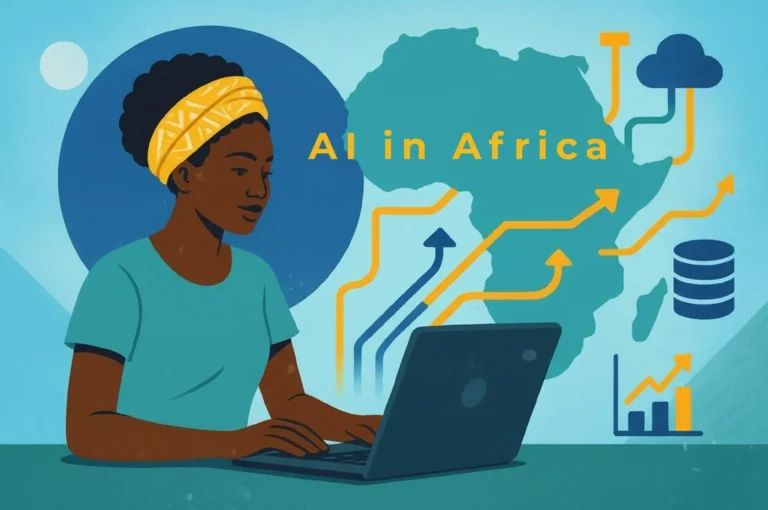
Artificial intelligence is beginning to change more than how news is written, edited and distributed. It is also creating new opportunities for African and Chinese media organisations to work together on technology, content production and the wider development of journalism.
At a media and artificial intelligence forum in Beijing on Thursday, August 20, experts discussed how China and African countries can deepen cooperation in AI applications and governance to support innovation in the media industry. The discussions point to a growing relationship in which technology is becoming an important part of China-Africa media cooperation.
For African newsrooms, the development is significant. Many media organisations across the continent are operating under financial and technological pressure while trying to serve audiences that increasingly consume news through social media, mobile phones and digital platforms.
AI could help newsrooms handle some of these challenges, from translating stories into different languages to analysing large amounts of information and producing content for multiple platforms.
But the opportunity also comes with an important responsibility. African media organisations need to ensure that the technology supports local journalism rather than weakening editorial independence or allowing outside narratives to dominate African news coverage.
AI Could Make Media Cooperation More Practical
One of the clearest areas for cooperation is the use of AI to improve the speed and efficiency of journalism.
Chinese media organisations have invested heavily in artificial intelligence, digital broadcasting, high-quality production equipment and other technologies. African media organisations, meanwhile, have strong knowledge of local communities, languages, cultures and the issues that matter most to audiences on the continent.
Combining these strengths could create useful partnerships.
The idea is not entirely new. China Media Group has already developed cooperation with African media organisations involving programme sharing, joint interviews, production and cultural exchanges. In 2024, CMG said its cooperation network included more than 320 African resources and that it was using technologies including 5G, 4K, 8K and AI to improve media production.
AI can potentially take this relationship further by making cross-border content production faster and more accessible.
For example, automated translation could make an African report available to Chinese audiences, while Chinese-produced material could be adapted for African audiences without depending entirely on manual translation. AI tools could also assist with transcription, video editing, subtitles, research and content distribution.
African Media Must Remain Part of the Story
The growing use of AI in China-Africa media cooperation also raises questions about who controls the technology and whose perspective ultimately reaches audiences.
African media organisations should not simply become distributors of content produced elsewhere. They need to remain active participants in deciding which stories are told, how they are presented and which technologies are used.
This is particularly important because China has already developed an extensive media presence across Africa. Partnerships involving Chinese and African organisations have included content exchanges, staff exchanges and co-production arrangements.
There are therefore legitimate discussions around editorial independence, transparency and the need for African newsrooms to maintain control over their journalism.
AI makes those questions even more important. A newsroom using an AI system needs to understand how the system handles information, what sources it relies on and whether its output can reproduce bias or inaccurate assumptions about African societies.
The technology should support journalists, not replace professional judgement.
Back Story: A Relationship That Has Been Growing for Years
China-Africa media cooperation predates the current AI boom.
African and Chinese media organisations have spent years building relationships through training, broadcasting, content sharing, and professional exchanges. In 2025, a Kenyan media executive described Chinese media technology as highly advanced and argued that African and Chinese organisations should strengthen partnerships focused on technology and skills development. He also said African journalists should view AI as an opportunity rather than simply a threat.
Technology-focused cooperation has also produced projects such as Ubuntu AI, a platform developed through cooperation involving Chinese media and an African studies institution. The platform combines multilingual news, research, cultural information and policy analysis, showing how AI can be used as a bridge for knowledge exchange between Africa and China.
The latest discussions in Beijing suggest that this relationship is entering another stage.
For African media organisations, the real opportunity will be to use AI to strengthen local journalism, improve production quality and reach wider audiences while protecting editorial standards.
If handled properly, cooperation with Chinese organisations could provide African newsrooms with access to useful technologies and training. But African journalists must remain central to the process.
The future of China-Africa media cooperation may increasingly be powered by artificial intelligence, but its success will ultimately depend on people, professional standards and the ability of both sides to tell each other’s stories accurately and responsibly.
Also Read: Why Nigeria’s Probe Into AI Companies Could Change Digital Journalism Forever