Nigeria’s education sector is once again under the spotlight, this time over concerns that steadily declining admission standards in tertiary institutions may be quietly worsening the country’s already fragile talent pipeline. What was originally intended as a strategy to widen access to higher education is increasingly being viewed by stakeholders as a factor undermining quality, competence, and long-term national productivity.
At the centre of the debate is the evolving benchmark for entry into universities, polytechnics, and colleges of education. Over the past several years, admission cut-off marks have been repeatedly adjusted downward, raising questions about what Nigeria is prioritising in its pursuit of educational inclusion.
The conversation is not just about numbers. It is about what those numbers represent for the future of work, innovation, and national competitiveness.

BACK STORY: HOW ADMISSION CUT-OFF MARKS BECAME A NATIONAL DEBATE
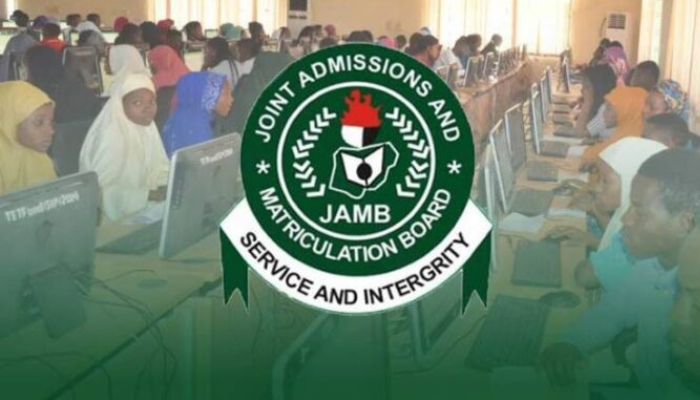
The controversy around admission standards did not emerge overnight. It has been building steadily since 2017, when the Joint Admissions and Matriculation Board (JAMB) first introduced notably lower minimum benchmarks for tertiary institutions.
At the time, universities were allowed to admit candidates with scores as low as 120, while polytechnics and colleges of education had even lower thresholds. This marked a significant departure from earlier expectations that typically placed university entry competition at much higher score ranges.
In subsequent years, the benchmarks fluctuated further. Universities were later set around 140 to 160 in different admission cycles, while polytechnics and colleges of education often remained at or near 100.
Supporters of the policy argued that it was necessary to expand access in a country with a rapidly growing youth population and limited university spaces. Critics, however, warned that lowering entry barriers without corresponding improvements in infrastructure, staffing, and academic support would eventually create a mismatch between certification and competence.
That concern has now evolved into a broader national discussion about the quality of graduates entering the labour market.
EXPANSION WITHOUT EQUIVALENT QUALITY GROWTH
Nigeria’s tertiary education system has expanded significantly in the last two decades. New federal, state, and private institutions have emerged to absorb rising demand from millions of secondary school leavers each year. On paper, this expansion appears like progress.
However, stakeholders argue that the pace of growth has not been matched by equivalent improvements in learning quality, funding adequacy, or teaching capacity. As admission thresholds remain relatively low, institutions are often left to bridge widening academic gaps within already stretched systems.
Education experts say the outcome is predictable. Lecturers are forced to spend more time revisiting foundational concepts that should have been mastered earlier in the education journey. This slows curriculum delivery and reduces the depth of learning in advanced courses.
At the same time, employers continue to report that many graduates struggle with basic problem-solving, communication, and workplace readiness. This mismatch between academic certification and practical competence has become one of the defining features of Nigeria’s labour market challenge.
Recent analyses of the education sector have repeatedly pointed to structural inefficiencies, underinvestment in teaching quality, and a widening gap between curriculum content and labour market demands.

WHEN ACCESS BECOMES A TRADE-OFF AGAINST QUALITY
The argument in favour of lower admission thresholds is rooted in inclusion. Nigeria has a large population of young people, and the demand for higher education far exceeds available spaces in public institutions. Lowering cut-off marks is seen by policymakers as a way to avoid shutting out millions of qualified candidates.
But education analysts warn that access without quality assurance can create a deeper systemic problem. When entry standards are too relaxed without strong remedial systems, institutions risk producing graduates who hold certificates but lack the competencies those certificates are meant to represent.
This, in turn, affects employer confidence. Companies begin to rely less on academic credentials and more on informal assessments of skills. Over time, this erodes the value of degrees and weakens the credibility of the education system.
The broader concern is that Nigeria may be producing a large number of graduates who are not fully prepared for the realities of a rapidly changing global economy. This includes industries increasingly shaped by technology, data, and innovation-driven work environments.
Some policy analysts also link this trend to rising youth underemployment and unemployment, as firms struggle to find candidates who meet even entry-level professional requirements.

THE TALENT CRISIS BEYOND THE CLASSROOM
The implications of falling admission standards extend far beyond university campuses. Nigeria’s economy is already grappling with what many experts describe as a talent allocation problem, where available human capital is not being effectively developed or utilised.
A significant portion of young people are either unemployed or underemployed, despite holding tertiary qualifications. This reflects not just a shortage of jobs, but a mismatch between education outcomes and labour market needs.
At the same time, industries that require technical, analytical, and digital skills continue to report shortages of qualified candidates. This paradox has created a situation where unemployment and skills gaps exist side by side.
Experts argue that solving this challenge requires more than adjusting admission policies. It demands a full system rethink that includes curriculum reform, stronger vocational and technical education pathways, improved teacher training, and better alignment between universities and industry needs.
There is also growing concern that continuous lowering of academic entry barriers without addressing foundational learning gaps may worsen long-term productivity outcomes for the country. When graduates lack strong analytical and problem-solving skills, innovation slows down, and economic growth becomes harder to sustain.
Ultimately, the debate over admission standards reflects a larger question facing Nigeria’s education system. That question is whether the priority is simply to produce more graduates, or to produce graduates who can meaningfully contribute to national development.
Join Our Social Media Channels:
WhatsApp: NaijaEyes
Facebook: NaijaEyes
Twitter: NaijaEyes
Instagram: NaijaEyes
TikTok: NaijaEyes