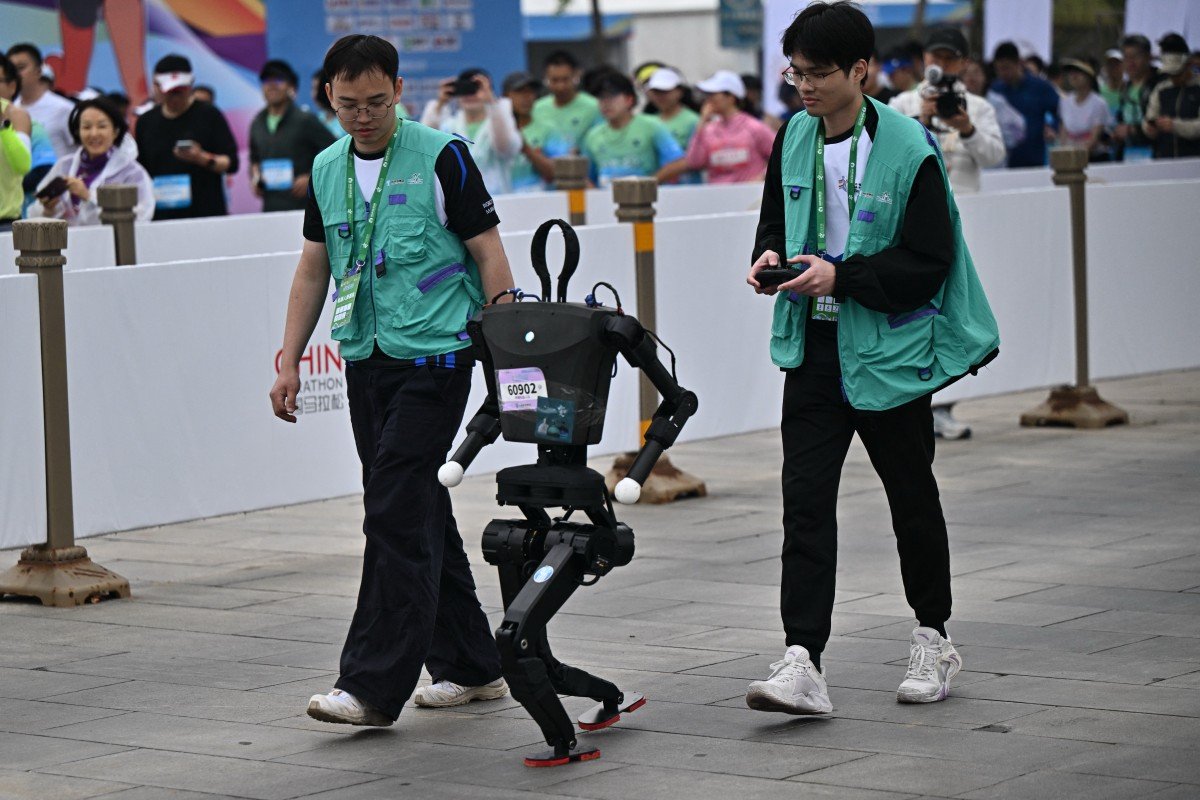

At first glance, it looked like a normal half-marathon morning in Beijing. Thousands of human runners stretching, coaches shouting instructions, and cameras rolling across the start line. But mixed into the crowd was something that would have sounded like science fiction not too long ago: humanoid robots lining up to race alongside humans in a 21-kilometre challenge.
What unfolded in the 2026 Beijing half-marathon has now become one of the clearest signals yet that robotics is moving from lab experiments into real-world performance. And not just participating, but competing seriously with humans.
A historic race where machines and humans shared the same road
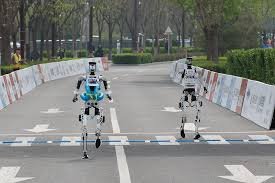
The event, held in Beijing’s high-tech E-Town district, brought together more than 12,000 human runners and over 100 humanoid robot teams in a co-running format. Both groups followed the same route but were separated for safety and organisation.
This was not a casual demonstration. It was structured like a proper competitive race, complete with timing systems, endurance testing, and strict rules for robot autonomy.
For China, it was also a showcase of how far its robotics sector has come. Government-backed research centres, private tech firms, and university teams all fielded machines designed to mimic human running patterns and decision-making abilities.
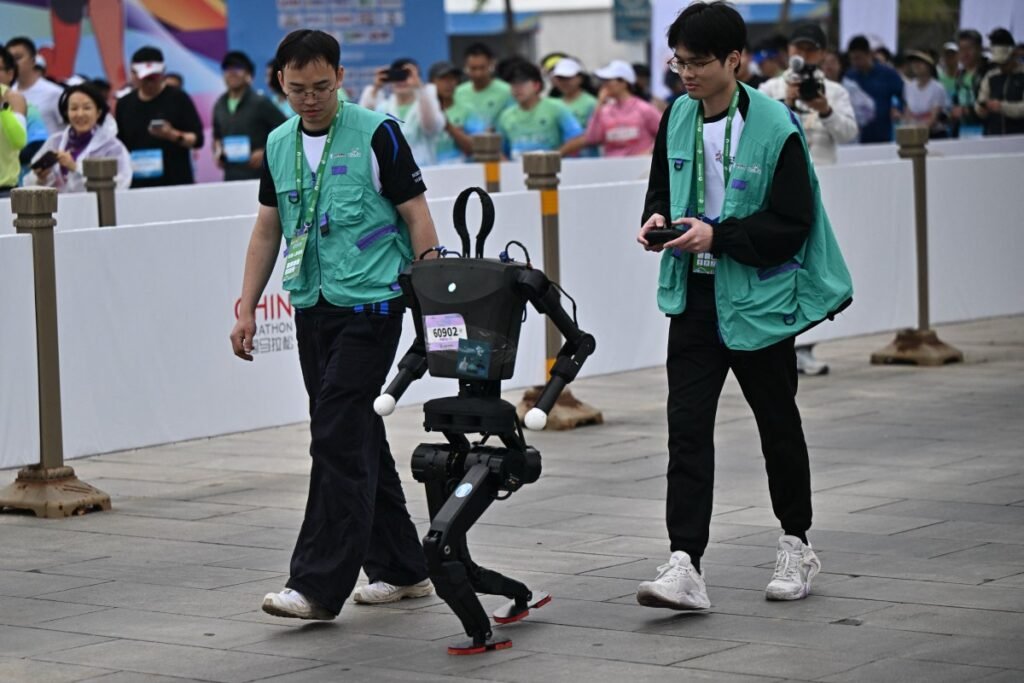
Some robots ran fully autonomously. Others were remotely assisted. A few even acted as support units along the route, including traffic control roles that showed how flexible the technology is becoming.
Robots are not just competing but setting a record pace
The biggest headline from the race was not just participation, but performance.
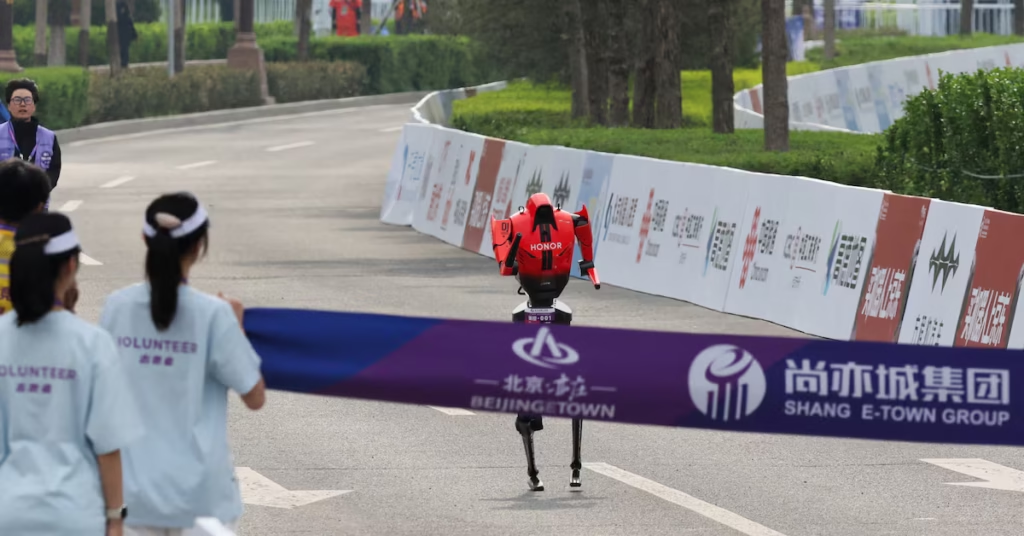
The winning humanoid robot completed the half-marathon in about 50 minutes and 26 seconds. That time alone would place it in elite territory even among professional human runners.
Another robot, operating under remote control, reportedly finished even faster but was not officially ranked ahead due to competition rules favouring full autonomy.
To put this into perspective, the robot’s finishing time was faster than the current human half-marathon world record, which immediately sparked global conversation about whether machines are now entering a new era of physical capability.
Spectators described the moment the leading robot crossed the finish line as surreal. Some cheered, others simply watched in disbelief as a machine completed a distance that only trained human athletes were once expected to dominate.
What this says about the future of robotics and work
Beyond the spectacle, experts are treating this race as a technical benchmark rather than entertainment.
The improvements seen in just one year are striking. In earlier editions, humanoid robots struggled with balance, endurance, and energy efficiency. Some collapsed mid-race or required frequent assistance.
Now, newer models are running longer, more steadily, and with better navigation systems. Many are also beginning to manage terrain changes, curves, and pacing decisions with limited or no human input.
However, specialists caution against overhyping the breakthrough. While performance in controlled race conditions is improving fast, real-world usefulness is still limited. Manufacturing, logistics, disaster response, and healthcare environments are far more complex than a closed marathon course.
Still, the direction is clear. Humanoid robots are becoming more capable, and China is positioning itself as a global leader in this field through heavy investment, national robotics programmes, and large-scale public demonstrations like this marathon.
Why this moment matters for Nigeria, Africa, and the world
Events like this are not just about China or robotics enthusiasts. They signal wider global shifts that will eventually affect jobs, education, and technology adoption everywhere, including Africa.
For countries like Nigeria, the takeaway is not fear of replacement but awareness of acceleration. Robotics and artificial intelligence are moving from theory into physical environments faster than many expected.
In practical terms, this could reshape industries such as manufacturing, agriculture, security, and logistics in the coming years. It also raises questions about skills development, technical education, and how future workforces will adapt.
At the same time, it opens opportunities. Cheaper robotics platforms and AI systems could eventually support healthcare delivery, farming efficiency, and infrastructure maintenance across African cities if properly developed and integrated.
Join Our Social Media Channels:
WhatsApp: NaijaEyes
Facebook: NaijaEyes
Twitter: NaijaEyes
Instagram: NaijaEyes
TikTok: NaijaEyes