
Artificial intelligence education in Africa has received a major boost as Bloom Academy for Artificial Intelligence (BAFAI) unveils an expanded curriculum designed to equip learners with practical, globally relevant skills. The move signals a growing urgency to position Nigeria and the wider continent at the forefront of the global AI revolution.
The development comes at a time when conversations around digital transformation, workforce readiness and technological sovereignty are gaining momentum across Africa. With industries evolving rapidly, institutions like BAFAI are stepping in to bridge the widening skills gap and ensure that African talent is not left behind in the race for innovation.
According to details from the announcement, the academy has broadened its offerings to include specialised areas such as agentic AI, AI ethics, AI research, workflow automation and data annotation, alongside existing foundational programmes.
A Strategic Shift Towards Practical and Inclusive AI Education
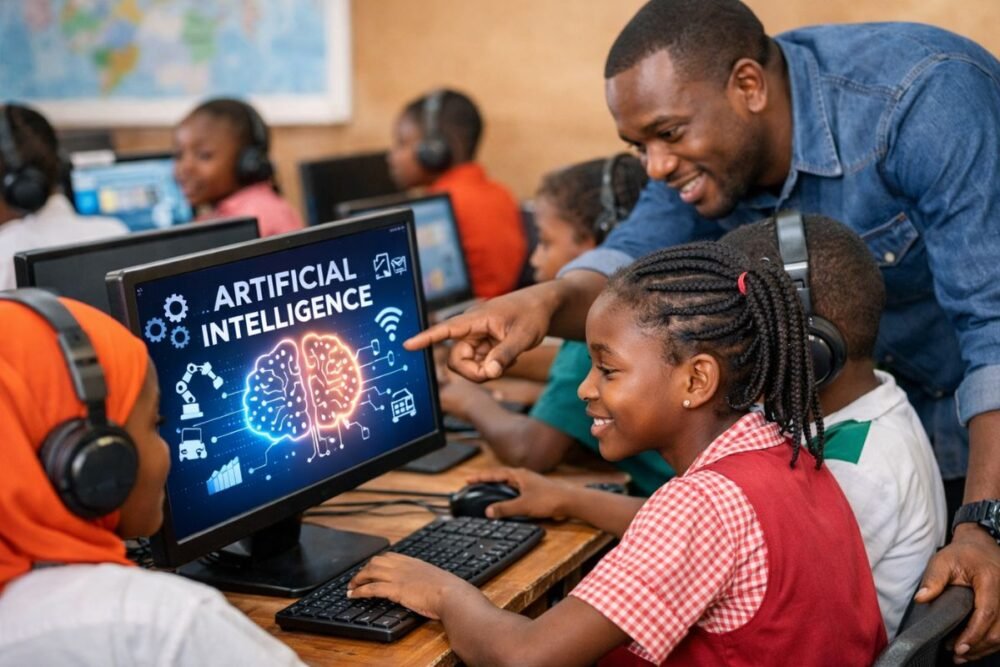
What stands out in BAFAI’s expansion is not just the addition of new courses, but the deliberate attempt to make artificial intelligence education more inclusive and accessible. The academy’s programmes are structured in a way that removes traditional barriers such as the need for coding experience, opening the door to professionals from non-technical backgrounds.
This approach reflects a deeper understanding of Africa’s workforce realities. Many young Nigerians and Africans possess the curiosity and drive to participate in the tech economy but lack formal technical training. By lowering entry requirements, BAFAI is effectively democratising access to one of the most in-demand skill sets in today’s global economy.
The academy’s model also leans heavily on affordability. With several courses offered at discounted rates and others available through full scholarships, the initiative addresses one of the biggest challenges facing tech education in emerging markets, which is cost.
In practical terms, this means a graduate in business administration, a creative entrepreneur or even a student fresh out of secondary school can begin to build competence in AI without the intimidation often associated with programming-heavy courses.
Beyond accessibility, the curriculum expansion reflects a shift towards real-world application. Courses such as workflow automation and AI task management are designed to equip learners with tools they can immediately deploy in their workplaces or personal ventures. This emphasis on usability is critical in a continent where employability and entrepreneurship often intersect.

Building Africa’s AI Talent Pipeline from the Ground Up
At the heart of BAFAI’s vision is a bold ambition to develop a strong pipeline of AI talent that can compete globally while solving local problems. The academy, which operates from Lagos with a fully online platform, has already trained thousands of learners across different cohorts.
Its reach extends beyond Nigeria, attracting participants from across Africa and the global south. This pan-African outlook is significant, especially as the continent seeks to position itself as both a consumer and creator of emerging technologies.
The founder and leadership of the academy have consistently emphasised the need for Africa to take ownership of its technological future. Rather than waiting for imported solutions, the focus is on building local expertise that can develop context-specific innovations.
This philosophy aligns with broader industry sentiment. Experts have repeatedly warned that without deliberate investment in skills and infrastructure, Africa risks becoming dependent on foreign AI systems that may not reflect local realities or priorities.
BAFAI’s expansion can therefore be seen as part of a wider movement aimed at reversing that narrative. By training individuals who understand both the technical and ethical dimensions of AI, the academy is nurturing a generation of professionals capable of shaping policy, driving innovation and leading organisations.
Another notable aspect of the programme is its global collaboration strategy. By partnering with international organisations and industry players, BAFAI is positioning its graduates for opportunities beyond local markets. This dual focus on local relevance and global competitiveness is increasingly important in a world where remote work and cross-border collaboration are becoming the norm.
Why AI Ethics and Emerging Fields Matter More Than Ever
One of the most significant additions to the curriculum is the inclusion of AI ethics. As artificial intelligence becomes more embedded in everyday life, questions around data privacy, bias, accountability and transparency are taking centre stage.
For a country like Nigeria, where regulatory frameworks are still evolving, equipping learners with ethical awareness is not just desirable but necessary. It ensures that innovation does not come at the expense of societal trust or human dignity.
Courses in agentic AI and AI research also reflect the academy’s forward-looking approach. These are not just trending buzzwords but areas that are expected to define the next phase of AI development. By introducing learners to these concepts early, BAFAI is preparing them for roles that may not yet be fully mainstream but will soon become critical.
Workflow automation and data annotation, on the other hand, address immediate market needs. Many businesses are already integrating AI tools to streamline operations, improve customer experience and enhance decision-making. Skilled professionals who can manage and optimise these systems are in high demand.
This blend of future-focused and market-ready skills is what gives the programme its strength. It recognises that while innovation is important, employability remains a key concern for learners.
A Timely Intervention in Nigeria’s Digital Future
The expansion of BAFAI’s curriculum comes at a pivotal moment for Nigeria’s technology ecosystem. With increasing interest in artificial intelligence across sectors such as finance, healthcare, education and logistics, the demand for skilled professionals is growing rapidly.
However, this demand has not always been matched by supply. Many organisations struggle to find talent with the right combination of technical knowledge and practical experience. Initiatives like BAFAI’s are helping to close that gap by producing graduates who are not only trained but also job-ready.
There is also a broader economic implication. As more Nigerians acquire AI skills, the country stands to benefit from increased innovation, improved productivity and new business opportunities. From startups developing local solutions to established companies optimising their operations, the ripple effects could be far-reaching.
Importantly, the academy’s emphasis on remote and online learning ensures that geography is no longer a limiting factor. A student in a rural community can access the same quality of education as someone in Lagos or Abuja, provided they have internet connectivity.
This democratisation of learning is crucial for a country with significant regional disparities. It creates a more level playing field and allows talent to emerge from unexpected places.
Looking ahead, the success of such initiatives will depend on sustained collaboration between the private sector, educational institutions and government. While academies like BAFAI are making significant strides, a coordinated national strategy will be needed to fully harness the potential of artificial intelligence.
For now, the expansion of BAFAI’s curriculum represents a strong step in the right direction. It signals a growing recognition that the future of work is already here and that preparing for it requires bold, inclusive and forward-thinking approaches.
Join Our Social Media Channels:
WhatsApp: NaijaEyes
Facebook: NaijaEyes
Twitter: NaijaEyes
Instagram: NaijaEyes
TikTok: NaijaEyes