
Across universities in the United States and beyond, a quiet but significant transformation is taking place in how students are assessed during exams. Traditional take-home assignments and unsupervised online tests are gradually losing their place as institutions confront a growing challenge posed by artificial intelligence tools such as ChatGPT.
What used to be occasional concerns about plagiarism have now evolved into a full-scale academic integrity dilemma. Educators are increasingly encountering assignments that appear flawless on paper but collapse under simple questioning. According to recent reporting, many lecturers now face what one described as “perfect homework, blank stares” when students are asked to explain their submissions.
The response has been swift and, in many cases, a return to older methods of evaluation. Universities are reintroducing in-person examinations, handwritten tests, and more notably, oral assessments where students must defend their knowledge face-to-face.
This shift is not merely about catching students who misuse AI. It reflects a deeper concern about whether learners are truly understanding what they submit. As generative AI continues to improve, the line between assistance and substitution has become increasingly blurred, forcing institutions to rethink the very foundation of academic evaluation.

The Comeback of Oral Exams and Face-to-Face Testing
One of the most striking developments is the resurgence of oral examinations, a method that dates back centuries but is now gaining renewed relevance. In many classrooms, students are required to sit with their lecturers and respond to questions without relying on any devices or written aids.
Educators argue that this method is almost impossible to manipulate using AI. A student may submit a well-written essay generated with digital assistance, but explaining the logic behind it in real time is a different challenge entirely. As one professor noted, students simply cannot “AI their way through an oral exam.”
Institutions are also experimenting with hybrid approaches. Some combine oral questioning with project work, while others conduct rapid follow-up interviews after assignments are submitted. These strategies are designed to verify that students genuinely understand their work rather than merely presenting polished outputs.
At the same time, there is a growing return to supervised, in-person testing environments. Universities are bringing back invigilated exams and even handwritten “blue book” tests to limit the use of external tools.
Experts say this dual approach, blending old and new methods, is becoming the most practical way forward. It allows institutions to maintain academic standards while adapting to the realities of a technology-driven learning environment.
The Limits of AI Detection and the Rise of New Strategies
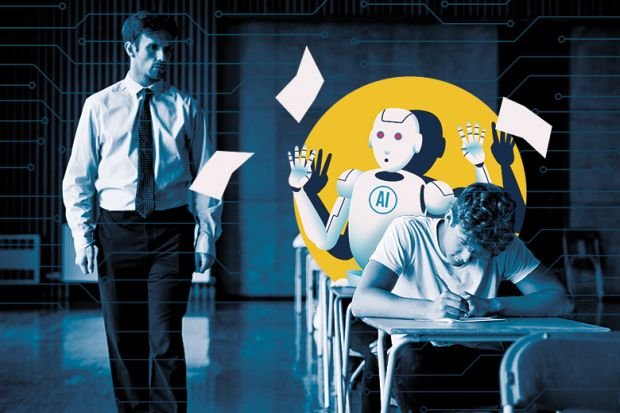
Interestingly, the shift towards oral and in-person assessments is not only driven by student behaviour but also by the failure of technological solutions. AI detection tools, once seen as a promising safeguard, have proven unreliable and controversial.
Some universities have already scaled back or completely abandoned these tools due to concerns about accuracy and fairness. In several cases, detection systems have struggled to distinguish between human and AI-generated work, leading to disputes and mistrust.
As a result, many educators are moving away from trying to police AI use and instead focusing on designing assessments that naturally resist misuse. This includes asking students to apply knowledge in real time, engage in discussions, or solve problems under supervision.
There is also a growing recognition that AI itself is not entirely the enemy. Some institutions now allow controlled use of AI in certain assignments while requiring students to demonstrate independent understanding through additional evaluation methods.
This shift reflects a broader philosophical change. Rather than banning AI outright, universities are beginning to accept its presence while reinforcing the importance of critical thinking, originality, and communication skills.
Implications for Students, Educators, and the Future of Learning
For students, these changes represent both a challenge and an opportunity. Oral exams and in-person tests can be more demanding, requiring not just memorisation but genuine comprehension and the ability to articulate ideas clearly.
Some learners initially find these methods intimidating, especially those who are less confident in speaking or performing under pressure. However, many who have experienced oral assessments report that they ultimately enhance understanding and retention of knowledge.
For educators, the transition is equally complex. Conducting oral exams, particularly in large classes, can be time-consuming and logistically difficult. Yet, advances such as AI-assisted oral testing systems are beginning to address these challenges by helping scale the process while maintaining quality.
On a broader level, this shift raises important questions about the future of education. If AI can produce high-quality written work within seconds, what should schools and universities truly be testing?
Increasingly, the answer appears to lie in skills that machines cannot easily replicate, such as reasoning, communication, and the ability to think on one’s feet. This suggests that the role of education may evolve from content delivery to capability development.
For countries like Nigeria, where digital adoption in education is growing rapidly, these global trends carry important lessons. Institutions may need to strike a balance between embracing technological tools and preserving the integrity of learning outcomes.
What is clear is that the age of AI has not made assessment obsolete. Instead, it has forced a necessary reset. Universities are rediscovering that sometimes, the most effective solutions are not entirely new but carefully adapted versions of what worked in the past.
As the education sector continues to evolve, one thing remains certain. The ability to demonstrate real understanding, whether through speech, action, or critical thinking, will become more valuable than ever.
Join Our Social Media Channels:
WhatsApp: NaijaEyes
Facebook: NaijaEyes
Twitter: NaijaEyes
Instagram: NaijaEyes
TikTok: NaijaEyes