Artificial intelligence is not just a buzzword in tech circles; it is rapidly becoming a lever for transforming education, especially for learners with specific needs. In Nigeria, where schools seek more inclusive and meaningful ways to educate every child, AI is emerging as a tool with real potential to support learners with dyslexia. This common learning difficulty makes reading, writing, and processing language challenging. Drawing on research, pilot projects, and insights from educational technology from both global and local perspectives, this article explores how artificial intelligence can reshape learning experiences for dyslexic students in Nigerian schools while acknowledging the challenges that must be addressed.
What Dyslexia Means for Students and Why Support Matters
Dyslexia affects how the brain processes written language, often leading to struggles with fluent reading, accurate spelling, and comprehension. These difficulties are not linked to intelligence; they simply reflect a different way of learning and interpreting text. In many classrooms across Nigeria, where traditional lecture methods dominate and teaching resources are stretched thin, students with dyslexia may fall behind without tailored guidance and support. Teachers, parents, and policymakers have long recognised the need for early identification and methods that go beyond one‑size‑fits‑all instruction to truly support learners who struggle with language processing.
Historically, efforts to assist dyslexic learners have relied on specialised tutors, structured literacy programmes, and multisensory teaching techniques that engage sight, sound, and touch to reinforce language concepts. These approaches can be effective but are often limited by teacher training, resources, and the scale of implementation in under‑resourced schools. While some educational support exists, large gaps remain in identification, personalised instruction, and ongoing assessment for dyslexic students nationwide.
How AI Is Being Used to Personalise Learning and Enhance Support for Dyslexic Students
Artificial intelligence introduces new possibilities by adapting learning to the needs of each student. Rather than treating all learners the same, AI tools can adjust pace, format, and support strategies based on how a student interacts with material. For learners with dyslexia, this means text can be transformed into audio, vocabulary can be introduced in smaller, more digestible steps, and activities can be tailored to focus on specific challenges such as spelling or reading comprehension. AI can identify patterns in how a learner reads and responds, then use those insights to present content in ways that are easier for that student to consume.
A landmark study within Nigerian secondary schools examined conversational AI tools used with dyslexic learners. After six weeks of combining regular instruction with AI intervention, students in the experimental group demonstrated noticeable improvements in spelling and reading skills when compared with peers who received only traditional teaching methods. This suggests AI, when integrated into classroom practice rather than used in isolation, can enhance learning outcomes for specific groups of students.
Recent research from Port Harcourt also underlines the potential of specific AI applications like the Speechify App, an AI‑based reading support tool. In comparative studies, dyslexic students who used the app showed higher performance and better retention in reading comprehension than those relying solely on group discussion or collaborative instruction. These results suggest that AI‑driven assistive applications can directly impact how dyslexic learners engage with curriculum content.
Real‑World Benefits of AI Tools in the Classroom and Dyslexic Learners
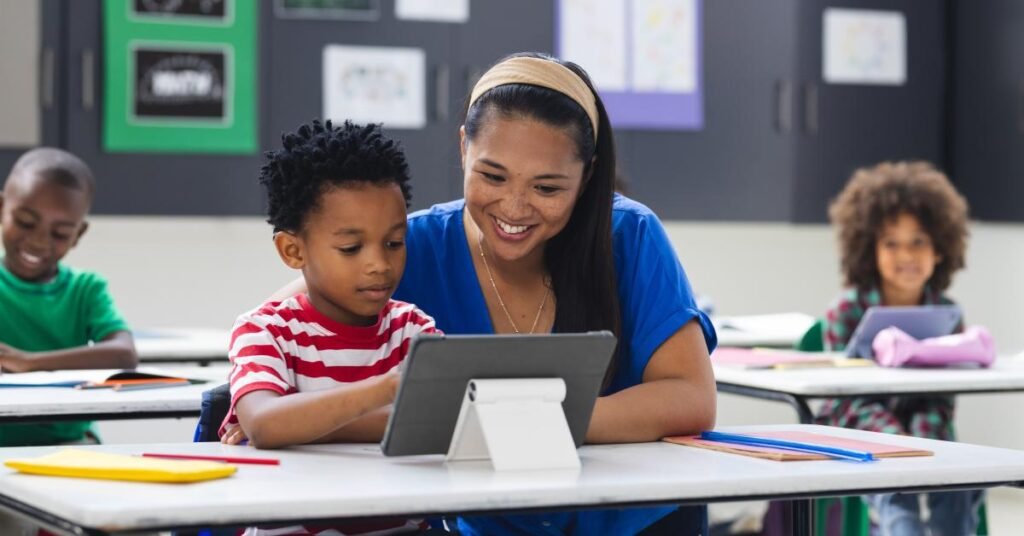
One of the most significant advantages of AI is its ability to make content accessible. Text‑to‑speech and speech‑to‑text features help students engage with written material in a format that matches their strengths. For dyslexic learners, listening to text aloud can reduce the cognitive load associated with decoding words, allowing them to focus on meaning and comprehension. Conversely, converting spoken explanations into text can help clarify instructions and support writing tasks.
Beyond reading and writing, AI platforms can serve as virtual tutors. These systems are available around the clock and can offer explanations, examples, and practice exercises that adjust as the learner progresses. Students who might otherwise be hesitant to ask questions in class are free to explore concepts at their own pace with AI guidance. This real‑time adaptability encourages confidence and ownership of learning.
AI also helps teachers by automating parts of the assessment and planning process. By analysing errors and learning patterns, AI can flag areas where a student consistently struggles, which allows teachers to intervene earlier and with more precision. This can be particularly useful in large classrooms where individual attention is hard to maintain. AI analytics can show teachers which learners need the most support and which instructional strategies are working best, helping educators make data‑driven decisions instead of relying on intuition alone.
Barriers to Effective AI Use in Nigerian Schools and What’s Needed
Despite these promising benefits, there are significant hurdles to the broad adoption of AI for dyslexic learners in Nigeria. Infrastructure remains a critical concern. Many schools, particularly in rural areas, lack reliable electricity, internet connectivity, or even basic computing resources. Without these fundamental building blocks, AI technologies cannot be effectively deployed or used regularly by educators and students.
Cost is another barrier. Many advanced AI platforms and apps require subscriptions or licensing fees that are beyond the means of many schools and families. To make AI tools accessible, governments, non‑profits, and private sector partners will need to explore funding mechanisms, subsidies, or open‑source alternatives that reduce financial barriers to entry.
Teacher readiness is also critically important. An AI tool is only as effective as the person using it. Educators need training not just on how to operate AI software, but on how to interpret the outputs, integrate recommendations into lesson plans, and provide the human support that AI cannot replace. Professional development programmes that combine technology skills with inclusive pedagogical practice will be essential if AI is to make a lasting impact in classrooms.
There are also legitimate questions about equity and digital inclusion. The digital divide in Nigeria means that students in wealthier urban schools may benefit from AI sooner and more comprehensively than their peers in underserved communities. Bridging that divide will require targeted policy action, investment in infrastructure, and community engagement to ensure AI benefits reach all learners, not just a privileged few.

Looking Ahead: A More Inclusive Future with AI
The opportunities AI presents for dyslexic learners in Nigerian schools are compelling. When implemented thoughtfully, AI can support early screening, personalise instruction, and help educators tailor support to individual learning profiles. Such tools have the potential not only to improve academic performance but also to boost the confidence and well-being of students who have previously struggled in traditional classroom environments.
However, realising this potential will require coordinated action from educators, policymakers, technology providers, and communities. Solutions must be affordable, accessible, and grounded in training and support for teachers and learners alike. Government policy and curriculum frameworks need to adapt to leverage AI meaningfully while safeguarding ethical use, data privacy, and equitable access.
As Nigeria continues its journey towards a more inclusive and effective education system, integrating AI thoughtfully into classrooms could help ensure that every learner, regardless of how they read or write, has the opportunity to succeed. The promise of technology is not to replace human educators, but to empower them with tools that expand their reach and effectiveness. With the right vision and support systems in place, AI can become a partner in closing gaps and unlocking potential throughout Nigeria’s education landscape.
Join Our Social Media Channels:
WhatsApp: NaijaEyes
Facebook: NaijaEyes
Twitter: NaijaEyes
Instagram: NaijaEyes
TikTok: NaijaEyes