Nigeria’s promise of free education has long been framed as a gateway to opportunity, a policy designed to lift millions out of poverty and expand access to knowledge. From the establishment of the Universal Basic Education Commission to various state-led initiatives, the idea has always been simple: remove financial barriers, and more children will learn. Yet, beneath this promise lies a growing contradiction. Education may be free in principle, but in practice, access to meaningful learning is increasingly determined by something else entirely: digital infrastructure.
Across classrooms, communities, and households, a quiet divide is shaping outcomes. It is not about whether a child is enrolled in school. It is about whether that child can participate in a modern learning system that now depends heavily on technology, connectivity, and digital skills.
Free education meets a digital reality
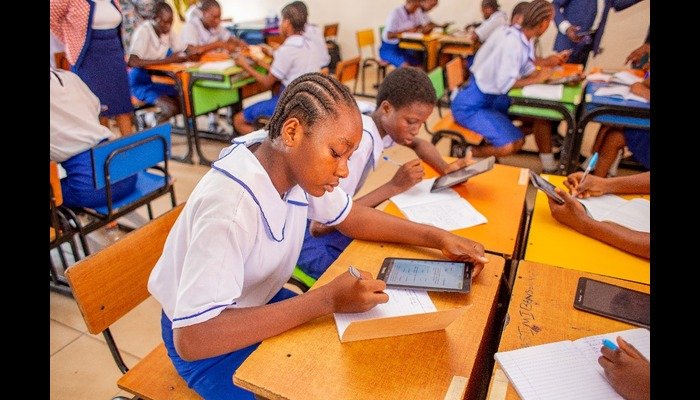
The definition of education has changed. It is no longer limited to chalkboards and printed textbooks. Today’s learning environment includes online resources, virtual classrooms, digital assignments, and interactive tools that prepare students for a technology-driven world. In Nigeria, however, this transition has exposed a critical gap.
While enrolment in public schools has improved due to free education policies, the infrastructure needed to support digital learning remains uneven and, in many places, almost nonexistent. Many schools still lack reliable electricity, internet connectivity, and basic digital tools.
The consequences became particularly visible during the COVID-19 pandemic, when schools were forced to shut down. In many countries, learning moved online. In Nigeria, millions of students were effectively cut off. Research shows that many schools had no capacity for e-learning due to weak infrastructure, leaving students without alternatives.
Even beyond emergency situations, the problem persists. Free education may guarantee a seat in a classroom, but it does not guarantee access to the digital resources that increasingly define quality education. This creates a two-tier system where some students advance with technology while others remain limited to outdated methods.
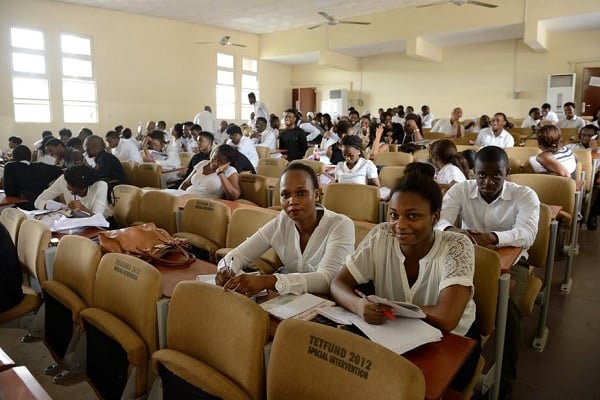
The widening gap between urban and rural learners
The digital divide in Nigeria is not evenly distributed. It follows familiar lines of inequality, separating urban centres from rural communities, and wealthier households from poorer ones.
In cities, students are more likely to have access to smartphones, laptops, and relatively stable internet connections. In rural areas, the situation is starkly different. Many communities struggle with poor network coverage, inconsistent electricity, and limited access to digital devices.
This gap is not just about convenience. It directly affects learning outcomes. Students in well-connected areas can access global knowledge, online tutorials, and digital skill-building platforms. Those in underserved regions are often restricted to what is available locally, which may already be under-resourced.
Data costs further deepen the divide. Even where internet access exists, it is often too expensive for consistent educational use. For families already managing tight budgets, choosing between daily necessities and internet subscriptions is not a real choice.
The result is a silent inequality. Two students may both benefit from “free education,” yet their experiences and future opportunities can be worlds apart.
Policy ambition versus infrastructure reality
Nigeria is not unaware of this challenge. Several initiatives have been introduced to build digital capacity and prepare the country for a knowledge-based economy. One example is the 3 Million Technical Talent Programme, which aims to train millions of Nigerians in high-demand tech skills.
There are also broader efforts to address infrastructure deficits through institutions like the Infrastructure Corporation of Nigeria, which seeks to mobilise large-scale investment into critical national infrastructure.
Yet, the pace of implementation often struggles to match the urgency of the need. Experts continue to highlight poor funding, inadequate facilities, and weak policy execution as major barriers to digital education.
The issue is not just about launching programmes. It is about ensuring that schools across all regions can actually benefit from them. Without reliable electricity, affordable internet, and accessible devices, even the most ambitious digital education policies risk becoming disconnected from reality.
There is also a curriculum gap. Digital literacy is still not fully integrated into basic education, leaving many students unprepared for the demands of the modern workforce. This disconnect raises important questions about the long-term impact of free education if it does not evolve alongside global trends.
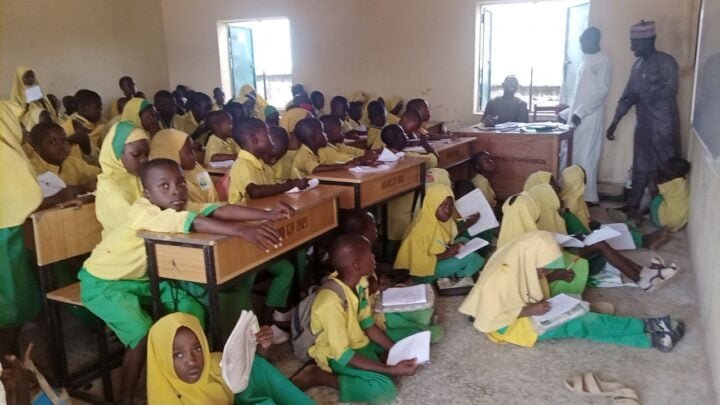
The real cost and the path forward
The hidden cost of free education in Nigeria is not financial in the traditional sense. It is the cost of missed opportunities, unequal outcomes, and a generation that may be left behind in a rapidly changing world.
According to recent warnings, Nigeria faces a potential learning and digital crisis, with millions of children already out of school or lacking essential digital skills. The challenge is not only about bringing children into classrooms but also about ensuring they receive education that is relevant, inclusive, and future-ready.
Closing this gap will require a coordinated effort. Investment in infrastructure must go beyond urban centres and reach underserved communities. Public-private partnerships can play a critical role in expanding access to technology and reducing costs. Teachers also need training to effectively integrate digital tools into their teaching methods.
Equally important is the need to rethink what “free education” truly means in the digital age. Access should not be measured only by enrolment numbers but by the quality and relevance of learning experiences.
Nigeria stands at a crossroads. With its large youth population and growing digital economy, the potential for transformation is immense. But that potential can only be realised if the foundation is strong. Free education, on its own, is no longer enough. Without the infrastructure to support it, the promise of education risks becoming incomplete.
Join Our Social Media Channels:
WhatsApp: NaijaEyes
Facebook: NaijaEyes
Twitter: NaijaEyes
Instagram: NaijaEyes
TikTok: NaijaEyes
READ THE LATEST EDUCATION NEWS