
The United Arab Emirates is intensifying its race to become a global leader in space technology and autonomous systems, and the latest partnership between Space42 and Sindan signals just how serious that ambition has become.
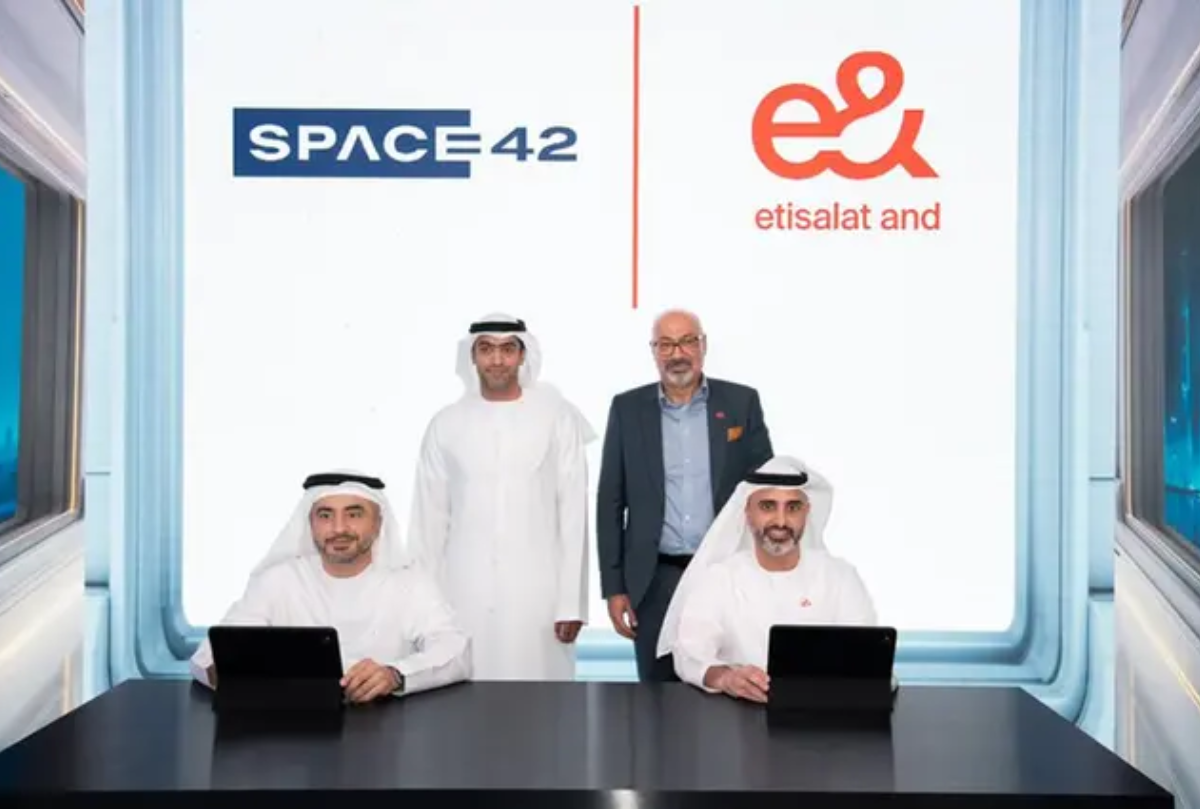
At the centre of the new collaboration is a Memorandum of Understanding signed between the UAE-based SpaceTech company Space42 and aerospace manufacturing specialist Sindan. The agreement focuses on advancing satellite connectivity solutions for autonomous systems, an area increasingly becoming critical for modern transportation, defence, industrial automation and smart infrastructure.
The partnership was unveiled during Make it in the Emirates 2026, one of the UAE’s flagship industrial and technology events. According to details released by both firms, the collaboration will explore how Space42’s satellite communication technologies can integrate with Sindan’s aerospace engineering and testing infrastructure to support autonomous operations in real-world conditions.
Industry experts say the agreement reflects a wider trend in the global technology ecosystem where satellite networks are no longer viewed as tools for television broadcasting or basic communications alone. Increasingly, they are becoming the digital backbone powering connected drones, autonomous vehicles, remote industrial operations and advanced AI systems.
For Africa and the Middle East, where connectivity gaps still exist across vast territories, satellite-powered autonomous systems may eventually become one of the most practical solutions for improving logistics, surveillance, agriculture, emergency response and infrastructure management.
Under the agreement, Sindan will provide access to airborne platforms and ground command systems that can be used for flight testing. Space42, on its part, will deploy and evaluate its aero communication and satellite connectivity systems within those testing environments.
The companies also confirmed that the project will involve technical validation, system optimisation and deployment readiness assessments. In simple terms, both firms want to determine how reliable and scalable these technologies can become when deployed in operational environments rather than controlled laboratory settings.
Executives involved in the project believe the partnership could open the door to broader commercial deployment opportunities in sectors where stable communication systems are essential.
Sulaiman Al Ali, Chief Commercial Officer at Space42, said the collaboration represents another step in the company’s ambition to strengthen secure connectivity systems across the UAE. He noted that the company had already conducted extensive validation work on satellite connectivity solutions designed for autonomous systems before entering the new agreement.
For Sindan, the deal positions the company deeper within the UAE’s rapidly growing aerospace and advanced manufacturing ecosystem. The company says its role will focus heavily on helping transition emerging technologies from research concepts into deployable operational systems.
The announcement also highlights how the UAE is increasingly combining artificial intelligence, aerospace engineering and satellite communications into one integrated national strategy. Rather than treating these sectors separately, the country appears focused on building a unified innovation ecosystem capable of competing globally.
Why Satellite Connectivity Matters for Autonomous Systems
Autonomous systems depend heavily on stable, uninterrupted communication channels. Whether it is self-driving vehicles, industrial drones, unmanned aerial systems or AI-powered mobility platforms, these technologies require constant data exchange to operate safely and efficiently.
Traditional ground-based communication infrastructure often struggles in remote locations, deserts, offshore environments or regions with weak network coverage. Satellite connectivity changes that equation by allowing systems to remain connected over much wider geographic areas.
That capability becomes particularly important for countries with large territories or difficult terrain. It also offers strategic advantages for industries such as logistics, mining, oil and gas, defence and agriculture.
Research into future space networks increasingly points toward integrated communication ecosystems that combine satellites, ground infrastructure and AI-driven network management. Academic studies have noted that multi-orbit satellite systems may become central to future 6G and autonomous communication architectures.
Experts believe that satellite-linked autonomous systems could eventually support applications such as:
- Long-distance autonomous freight transport
- Smart city traffic coordination
- Remote industrial inspections
- Precision agriculture
- Emergency disaster response
- Border and maritime surveillance
- Autonomous drone delivery systems
The growing demand for these solutions is also reshaping investment patterns across the global space economy.
In recent years, governments and private companies have accelerated investments in low Earth orbit satellites, AI-enabled communications infrastructure and high altitude platform systems. Many analysts now see space technology as one of the defining economic battlegrounds of the next decade.
For African countries, the implications could also be significant. Satellite-powered systems may help bypass some of the infrastructure limitations that have historically slowed digital transformation projects across parts of the continent.
While challenges around affordability, regulation and deployment remain, partnerships like the one between Space42 and Sindan indicate that commercial players are preparing for a future where autonomous connectivity becomes mainstream.
Back Story: How Space42 Became One of the UAE’s Fast-Rising SpaceTech Companies
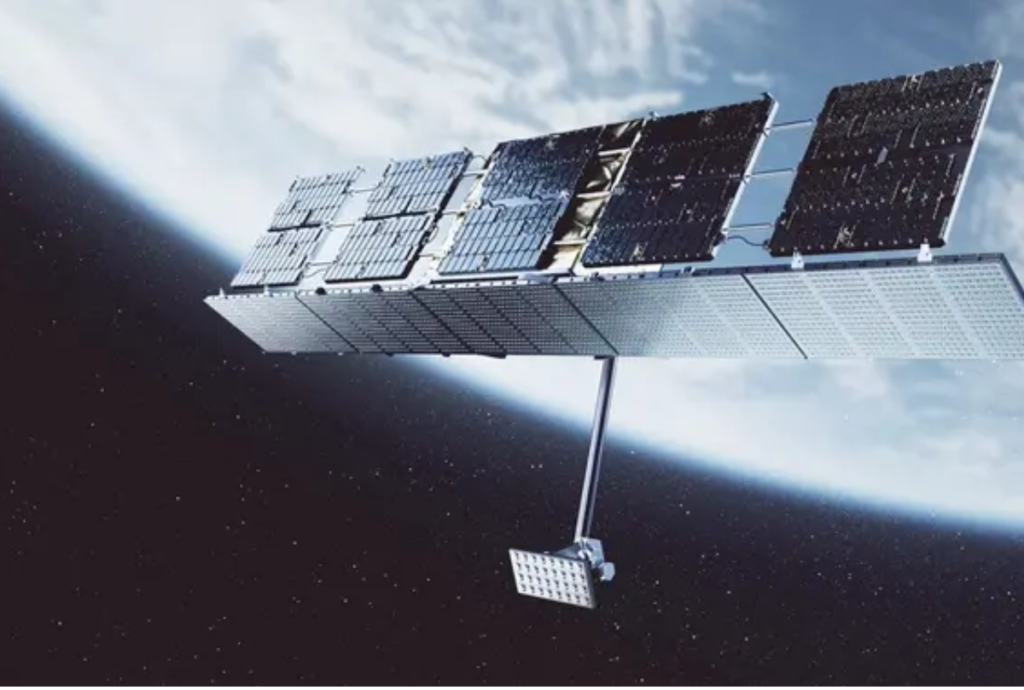
Space42 has rapidly emerged as one of the UAE’s most ambitious technology companies following the merger of Bayanat and Yahsat in 2024.
The company combines satellite communications, geospatial intelligence and artificial intelligence technologies under a single structure, allowing it to target sectors ranging from mobility and security to industrial infrastructure and smart city development.
In the past year alone, Space42 has signed multiple strategic agreements tied to autonomous systems and smart mobility innovation.
Earlier in 2026, the company entered a partnership with Abu Dhabi Police to support the development of smart autonomous mobility and AI-powered security systems within the emirate. That agreement focused on improving road safety, integrating AI into policing systems and strengthening autonomous vehicle technologies.
The company has also expanded internationally. In 2025, Space42 signed an agreement with Angola’s Military Intelligence and Security Service to support satellite communications, Earth observation and AI-driven national security technologies.
Another strategic partnership with South Korean firm Autonomous A2Z focused on deploying Level 4 autonomous driving systems across the Middle East and Africa. The initiative aimed to help establish a regional smart mobility ecosystem anchored in Abu Dhabi.
These agreements reveal a broader pattern. Space42 is not simply operating as a satellite company. It is positioning itself as a full-scale infrastructure player within the emerging AI and autonomous systems economy.
The UAE government’s industrial policies are also playing a major role in accelerating these developments.
The latest Space42 and Sindan collaboration aligns with the UAE’s Operation 300bn strategy, which aims to increase the contribution of the industrial sector to national GDP while promoting advanced manufacturing and technology adoption. The partnership also supports the country’s National Space Strategy 2030.
Observers say the UAE’s approach differs from many countries because it combines government backing, sovereign investment funds and private sector partnerships into one coordinated innovation model.
That strategy appears to be paying off.
The country has steadily expanded its profile in satellite manufacturing, Earth observation systems, AI infrastructure and space-based communications. Its investments are increasingly attracting international partnerships and positioning Abu Dhabi as a growing centre for advanced aerospace innovation.
What This Means for the Future of Smart Mobility and Connectivity
The collaboration between Space42 and Sindan may still be in its early stages, but it reflects where the future of global communications is heading.
Autonomous systems are expected to become far more common over the next decade. As industries digitise operations and cities adopt smarter infrastructure, the need for reliable, secure and scalable connectivity solutions will only intensify.
Satellite communication is emerging as one of the few technologies capable of supporting that demand across large geographic regions without relying entirely on traditional terrestrial infrastructure.
For countries across Africa and the Middle East, this could create new opportunities in transportation, logistics, agriculture and public safety.
It also places companies like Space42 in an increasingly influential position within the global technology market.
Rather than competing solely with traditional telecom operators, Space42 is entering a broader race involving AI companies, aerospace manufacturers, autonomous mobility developers and digital infrastructure providers.
The company’s growing list of partnerships suggests it intends to become a major player in that ecosystem.
For now, the agreement with Sindan remains focused on research, integration and testing. But if successful, it could contribute to the development of next-generation autonomous systems capable of operating reliably in some of the world’s most demanding environments.
That would not only strengthen the UAE’s ambitions in advanced technology. It could also reshape how satellite connectivity is used across industries in the years ahead.
Join Our Social Media Channels:
WhatsApp: NaijaEyes
Facebook: NaijaEyes
Twitter: NaijaEyes
Instagram: NaijaEyes
TikTok: NaijaEyes